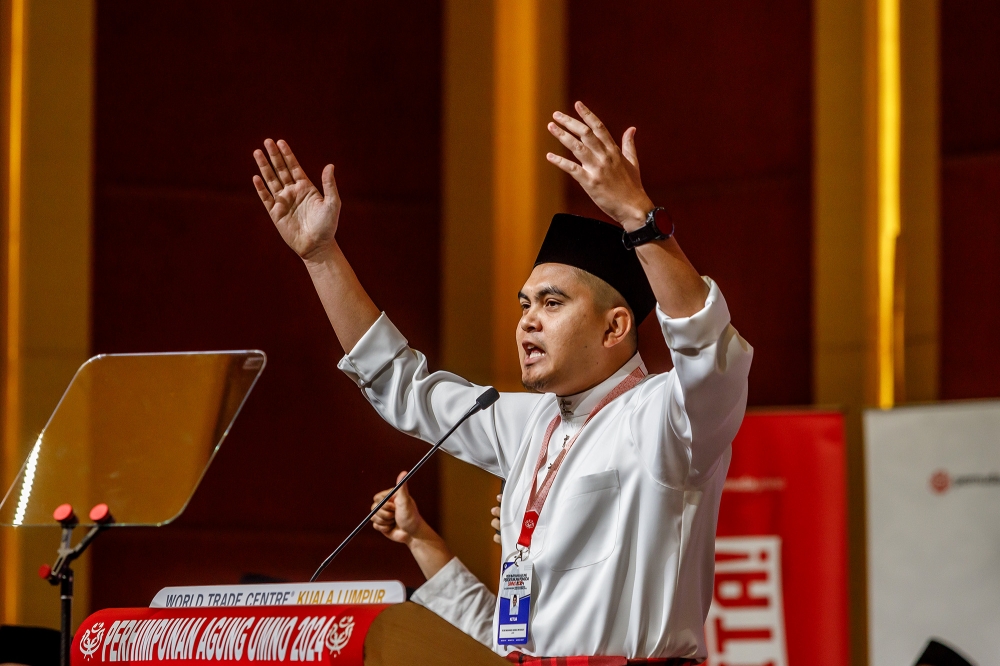
Umno Youth chief Datuk Dr Akmal Saleh has turned up the political heat by challenging Pakatan Harapan to apply consistent principles when addressing electoral partnerships and government participation, raising fundamental questions about fairness in Malaysia's coalition politics. Speaking on July 19 in Kuala Lumpur, the young party leader questioned the apparent double standards that appear to govern how different coalitions face scrutiny over their alliance arrangements, suggesting that if certain parties must exit government based on their alliances, the same logic should apply universally across the political spectrum.
The challenge stems from ongoing tensions within Malaysia's governing coalitions and the various groupings that compete for power. Electoral alliances have become increasingly complex in recent years, with parties frequently shifting partners depending on state and federal contexts, creating a tangled landscape that observers struggle to navigate. Umno, as the historically dominant player in Malaysian politics, has faced particular criticism when its electoral choices conflict with those of its coalition partners or when alliance arrangements appear inconsistent across different electoral contests. Dr Akmal's intervention suggests that Umno Youth believes the party is being singled out for scrutiny that other coalition partners avoid.
The statement reflects deeper frustrations within Umno regarding what its leadership perceives as unequal treatment in national political discourse. While Pakatan Harapan has positioned itself as a reformist force with clearer ideological moorings, its own coalition arrangements have proven pragmatic and occasionally fluid, particularly during state-level elections. Critics within the opposition have sometimes contended that Pakatan's partners, including Amanah and DAP, have pursued different electoral strategies in different states without equivalent calls for their removal from government when they hold power. Dr Akmal's challenge brings this tension into sharp relief.
For Malaysian readers, this dispute matters because coalition coherence affects policy implementation and government stability. When partners operate under different rules or face inconsistent pressure, it can undermine the effectiveness of whichever coalition holds federal power. The current political climate, where governments depend on managing multiple coalition partners with differing agendas, makes this equilibrium particularly fragile. If standards for coalition participation are perceived as unfairly applied, it can destabilize the consensus required to govern and deepen parliamentary dysfunction.
The Southeast Asian context adds another layer to this debate. Throughout the region, coalition governments have become the norm rather than the exception, and managing their internal dynamics remains a persistent challenge for stability. Thailand, Philippines, and Indonesia have all grappled with coalition fractures that paralyzed governments or forced dramatic realignments. Malaysia's experience suggests that when major parties feel treated unequally within coalition structures, the pressure builds for either reformation or exit, neither of which necessarily produces a more stable or functional government.
Umno's position as the largest Malay-dominated party in BN gives its leadership particular sensitivity to perceived slights or discriminatory treatment. Any suggestion that its alliance choices are subject to harsher judgment than those of competing coalitions strikes at questions of political equality and respect that matter deeply within Umno's organizational culture. Younger party members, whom Dr Akmal represents as Youth chief, may feel this perceived unfairness more acutely, particularly if they believe it disadvantages their party's electoral prospects or governing legitimacy.
Pakatan Harapan's silence or response to these charges will carry significance beyond the immediate rhetorical exchange. The coalition's credibility as an alternative government rests partly on claims that it operates according to consistent principles and higher standards than the governments it opposes. If it cannot respond convincingly to charges of applying different standards to itself versus its rivals, it weakens these claims. Conversely, if Pakatan can articulate principled distinctions between its own alliance arrangements and those of BN, it may strengthen its narrative about what separates the two coalitions philosophically.
The timing of Dr Akmal's challenge also merits consideration. Rising among Umno Youth, he may be positioning himself as a more combative voice willing to challenge opposition narratives directly. For a party that has faced sustained criticism from multiple quarters, having younger leaders willing to push back against what they perceive as unfair treatment serves an internal morale function while also testing how the political opposition responds. This can signal to Umno members that their party will not accept disparate treatment without voicing objection.
Looking ahead, this dispute reflects a broader Malaysian political truth: coalition governance requires not just operational management but also agreement on the rules of the game. When major parties believe these rules are applied unequally, they naturally resist and raise these grievances in public forums. Whether through dialogue or continued public sparring, Malaysian political leadership will eventually need to establish clearer, more universally applicable standards for how coalition partners are expected to operate and under what circumstances they should face pressure to withdraw from government. Without such clarity, each coalition will continue accusing the other of hypocrisy whenever convenient, deepening cynicism about whether principle or mere power calculation drives coalition politics in Malaysia.

