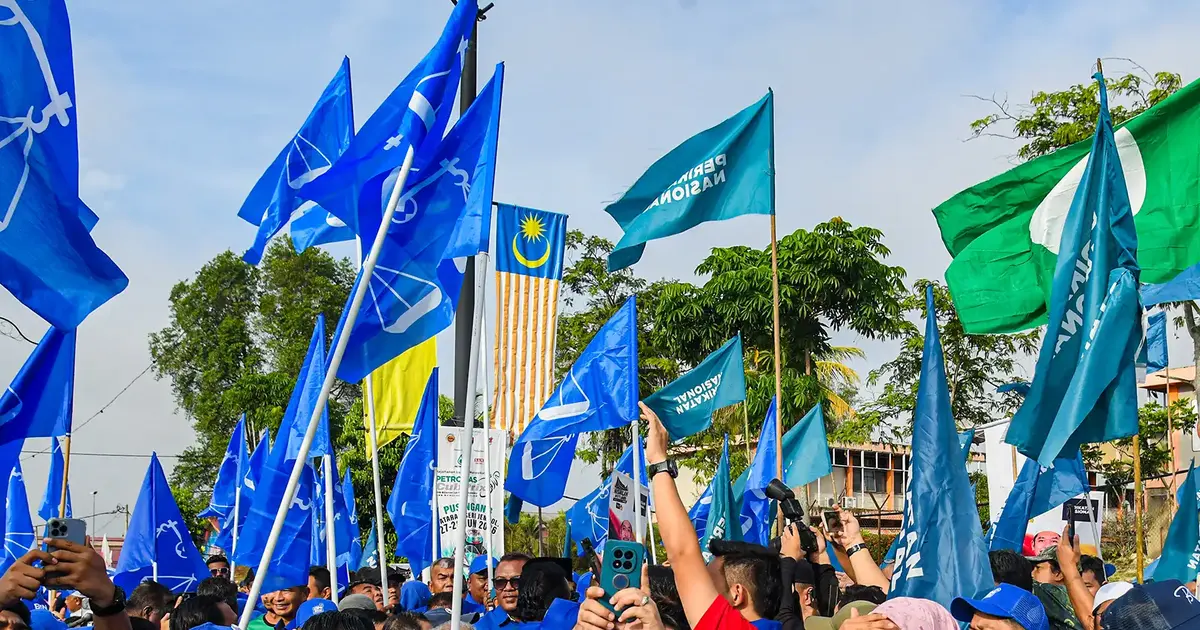
The strategic alliance between Barisan Nasional and Perikatan Nasional faces mounting pressure as Umno pursues an aggressive campaign to recover its historical dominance across Malaysia's political landscape. Political analysts caution that this ambition could undermine the delicate coalition architecture that has underpinned government stability since the parties joined forces, particularly in states where power-sharing arrangements remain contested and fragile.
The fundamental tension centres on territorial control in strategically important East Coast states, where the two coalitions maintain competing interests and overlapping electoral bases. Umno, traditionally the dominant force in federal politics before its 2018 electoral setback, views reassertion across the peninsula as essential to its political rehabilitation. However, this objective clashes with Perikatan's consolidated influence in several key regions, creating a zero-sum dynamic that could destabilise their governing arrangement.
In Terengganu, Umno currently holds no parliamentary seats, a dramatic reversal from its historical stronghold status. Perikatan has since consolidated power in the state, and analysts regard any serious Umno push for representation as unlikely to succeed without major concessions from its alliance partner. The situation mirrors challenges in Kedah and Perlis, where similar territorial dynamics have emerged. Umno's absence from these states reflects broader electoral losses from which the party is still recovering, yet the party's leadership has signalled determination to reverse this trend.
Kelantan presents a more nuanced scenario, where Umno retains a minimal foothold with just two parliamentary seats in a state where Perikatan holds overwhelming control. The disparity underscores the scale of Umno's challenge: rebuilding requires either winning seats through electoral competition or negotiating seat allocations within coalition negotiations. Neither pathway appears straightforward, as Perikatan has little incentive to voluntarily surrender seats it currently holds.
Political observers emphasise that such regional imbalances could trigger broader coalition friction beyond these three states. When seat negotiations resume for future elections or state-level contests, Umno's insistence on seat increases may meet resistance from Perikatan leaders who question whether accommodating Umno serves their electoral interests. This disagreement mirrors historical tensions within Barisan Nasional itself, where larger component parties sometimes dominated smaller partners' representation opportunities.
The alliance faces a credibility test if internal tensions become visible to voters. Public disputes over seat allocations or state-level power-sharing arrangements could undermine the unified front both coalitions present to the electorate. Voters may interpret such conflicts as evidence of opportunism rather than principled governance, potentially damaging both partners' standing in marginal constituencies where coalition backing proves decisive.
Umno's internal recovery depends partly on electoral success and partly on political realignment with coalition partners. The party has undertaken significant reorganisation following its earlier defeats, and senior leaders argue that electoral expansion remains essential to party survival and relevance. This perspective, while internally rational, may not align with Perikatan's calculation of optimal strategy. Perikatan leaders increasingly view their party as a permanent political force rather than a temporary alternative, reducing their willingness to cede territory to former rivals.
For Malaysia's broader political stability, the BN-PN relationship carries outsized importance. The coalition controls the federal government and several state administrations, and its internal cohesion influences legislative reliability and policy implementation capacity. Excessive friction could invite opposition overtures to dissatisfied coalition members or create openings for alternative arrangements that might prove less stable.
The timing of coalition stress adds complexity. Economic challenges and public sector management demands require sustained governmental focus, yet internal coalition management absorbs considerable political attention and energy. Whether coalition leaders can compartmentalise these concerns—maintaining strategic unity while addressing legitimate territorial claims—will significantly influence the alliance's durability.
Regional consequences extend beyond Malaysia's borders. Southeast Asian observers watch coalition dynamics closely, as Malaysia's political stability influences regional economic confidence and security cooperation. Protracted coalition tensions might signal broader governance uncertainty that could affect regional investment flows and diplomatic engagement.
Moving forward, coalition architects face a fundamental choice: either develop transparent, formula-based seat allocation frameworks that accommodate Umno's recovery aspirations while respecting Perikatan's existing control, or accept mounting friction as a coalition management cost. Without proactive negotiation, competitive impulses within the alliance could gradually erode the structured cooperation that has proven essential for stable governance in Malaysia's ethnically diverse and regionally diverse political environment.

