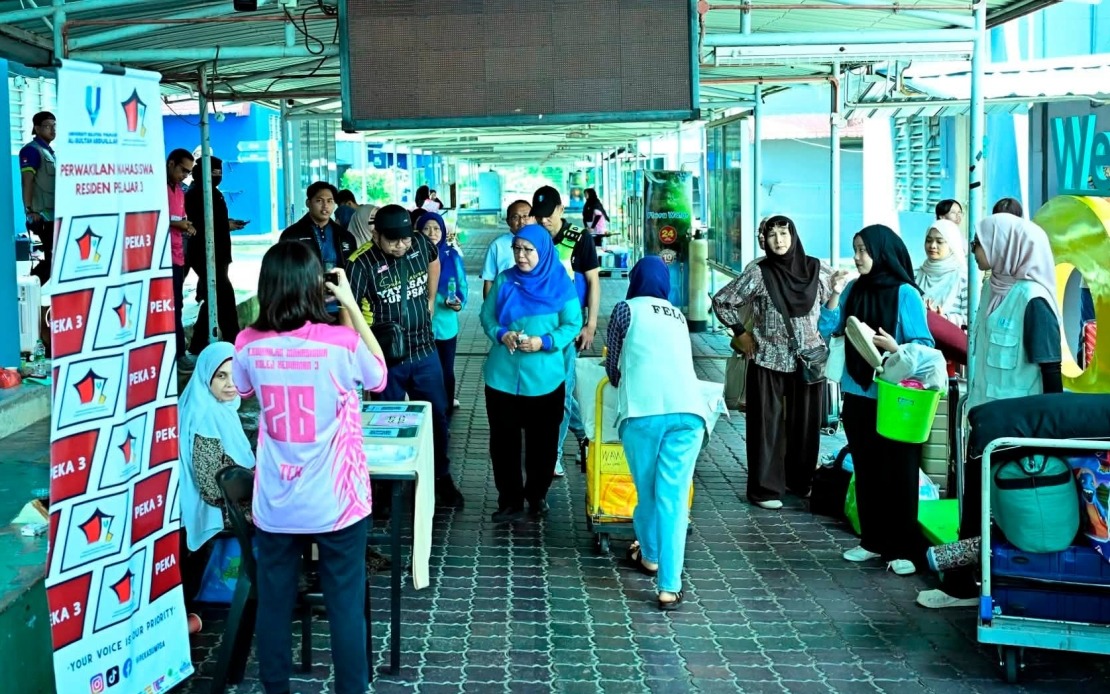
Universiti Malaysia Pahang Al-Sultan Abdullah (UMPSA) has pledged sustained investment in the welfare and academic success of financially disadvantaged students, underscoring the institution's dedication to widening access to higher education across Malaysia. Vice-Chancellor Prof Dr Yatimah Alias made the commitment during the institution's new student registration day in Kuantan on July 19, emphasising that the university remains resolute in its mission to provide equitable educational opportunities regardless of socioeconomic background. Her remarks come as UMPSA welcomes what it describes as the highest intake of new students since its founding, signalling expanding capacity to accommodate learners from across the country.
The university's comprehensive approach to student welfare extends beyond traditional tuition support. UMPSA has structured a multi-layered assistance framework designed to address the varied financial pressures faced by economically vulnerable students. Financial assistance schemes form the cornerstone of this strategy, complemented by targeted academic support services intended to help struggling learners keep pace with coursework and maintain satisfactory progress toward their degrees. According to Yatimah, these initiatives collectively aim to dismantle the financial barriers that otherwise prevent promising but resource-constrained students from accessing tertiary education.
During the registration ceremony, the university distributed scholarships to twenty selected students, each award encompassing full coverage of tuition fees alongside a regular monthly stipend to offset living costs. The scholarship recipients represent a carefully selected cohort deemed to demonstrate both financial need and academic potential, ensuring that limited resources are directed toward candidates most likely to benefit from tertiary education. This targeted allocation reflects institutional pragmatism—by concentrating support on high-potential disadvantaged applicants, UMPSA maximises the social return on its welfare investment while simultaneously strengthening the quality of its student body.
Beyond scholarship provision, UMPSA's support infrastructure incorporates emergency financial assistance managed through the university's philanthropic arm. The UMPSA Foundation distributed one-time grants of RM1,000 to students facing immediate financial hardship, funds earmarked specifically for early-stage educational expenses that can otherwise derail academic journeys during vulnerable transition periods. This early intervention mechanism recognises that many disadvantaged students possess the intellectual capacity to succeed in higher education but encounter unexpected obstacles during their first weeks or months of enrolment—a period when financial stress often precipitates dropout decisions.
The registration cohort itself merits careful examination. A total of 1,045 new diploma students enrolled during the 2026/2027 academic cycle, representing the largest intake since UMPSA's establishment. This expansion suggests both growing demand for diploma-level qualifications in Pahang and beyond, as well as increasing awareness of UMPSA as an accessible entry point to higher education. The university's strategic positioning as an institution genuinely committed to disadvantaged students may well have contributed to this enrolment surge, as word-of-mouth among prospective applicants spreads awareness of genuine support mechanisms rather than mere rhetorical commitments.
For Malaysian higher education policy, UMPSA's approach carries broader significance. While Malaysia has made progress in expanding tertiary education access, persistent socioeconomic barriers continue limiting opportunities for rural and low-income students. Institutional commitment to welfare—translated into concrete financial support rather than symbolic gestures—remains comparatively rare. UMPSA's model demonstrates that public universities can simultaneously expand enrolment, maintain academic standards, and genuinely support disadvantaged cohorts through sufficient resource allocation and bureaucratic will.
Yatimah's emphasis on equal and quality education opportunities speaks to a fundamental tension in Malaysian higher education. Expanding access without maintaining quality produces credentials of diminishing market value; conversely, restricting access to preserve standards perpetuates privilege. By explicitly linking welfare provision to quality education outcomes, UMPSA positions itself as pursuing a more demanding path—one that requires sustained institutional investment rather than token gestures. This approach implicitly acknowledges that disadvantaged students often require more support, not less, to achieve equivalent learning outcomes compared to peers from privileged backgrounds.
The financial commitment represented by twenty scholarships and a foundation dispensing emergency grants of RM1,000 might appear modest in absolute terms. However, for Malaysian diploma students—many of whom come from households earning below RM3,000 monthly—such interventions prove genuinely transformative. Tuition fee coverage eliminates the single largest barrier to enrolment, whilst monthly allowances enable students to concentrate on studies rather than engage in precarious part-time employment at unsustainable hours.
Looking forward, the university's welfare framework presents an important model for replication across Malaysia's broader higher education ecosystem. As demographic challenges and economic pressures increasingly force Malaysian universities to compete for enrolment, those institutions genuinely committed to supporting disadvantaged cohorts may find themselves attracting high-quality applicants who feel valued and supported. UMPSA's record intake suggests this strategy delivers tangible institutional benefits alongside genuine social outcomes, creating aligned incentives around authentic educational inclusion rather than performative diversity commitments.

