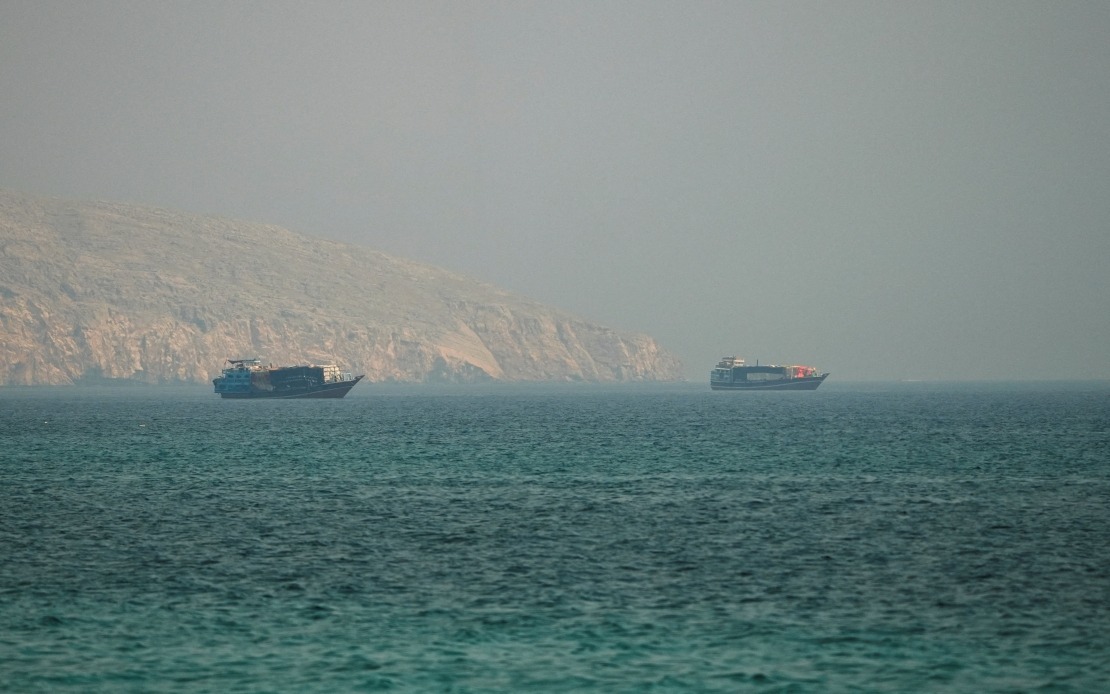
The United Nations' top official has sounded an alarm over mounting military confrontations in the Persian Gulf, calling for an immediate cessation of hostilities and a renewed commitment to dialogue between Washington and Tehran. In remarks delivered on Sunday, UN Secretary-General Antonio Guterres expressed grave concern about the cycle of escalating attacks that has destabilised the strategically critical waterway, emphasising that the international community must act decisively to prevent further deterioration.
Guterres articulated deep alarm at the pattern of recent incidents, which have involved Iranian attacks on commercial vessels transiting the Strait of Hormuz, retaliatory American military strikes against Iranian targets, and Tehran's subsequent attacks on facilities in neighbouring countries. Through his spokesperson Stephane Dujarric, the Secretary-General underscored that these tit-for-tat operations represent a dangerous trajectory that threatens not only regional stability but also global economic and security interests. The repetitive nature of these incidents suggests a deteriorating relationship between the two powers with diminishing diplomatic buffers.
The Strait of Hormuz, through which roughly one-third of the world's seaborne traded oil passes, remains the central focus of Guterres' concerns. Any prolonged disruption to this critical shipping corridor would have immediate repercussions across Southeast Asia and globally, affecting fuel prices, supply chains, and economic growth. Malaysia's own energy security and export-dependent economy make stability in this region a matter of direct national interest, given the country's reliance on reliable energy supplies and unimpeded maritime commerce through regional waterways.
Guterres has called upon all belligerents to exercise maximum restraint and refrain from actions that would further inflame an already volatile situation. The Secretary-General's language suggests he views the current trajectory as potentially catastrophic if allowed to continue unchecked. His appeal for immediate steps to ease tensions reflects the UN's assessment that window for de-escalation, though narrow, remains open if political will can be mustered by the principal actors.
The UN chief explicitly warned that a return to full-scale hostilities would produce what he characterised as "catastrophic consequences" extending across multiple dimensions. Beyond the immediate human toll on Gulf populations, such an escalation would destabilise international peace and security architecture, destabilise energy markets and trigger economic shocks that would ripple across the developing world. For countries in Southeast Asia heavily dependent on energy imports and international trade, such regional instability carries tangible economic risks that extend far beyond the immediate theatre.
Guterres has emphasised the paramount importance of restoring and guaranteeing full freedom of navigation through the Strait of Hormuz. This principle underpins the international maritime order and the rules-based system upon which global commerce depends. Attacks on commercial shipping, regardless of their stated strategic rationale, represent violations of established international law and norms that govern the seas. The restoration of secure passage is therefore not merely a technical requirement but a fundamental prerequisite for resuming normal economic activity in the region.
In perhaps his most pointed intervention, the UN Secretary-General has directly urged both Tehran and Washington to abandon their current course and return urgently to the negotiating table. Guterres has characterised diplomacy as the essential mechanism through which outstanding disputes between the two nations can be resolved, implicitly acknowledging that military means have reached diminishing returns. His call for negotiations suggests that the UN views dialogue as not merely desirable but urgent, with a recognition that the longer military operations continue, the harder political settlements become to achieve.
The UN's intervention reflects growing international alarm that the conflict trajectory, if unchecked, could spin beyond the control of rational actors and precipitate unintended consequences. Both Iran and the United States possess military capabilities and doctrinal frameworks that create significant risks of miscalculation or escalatory spirals. The involvement of proxies and non-state actors further complicates efforts at communication and control, increasing the likelihood of unintended escalations that neither side initially anticipated.
For Southeast Asian nations, the UN's diplomatic initiative carries immediate policy implications. Regional stability in the Gulf directly affects energy security, shipping insurance costs, and trade flow patterns that constitute vital economic arteries for ASEAN economies. Malaysia and other regional countries have strategic interests in promoting stable, rules-based international order in the Gulf, even while maintaining careful diplomatic balance in their own relationships with both Washington and Tehran. The UN's efforts to promote de-escalation and dialogue align with Southeast Asian preferences for peaceful resolution of international disputes.
Guterres' appeal also reflects the broader challenge facing multilateral institutions in an increasingly fractious geopolitical environment. The UN Secretary-General's ability to influence behaviour depends partly on the legitimacy and authority he can muster, which in turn depends on demonstrated support from major powers. His call for restraint and negotiation will prove effective only if both Washington and Tehran view continued confrontation as ultimately counterproductive to their strategic objectives. The coming weeks will reveal whether either side is prepared to heed the UN's counsel.

