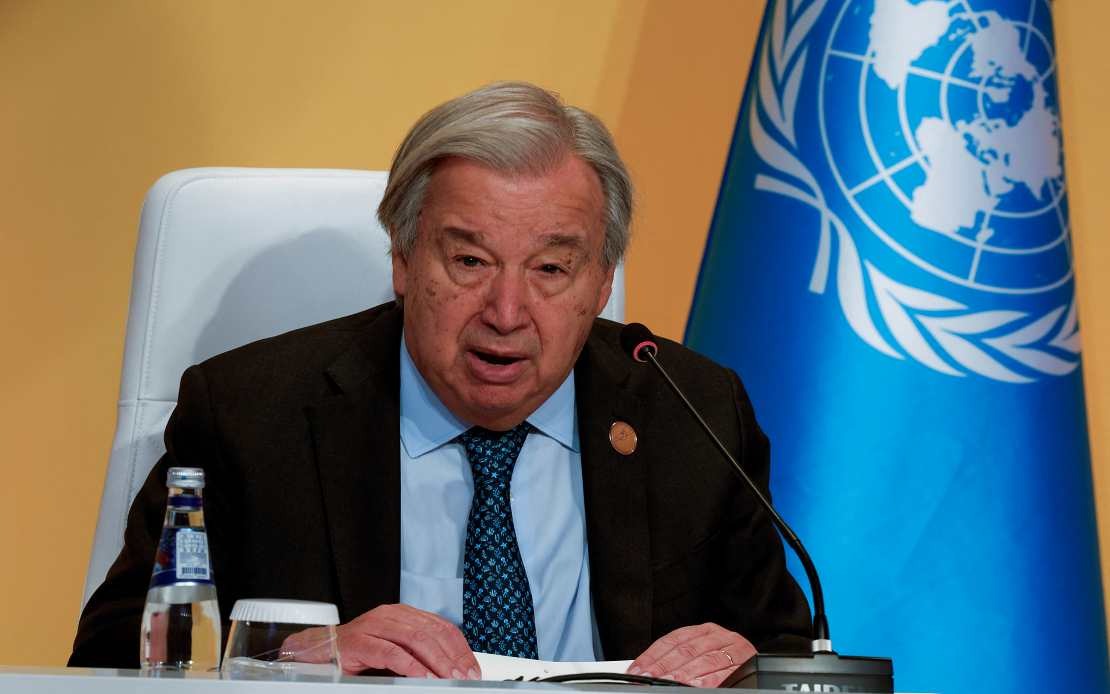
The United Nations leadership is sounding alarms over rapidly intensifying military hostilities in the Persian Gulf, with Secretary-General Antonio Guterres expressing grave concern about a situation that threatens not only regional stability but global economic security. The diplomatic crisis centres on a series of tit-for-tat military actions, including Iranian operations against commercial shipping vessels transiting the Strait of Hormuz, retaliatory strikes by the United States against Iranian targets, and Iranian attacks on objectives within neighbouring countries. This cycle of escalation has prompted the UN to issue an urgent appeal for all combatants to step back from the brink before the situation spirals irreversibly toward wider conflict.
The Secretary-General's position, articulated through his official spokesperson Stephane Dujarric in a formal statement on Sunday, emphasises the need for what he characterises as maximum restraint from every party involved in the confrontation. Rather than continuing down the path of military action and counter-action, Guterres is pushing for immediate and concrete measures designed to lower tensions and create space for diplomatic solutions. This framing reflects a deepening anxiety within the international community that the current trajectory could lead to a complete breakdown of restraint and the resumption of full-scale military operations—a prospect with implications far beyond the Gulf itself.
The maritime dimension of the crisis adds particular urgency to international concerns. The Strait of Hormuz represents one of the world's most vital energy chokepoints, through which approximately one-third of all seaborne traded oil passes daily. Disruptions to shipping in these waters directly affect global energy prices and supply chains that reach into every corner of the world economy. The Secretary-General has therefore underscored the imperative of restoring and maintaining full freedom of navigation through the strait, a principle essential both for regional commerce and for the functioning of the global trading system upon which developing nations like Malaysia depend heavily.
Guterres has made explicit his assessment of what uncontrolled escalation could produce: consequences described as catastrophic for the peoples of the Gulf region, for the broader international peace and security architecture, and for economic stability worldwide. This language reflects the UN's most serious level of concern and suggests that officials believe the situation could rapidly deteriorate into a major conflict with unpredictable and severe ramifications. The breadth of this concern—spanning regional humanitarian impacts, global security implications, and economic disruption—illustrates how a confrontation between two regional powers can pose systemic risks to the international order.
Central to the UN's strategy for de-escalation is the urgent resumption of direct negotiations between Iran and the United States. These two nations, whose relationship has been marked by decades of antagonism and periodic military tension, hold the key to whether current hostilities can be brought under control through diplomatic channels. The Secretary-General has explicitly called on both countries to re-engage in talks aimed at addressing the substantive disputes that underlie the military confrontations. This diplomatic push reflects a recognition that without direct communication and negotiation, the cycle of action and reaction may prove impossible to interrupt.
For Southeast Asian nations monitoring these developments from a distance, the Gulf crisis carries significant implications. The region's economies depend substantially on stable energy supplies from the Middle East, and any sustained disruption to oil markets would reverberate through supply chains and manufacturing sectors across the Association of Southeast Asian Nations. Malaysia, as a major trading nation and energy consumer, has particular reason to be invested in the restoration of stability in this distant but crucial region. Rising energy costs triggered by Middle Eastern instability would add pressure to prices in Malaysian markets and complicate economic management.
The statement from the UN also carries implicit criticism of all parties' reliance on military means to address their grievances. Rather than continuing to escalate and respond in kind to each new attack, Guterres is advocating for a fundamental shift in approach—one that privileges diplomatic engagement over military action. This reflects the classical UN mandate to seek peaceful resolution of disputes and prevent the use of force in international relations. The appeal is framed not as taking sides but as addressing a common interest in preventing catastrophe.
The timing of this escalation occurs against a backdrop of longstanding tensions between the United States and Iran, rooted in historical grievances, regional competition, and differing strategic objectives. However, the current phase of military confrontation represents a dangerous intensification that has alarmed not only the UN but also regional powers and countries dependent on Gulf stability. The escalation has moved beyond rhetoric and sanctions into direct military action, a shift that heightens the risk of miscalculation or unintended consequences.
Guterres' intervention underscores the reality that in an interconnected global system, regional conflicts cannot be neatly contained. What occurs in the Strait of Hormuz affects markets in Kuala Lumpur, supply chains stretching to Singapore, and energy costs for households across Southeast Asia. The UN chief's call for restraint and renewed diplomacy is therefore not merely a plea for distant actors to behave responsibly but an urgent appeal to prevent consequences that would ripple outward to affect millions of people far removed from the immediate theatre of confrontation. The coming days and weeks will be critical in determining whether the appeal for de-escalation gains traction or whether military hostilities continue their dangerous upward trajectory.

