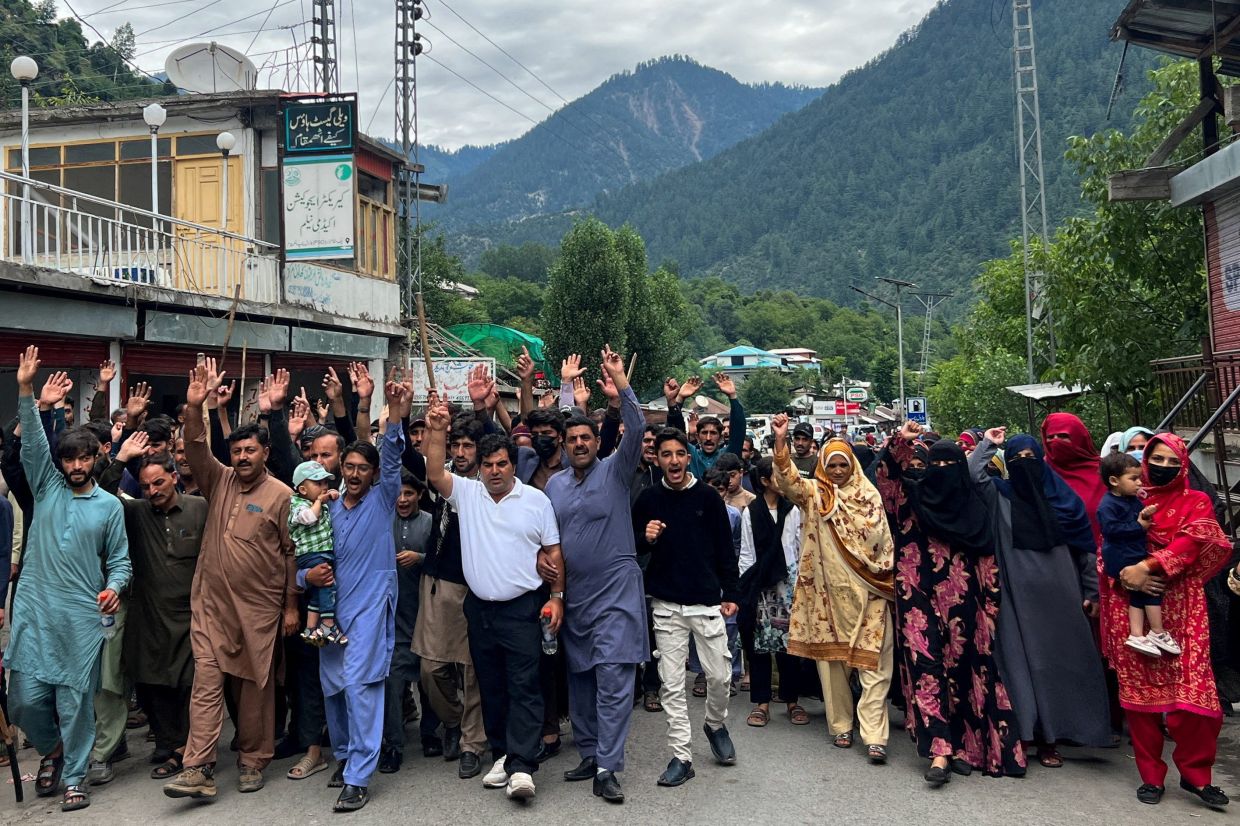
The United Nations has intensified pressure on Pakistan to conduct impartial investigations into what officials describe as a deadly escalation of tensions in Pakistan-administered Kashmir, with dozens of lives lost since June amid a volatile political climate. Speaking in Geneva on Friday, UN High Commissioner for Human Rights Volker Turk's office appealed for calm in the disputed region and signalled deep concern over the reported deaths occurring both among civilian protesters and law enforcement personnel as the territory heads toward legislative assembly elections scheduled for July 27.
The escalating violence represents a critical juncture for the Himalayan region, where longstanding political grievances have intersected with armed security responses to create an exceptionally volatile environment. The unrest centres on the Joint Awami Action Committee, a civil society movement calling for substantial economic and governance reforms across the territory. Despite being designated under anti-terrorism legislation last month—a move authorities justified on public order grounds—JAAC supporters have pressed ahead with demonstrations, signalling the depth of popular discontent that extends beyond the organisation's formal structures.
The crackdown on JAAC marks an intensification of restrictions that the UN argues fundamentally undermines democratic space in the region. Pakistani authorities have arrested several leaders of the movement, drawing sharp criticism from international human rights bodies. The UN's human rights office contended that treating a civil society organisation as a terrorist entity raises troubling questions about whether governments can use security frameworks to suppress legitimate political expression. The office specifically warned that the blanket arrests and restrictions on public gatherings represent potential violations of rights to free expression, peaceful assembly, and freedom of association—protections that remain foundational to any functioning democratic system.
This is not the first instance of severe unrest in Pakistani-administered Kashmir during recent years. Similar violent clashes between police forces and JAAC-led protesters engulfed the region in September of the previous year, resulting in at least nine confirmed deaths. The recurring pattern of escalation suggests underlying tensions remain unresolved, pointing to systemic grievances that elections alone may not address without concurrent structural reforms. The cyclical nature of these confrontations underscores how disputed territories with entrenched political tensions can rapidly descend into violence when institutional mechanisms for addressing popular demands remain inadequate.
The geopolitical sensitivities surrounding Kashmir compound the humanitarian concerns raised by the UN. The disputed territory, claimed in entirety by both India and Pakistan since their partition from British rule, has become a flashpoint for military and political competition between the two nuclear-armed neighbours. Pakistan's military and civilian leadership treat the region as strategically vital, given the history of armed conflicts and ongoing border tensions with India. This heightened security consciousness often translates into heavy-handed approaches to civil unrest, with authorities prioritising stability over accommodating political dissent through dialogue and reform.
Internet blackouts have emerged as a particularly contentious aspect of the security response, with communications severely restricted during periods of heightened tension. The UN's office characterised these digital shutdowns as disproportionate infringements on freedom of information at precisely the moment when citizens most need access to reliable communication channels. When tensions escalate, citizens typically require independent information sources to understand events, communicate with loved ones, and document potential abuses. Internet restrictions therefore create an information vacuum that can intensify fear and allow unverified narratives to dominate public discourse, potentially fuelling further confrontation.
For Malaysian and Southeast Asian observers, the Kashmir situation offers instructive lessons about balancing security imperatives with democratic governance in disputed or sensitive territories. Malaysia itself has experienced communal tensions and separatist movements, making the question of how to address political grievances without resorting to blanket security measures directly relevant to regional governance discussions. The international consensus, articulated through UN interventions, increasingly emphasises that security without political accommodation tends to entrench grievances rather than resolve them, creating cycles of recurring violence.
The UN's call for detained JAAC leaders to receive legal representation and fair trial guarantees reflects broader international norms about due process, even when individuals face terrorism charges. The organisation stressed that rights to due process and fair trials must remain inviolable, suggesting that security frameworks should not become pretexts for abandoning fundamental legal protections. This position challenges the increasingly common argument that terrorism designations justify suspending normal judicial procedures—a practice that many democracies have adopted but that international bodies continue to challenge as corrosive to rule of law.
Turk's appeal for meaningful and inclusive political dialogue acknowledges that electoral processes alone cannot resolve deep-seated political tensions without complementary efforts to address underlying grievances. The July 27 elections represent an opportunity for Pakistani authorities to demonstrate commitment to democratic engagement, but only if the electoral environment permits genuine political competition and expression of diverse viewpoints. The arrest of opposition figures and restrictions on assembly cast doubt on whether the forthcoming elections will reflect authentic popular will or merely provide a facade of democratic legitimacy atop unchanged power structures.
The international scrutiny now focused on Kashmir reflects broader shifts in UN engagement with internal conflicts, where human rights bodies have become more assertive in demanding accountability for deaths and violations. This represents a meaningful departure from past practice, when the UN often deferred to state sovereignty in such matters. For Pakistan, navigating the competing demands of security concerns and international human rights standards will require sophisticated political judgement, particularly as elections approach and international attention intensifies. The pathway forward likely depends on whether Pakistani leadership can credibly commit to dialogue with opposition movements rather than treating political dissent as a security threat requiring suppression.

