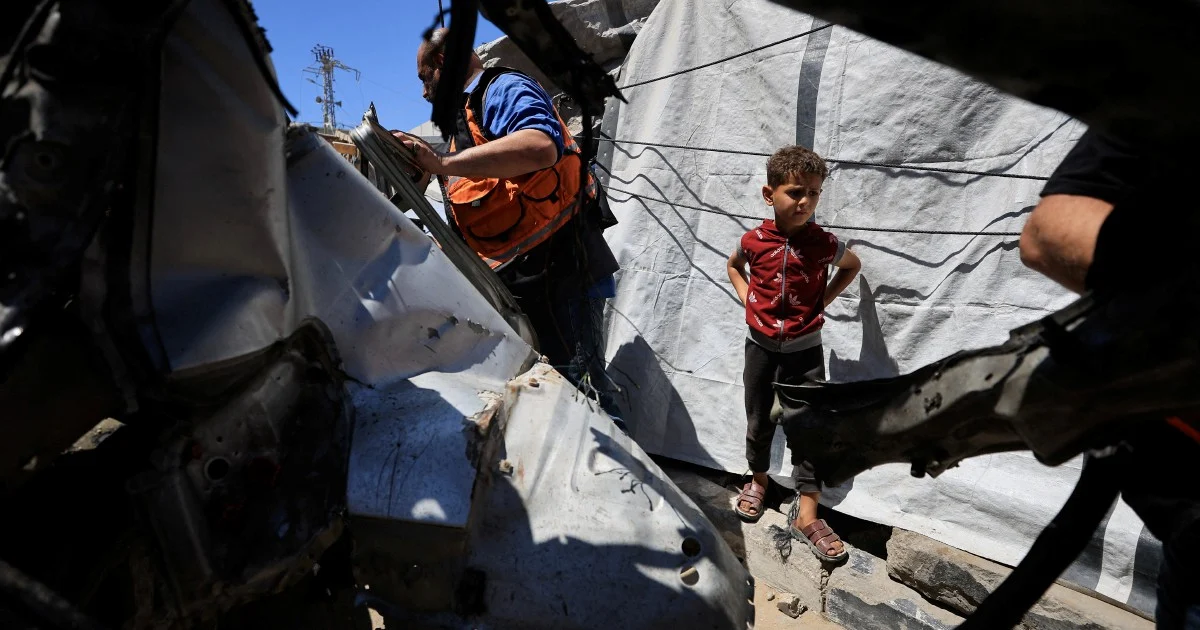
A United Nations investigative body released a damning report on Tuesday accusing Israel of systematically targeting Palestinian children in Gaza, framing such actions as a deliberate strategy within what the investigators characterise as genocide. The allegations represent one of the most serious charges levelled against Israel during the ongoing conflict, with the UN team asserting that the targeting of minors constitutes a central component of the broader pattern of mass violence unfolding in the territory.
The report, delivered in Geneva, documents what UN investigators describe as patterns of deliberate strikes against civilian infrastructure frequented by children, including schools and residential areas sheltering families. According to the investigators, this conduct goes beyond incidental casualties of armed conflict and instead reflects intentional operational decisions designed to cause maximum harm to Palestinian civilian populations, with children disproportionately affected by the violence.
Israel has rejected the UN findings with considerable force, disputing both the methodology and conclusions of the investigation. The Israeli government has consistently maintained that its military operations target legitimate objectives, including infrastructure and personnel affiliated with Palestinian armed groups, and that any civilian casualties result from the inherent challenges of combat rather than deliberate targeting policies. Israeli officials have argued that the UN investigation lacks credibility and reflects bias against the Jewish state.
The investigation adds to mounting international scrutiny regarding the humanitarian consequences of the conflict in Gaza. Over recent months, multiple human rights organisations and international bodies have documented widespread civilian casualties, displacement, and destruction of civilian infrastructure, raising questions about proportionality and necessity of military operations. The latest UN report intensifies diplomatic pressure on Israel while also highlighting the deep polarisation surrounding accountability for actions in the conflict zone.
For Malaysia and Southeast Asian nations, the report carries particular resonance given the region's Muslim-majority populations and growing sensitivity to humanitarian crises affecting Islamic communities. Malaysian civil society organisations and government statements have previously expressed concern over Palestinian civilian suffering, and this UN investigation is likely to amplify calls within the region for international intervention and stronger accountability mechanisms. The findings may influence regional positions on broader Middle Eastern diplomatic initiatives and international forums addressing conflict resolution.
The UN investigative team's characterisation of actions in Gaza as genocide reflects the organisation's application of the Genocide Convention definition, which requires proof of intent to destroy a group protected under international law. By framing the deliberate targeting of children within genocide allegations, investigators are asserting not merely that excessive force has been used, but that there exists a coordinated strategic intention to eliminate or severely diminish Palestinian populations. This represents an escalation in legal and moral charges compared to accusations of war crimes or crimes against humanity.
The investigation's focus on children as victims carries particular weight in international discourse, as the protection of minors holds near-universal ethical and legal standing across cultures and nations. Targeting children activates fundamental protective instincts in global public opinion and strengthens arguments for international intervention. The UN team's emphasis on this dimension appears calculated to underscore the severity of allegations and the urgency of international response.
The timing of the report coincides with ongoing diplomatic efforts by various international actors to broker ceasefires and humanitarian corridors in Gaza. While some nations have called for renewed negotiations, others have demanded accountability mechanisms before peace talks commence. The UN investigation may complicate diplomatic channels by raising the stakes for any future settlement agreements and creating expectations among some constituencies for prosecutions of Israeli officials.
Israel's rejection of the findings reflects broader disagreements about how to assess military conduct in conflicts involving non-state actors. Israeli analysts argue that Palestinian armed groups deliberately position weapons and personnel among civilian populations, thereby complicating targeting decisions and making civilian casualties inevitable. From this perspective, investigators should account for the tactical environment rather than attributing all civilian harm to intentional Israeli policy. However, international investigators counter that military necessity does not justify targeting decisions that disproportionately affect protected populations like children.
The investigation underscores fundamental tensions within the international legal system regarding conflict accountability. Wealthy and militarily powerful nations often resist external investigations into their military operations, viewing them as infringements on sovereignty and military autonomy. Conversely, investigative bodies and human rights advocates argue that international humanitarian law applies equally to all parties and that accountability mechanisms strengthen respect for law-based governance globally. These competing principles shape responses to the UN report across different national and ideological perspectives.
For regional stability, the UN findings may influence how Southeast Asian governments position themselves on Middle Eastern conflicts and multilateral institutions. Nations seeking to maintain balanced foreign policies may face pressure from both pro-Palestinian constituencies and international partners aligned with Israel. The investigation demonstrates how conflicts in distant regions can generate transnational consequences, affecting diplomatic relationships and domestic political dynamics across multiple continents.