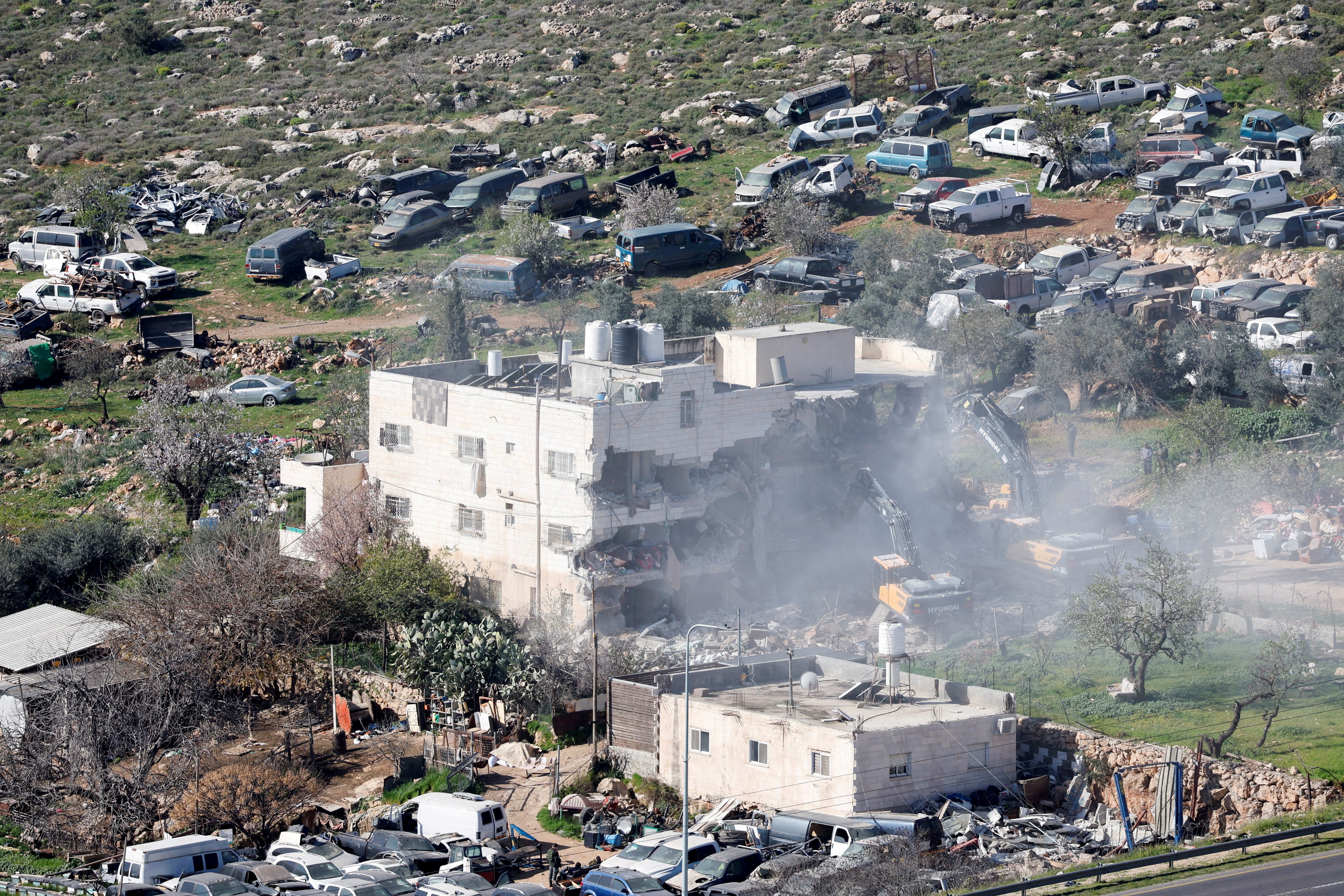
United Nations Secretary-General Antonio Guterres has raised fresh concerns about the establishment of new unlawful Israeli settlement outposts across the occupied West Bank, urging Israeli authorities to halt such expansion efforts immediately. Spokesman Stephane Dujarric conveyed the UN chief's alarm during a media briefing on Wednesday, emphasizing that Guterres views these developments as particularly troubling given their strategic implications for long-term peace prospects in the region.
The most pressing issue centres on the E1 settlement area, which occupies critical geographical territory between the northern and southern portions of the West Bank. Should Israeli settlement activities proceed in this zone, the consequences would effectively fragment Palestinian-controlled lands, severing vital connections that allow for free movement, economic activity, and administrative cohesion across the territory. This fragmentation threatens the viability of any future Palestinian state configuration and undermines the foundational premise upon which the two-state solution framework rests.
Guterres has explicitly called upon the Israeli government to refrain from any additional steps toward settlement expansion and to align its conduct with established United Nations resolutions. His position draws direct reference to the International Court of Justice advisory opinion released on July 19, 2024, which fundamentally addressed the legal status of Israel's presence in Palestinian territories. The court's pronouncement carries significant weight in international legal circles and provides the normative foundation for the UN chief's diplomatic pressure.
The ICJ's advisory opinion represents a landmark determination in the decades-long Israeli-Palestinian dispute. The court concluded that Israel's continued occupation of Palestinian territory constitutes an unlawful presence under international law. This finding carries profound implications beyond mere symbolic significance, as it establishes legal grounds for demanding concrete remedial action rather than accepting the status quo arrangement that has persisted for decades.
According to the court's reasoning, Israel bears a legal obligation to terminate its presence in occupied Palestinian territories at the earliest feasible opportunity. The opinion further stipulates that all new settlement construction must cease immediately, a directive that directly contradicts the reported expansion of illegal outposts that triggered Guterres' latest warnings. Additionally, the court mandated that settlers currently occupying Palestinian territories must be evacuated, and that Israel must provide comprehensive reparations compensating Palestinians for damages sustained through the occupation and settlement activities.
For Malaysian policymakers and Southeast Asian observers, the UN secretary-general's intervention reflects the persistent tensions between international legal norms and geopolitical realities in the Middle East. The situation illustrates how powerful nations can maintain territorial control despite adverse international court rulings, raising questions about the enforceability of international law and the credibility of global institutions. This precedent carries implications for how similar territorial disputes might develop in other regions, including potential flashpoints in Southeast Asia.
The timing of Guterres' statement comes amid broader international scrutiny of Israeli settlement policies, which successive UN bodies have repeatedly condemned as obstacles to peace negotiations. The establishment of new outposts represents a deliberate strategy to alter the physical and demographic landscape of the West Bank, effectively creating facts on the ground that complicate any future territorial arrangements. These settlements provide logistical anchor points for Israeli military and administrative control while simultaneously displacing Palestinian populations and confiscating Palestinian-owned land.
The E1 area holds particular strategic significance because of its location along the main route connecting Palestinian cities of Ramallah and Jericho. Control of this corridor has profound implications for Palestinian economic development, security operations, and the practical functioning of any future independent Palestinian administration. An Israeli-dominated settlement presence in E1 would allow occupying forces to maintain permanent military checkpoints and surveillance capabilities, effectively rendering Palestinian territorial contiguity theoretical rather than practical.
Guterres' emphasis on adherence to international court rulings underscores the UN's commitment to rule-based order in international relations. However, the gap between what international courts rule and what powerful states actually implement remains substantial. The secretary-general's repeated calls for compliance highlight this disconnect, serving notice that violations are documented and condemned even when enforcement mechanisms remain limited. For Southeast Asian nations navigating their own regional challenges, this dynamic raises important considerations about how international law operates in practice versus principle.
The Palestinian Authority and regional governments have long sought international intervention to curtail settlement expansion, viewing such projects as incompatible with peace negotiations. Each new outpost represents a consolidation of Israeli territorial claims and a corresponding reduction in territory available for Palestinian governance. The cumulative effect of these incremental advances has progressively narrowed the territorial options available for any negotiated Palestinian state, fundamentally reshaping the negotiating space over decades.
Guterres' statement reflects the UN's role as custodian of international legal norms and spokesperson for aggrieved populations lacking direct geopolitical power. By keeping these issues before the international community and anchoring criticism in legally binding court opinions, the UN maintains the premise that international law should govern state conduct. Whether such diplomatic pressure ultimately influences Israeli policy remains uncertain, but its continued expression affirms that settlement expansion does not occur without documented international opposition and legal contestation.

