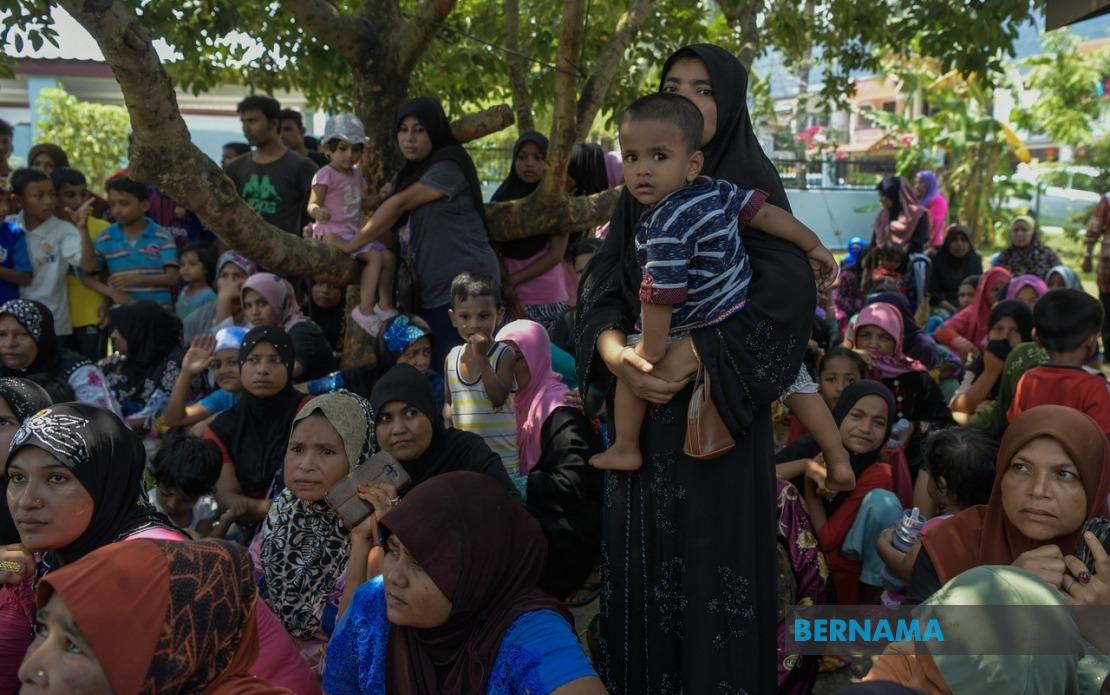
The Malaysian government has moved to dispel public misunderstandings about refugee documentation, with Economy Minister Datuk Akmal Nasrullah Mohd Nasir emphasising that possessing a UNHCR card carries no legal exemption from the nation's laws. Speaking during a briefing at the Parliament building, Akmal Nasrullah stressed that individuals holding such documentation remain fully subject to Malaysian legal jurisdiction, with the same investigative and enforcement procedures applied regardless of immigration status.
The clarification comes at a moment of heightened public concern surrounding refugee management across Malaysia. Recent discussions within government circles have highlighted anxieties about documentation authenticity, the operations of human trafficking networks, and broader implications for community safety. These preoccupations prompted the Home Ministry to present a comprehensive overview during today's National Economic Action Council meeting, chaired by Prime Minister Datuk Seri Anwar Ibrahim, addressing how Malaysia intends to manage its refugee population more effectively.
Central to the government's approach is the Refugee Registration Document Programme, commonly referred to as DPP, which represents a systematic overhaul of how asylum seekers are processed and monitored within Malaysian territory. This programme incorporates biometric registration technology, enabling authorities to capture fingerprints and facial recognition data for all individuals seeking protected status. Beyond initial registration, the system includes rigorous screening procedures designed to identify security risks, cross-referencing applicants against intelligence databases and criminal records maintained by both Malaysian and international law enforcement agencies.
The scope of enforcement operations has been considerably expanded to tackle interconnected criminal enterprises operating at Malaysia's borders and within urban centres. Authorities are intensifying efforts to dismantle smuggling rings that transport vulnerable people through dangerous and clandestine routes, while simultaneously cracking down on document falsification schemes that enable individuals to circumvent official immigration channels. These operations reflect recognition that refugee movements are frequently exploited by organised crime networks, creating secondary consequences including labour trafficking and sexual exploitation of vulnerable populations.
Technological infrastructure represents a cornerstone of this enforcement strategy. The government plans to deploy data analytics systems capable of processing large volumes of information collected through the biometric registration process, identifying patterns and anomalies that may indicate fraudulent documentation or criminal involvement. These systems will enable authorities to move beyond reactive responses to security threats, instead anticipating risks through predictive analysis. Monitoring technology will track movements and activities of individuals flagged during the screening process, supporting enforcement action and preventing those identified as security concerns from disappearing into informal economies.
Financial commitment to this expanded security architecture is substantial, with RM1.2 billion allocated across multiple government agencies for border control and security infrastructure. This funding supports equipment procurement, personnel training, and the establishment of additional screening facilities at entry points. The Malaysian Border Control and Protection Agency, which oversees operations at airports, seaports, and land crossings, is receiving accelerated resources to strengthen its capacity, reflecting government determination to reassert control over migration flows into the country.
The operational consolidation of border management represents an attempt to eliminate gaps in enforcement that may have previously permitted irregular entry or movement. By streamlining procedures across agencies, overlapping jurisdictions will be clarified, and coordination between immigration officers, customs personnel, and intelligence services will be enhanced. This integrated approach acknowledges that human trafficking and smuggling networks exploit bureaucratic inconsistencies and communication failures between organisations responsible for border security.
Beyond refugee-specific concerns, the government's broader policy framework extends to managing Malaysia's role within global supply chain disruptions. During the same National Economic Action Council meeting, officials discussed food security resilience and manufacturing sector capacity to absorb pressures created by international logistical constraints. These considerations reflect Malaysia's vulnerable position as a trading nation dependent upon reliable supply routes and stable commercial relationships with international partners, with refugee and migration issues increasingly intersecting with economic stability concerns.
The government's position reflects a balancing act between humanitarian obligations and domestic security imperatives. Malaysia hosts one of Southeast Asia's largest refugee populations, stemming from conflicts in Myanmar, Afghanistan, and Palestine, among other nations experiencing instability. Yet public sentiment has shifted toward greater restrictiveness, with concerns about labour market competition, crime rates, and infrastructure strain influencing political calculations. The clarification regarding UNHCR card status signals an attempt to address public anxiety while maintaining international credibility as a signatory to regional migration agreements.
For Malaysian employers and citizens, the implications are significant. Businesses employing individuals with UNHCR documentation cannot assume those employees operate outside legal frameworks protecting workers' rights or safety standards. Conversely, individuals claiming refugee status possess no special protection from prosecution if they violate Malaysian law. This clarity is intended to prevent exploitation by criminal networks claiming exemptions they do not possess, while simultaneously dispelling perceptions among the general population that refugees operate beyond legal accountability.

