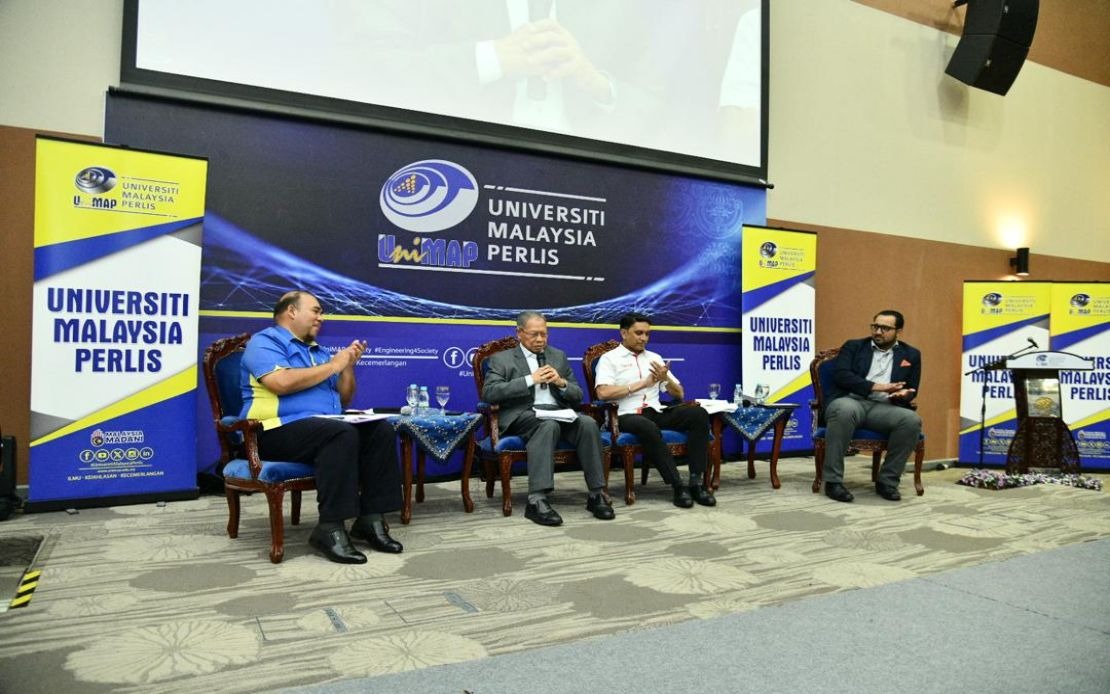
Universiti Malaysia Perlis (UniMAP) is positioning itself as a cornerstone institution in Malaysia's drive to build a formidable semiconductor workforce, churning out nearly 2,000 graduates each year who feed directly into the electrical and electronics sectors. This production capacity arrives at a critical juncture for the nation's ambitions in one of the world's most strategically important industries, where technical expertise and skilled labour form the bedrock of competitive advantage.
The university's commitment resonates with Malaysia's broader National Semiconductor Strategy, an ambitious policy framework that sets a target of nurturing 60,000 skilled workers and engineers across the sector by the end of the decade. For context, reaching this figure would require sustained growth in graduate output across multiple institutions, making UniMAP's annual contributions of nearly 2,000 professionals a substantial and measurable component of that pipeline. Vice-Chancellor Datuk Prof Dr Zaliman Sauli articulated this alignment during a major industry forum, signalling the institution's explicit alignment with national economic priorities.
Employment data underscores the effectiveness of UniMAP's alignment with industry demand. Graduate tracking results for 2024 and 2025 reveal that more than 30 per cent of the university's graduates begin their professional careers within the E&E sector itself, indicating that curriculum design and industry partnerships are successfully matching educational output with genuine job availability. This employment ratio matters because it demonstrates that UniMAP is not producing graduates destined for career misalignment or underemployment, but rather professionals immediately absorbed into their fields of study.
Semiconductors have transcended their traditional role as mere industrial components and have become foundational to virtually every dimension of contemporary technology. From the processors in smartphones and artificial intelligence systems to the power electronics in electric vehicles and the sophisticated infrastructure of data centres, semiconductors represent the invisible sinews binding the modern digital economy together. Malaysia's strategic interest in this sector therefore extends beyond manufacturing and exports to encompass its role in shaping future technological competitiveness and economic resilience.
Malaysia's existing position in global semiconductor manufacturing deserves recognition as a baseline from which further advancement can occur. The nation ranks as the world's sixth-largest semiconductor exporter, a standing that reflects decades of industrial development and investment. More granularly, Malaysian firms and facilities account for approximately seven per cent of global chip trade—a meaningful slice of a multi-hundred billion dollar market. Within the Assembly, Testing and Packaging (ATP) segment specifically, Malaysia holds a 13 per cent global market share, reflecting particular strength in the downstream processing stages of semiconductor production rather than purely upstream design and fabrication.
Beyond producing graduate numbers, UniMAP has deliberately woven industry partnerships throughout its institutional fabric. The university operates structured mechanisms for continuous dialogue between academic researchers, educators and commercial entities through Industry Advisory Panels, bringing practitioners into curriculum discussions. The Industry-on-Campus initiative physically embeds corporate partners and their operations within university settings, creating spaces where students encounter real problems and technologies before graduation. International Adjunct Professors bring global perspectives and current industry practices into classrooms. Professional certification programmes aligned with international standards ensure that graduates possess credentials recognised beyond Malaysia's borders, enhancing their mobility and the nation's technological reputation.
The semiconductor ecosystem thrives on collaboration extending beyond any single institution or company. Zaliman's public emphasis on triangular cooperation among government, industry and universities reflects an understanding that no actor can independently achieve the scale or speed required for Malaysia to consolidate and extend its semiconductor dominance. Government provides policy frameworks and infrastructure investment; industry contributes capital, expertise and employment; universities supply trained talent and research capability. When these three forces coordinate effectively, they create positive feedback loops where rising graduate quality attracts better employers, which in turn demand higher educational standards.
The policy forum where these comments were delivered brought together influential voices from multiple sectors. Datuk Seri Dr Mustapa Mohamed, former International Trade and Industry Minister, carries institutional memory of Malaysia's trade and industrial development strategy. Datuk Mohamad Haris Kader Sultan of the Northern Corridor Implementation Authority represents regional development interests, suggesting that semiconductor advancement is framed not as a Klang Valley monopoly but as a distributed opportunity across northern Malaysian regions. Ahmed Zaki Moten of Micron Technology Inc Malaysia—a major player in global semiconductors—adds the perspective of multinational capital and global supply chain integration.
Microsoft and other technology giants have publicly signalled their massive appetite for semiconductor capacity as artificial intelligence proliferates globally. This creates unprecedented demand for skilled labour across design, fabrication, testing, packaging and supply chain management. Malaysia's position as a leading ATP hub means the nation could capture significant employment and economic value if it maintains workforce quality and availability. The risk is that if other competitors develop comparable skills more rapidly, Malaysia could face competitive erosion despite its historical advantages.
For Malaysian policymakers, the strategic calculation involves ensuring that educational institutions like UniMAP receive sustained support to expand graduate output without compromising quality. It also requires retention mechanisms so that freshly trained engineers do not migrate permanently to higher-wage jurisdictions, a challenge that affects many developing economies. UniMAP's explicit focus on industry partnership and international certification suggests awareness of these tensions, positioning graduates for both domestic employment and competitive positioning in global labour markets.
The semiconductor sector's capital intensity and technological sophistication mean that Malaysia cannot rely on cheap labour as a sustainable competitive advantage. Instead, the nation must continuously upgrade the skill and knowledge intensity of its workforce. UniMAP's nearly 2,000 annual graduates represent a substantial investment in that upgrading, though the National Semiconductor Strategy's target of 60,000 workers by 2030 indicates that the nation recognises the need to cultivate talent through multiple educational pathways and institutions simultaneously.
Looking ahead, UniMAP's trajectory and sector demand create a convergent opportunity. If the university maintains its current graduate output while gradually increasing the proportion entering semiconductor careers, and if other Malaysian institutions similarly enhance their contributions, the nation could credibly approach its 2030 workforce target. This would position Malaysia not merely as a manufacturing location for semiconductors designed elsewhere, but as a source of skilled problem-solvers capable of engaging across the entire value chain—from design innovation to production optimisation to supply chain resilience.

