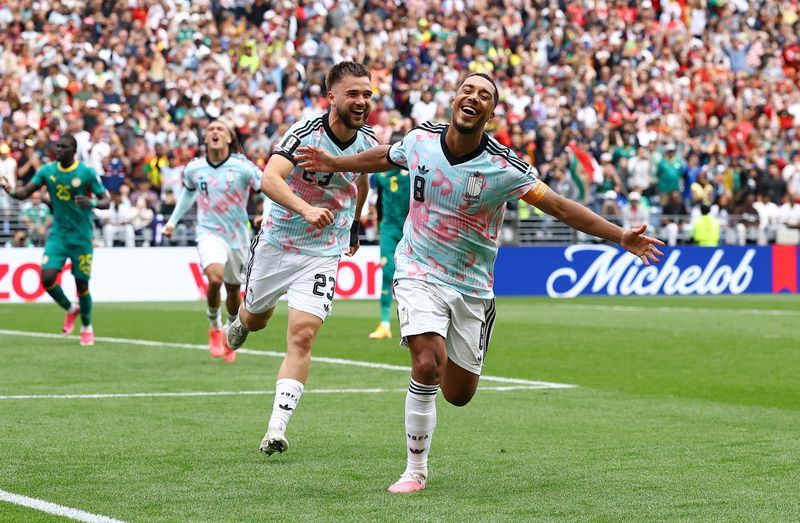
The United States enters a pivotal World Cup knockout encounter against Belgium in Seattle this week with confidence levels markedly higher than anticipated before the tournament began. The match, scheduled at the Seattle Seahawks' home venue—renowned for its deafening crowd noise—represents a critical juncture for Mauricio Pochettino's squad, which has exceeded early forecasts for how far the team might progress in this competition.
Before the World Cup commenced, most American supporters regarded qualification for the round of 16 as a satisfactory achievement. The squad carried historical baggage and defensive concerns into the tournament, with critics questioning whether the backline could withstand pressure from elite attacking units. Yet the progression through the group stage has fundamentally altered perceptions both domestically and internationally. Victories against Paraguay and Australia, followed by a commanding 2-0 triumph over Bosnia in which the Americans managed to maintain their advantage despite playing the final 36 minutes with a numerical disadvantage, have emboldened the entire nation's sporting hopes.
This narrative shift carries genuine significance for the United States' footballing profile in a nation where soccer remains secondary to gridiron football and basketball. A deeper tournament run would substantially elevate the sport's visibility and investment potential. The impressive defensive resilience on display against Bosnia—a performance that contradicted pre-tournament assessments of vulnerability at the back—has become a cornerstone of American optimism heading into the knockout phase. Pochettino's tactical adjustments and personnel decisions have drawn praise from analysts and supporters alike.
Belgium approaches the same fixture with considerably less momentum and certainty. The European contingent has struggled to convince observers despite advancing from their group. Their passage past Senegal involved considerable fortune and controversy, as the Belgians trailed through much of that encounter before equaling the score with two late strikes. The ultimate deciding moment came through a VAR-assisted penalty award in extra time, a decision that generated considerable frustration in the Senegal camp and raised questions about Belgium's capacity to overcome organized, determined opponents.
The Belgian delegation carries the weight of representing what many regard as a final World Cup opportunity for the nation's decorated "Golden Generation." Kevin De Bruyne, Romelu Lukaku, and Thibaut Courtois remain formidable talents, but their peak years are inevitably contracting. This tournament may represent the last realistic chance for these players to add a World Cup medal to their already substantial career achievements. That context adds emotional and competitive dimensions beyond the immediate match at hand.
From a tactical perspective, the American defensive unit will face its sternest test to date against a Belgian attack boasting genuine quality. Jeremy Doku represents a particular concern for the U.S. backline, despite the young winger's relatively subdued tournament so far. Doku possesses the technical brilliance and pace capable of troubling even the most organized defenses, and a breakout performance could prove decisive. The upcoming match will fundamentally test whether American improvements in defensive organization constitute a sustainable progression or merely a temporary phase coinciding with favorable matchups.
The historical precedent adds additional intrigue to the encounter. In 2014, Belgium eliminated the United States in the round of 16 in Brazil, a match defined by Tim Howard's extraordinary goalkeeping display that produced 16 saves—still a record for any knockout-stage encounter. Despite that remarkable individual performance, the Americans ultimately fell short despite mounting a late rally that suggested untapped potential. That defeat has lingered in American football consciousness as a near-miss opportunity, a match that might have marked a turning point had the outcome differed.
Complications have emerged regarding personnel availability. Folarin Balogun, who proved instrumental in the Bosnian encounter with an early goal, received a red card in the second half of that same match. His suspension removes a key attacking option precisely when Pochettino must navigate critical selection decisions. The American manager faces challenging choices regarding how to maintain attacking threat while compensating for the absent striker's absence, a dilemma that could shape tactical approaches significantly.
Midfielders like Tyler Adams have articulated the squad's broader ambitions. Adams spoke candidly about the team's desire to "leave a mark on the game and a legacy behind," reflecting an awareness that unexpected success in major tournaments carries lasting cultural resonance. The midfielder's observation that advancing further will generate increased national interest captures the symbiotic relationship between on-field performance and sporting popularity in the American context.
For Malaysian and Southeast Asian observers, this fixture carries relevance beyond the immediate sporting narrative. American success internationally influences global investment in football infrastructure and professional pathways. Conversely, Belgian progression would reflect the enduring advantages that European federations maintain in player development systems and competitive depth. The outcome will influence broader discussions about competitive balance in international football and whether emerging football nations can genuinely challenge traditional powerhouses.
The Seattle venue's acoustical properties will undoubtedly provide tangible advantage to the home team, creating an environment where communication becomes difficult and composure increasingly valuable. Belgium's experience navigating high-pressure environments across multiple continents will be tested against crowd intimidation tactics that major tournament venues routinely employ.
Ultimately, this encounter transcends a simple knockout fixture between two capable national teams. For the United States, it represents validation of progress and confirmation that ambitions beyond early-round participation were justified. For Belgium, it offers an opportunity to prove that group-stage struggles reflected circumstances rather than underlying vulnerability. The result will significantly influence both nations' football trajectories and shape narratives about competitive direction for years ahead.

