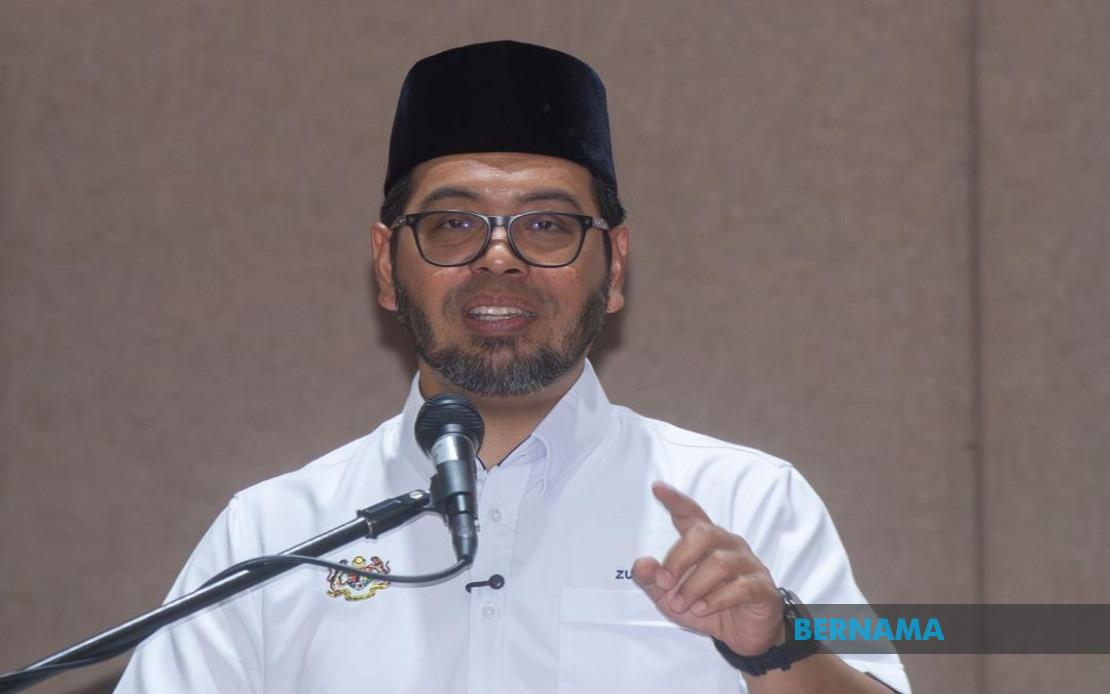
Religious Affairs Minister Dr Zulkifli Hasan has warned that couples living in unregistered unions across Malaysia face cascading consequences that extend far beyond their immediate circumstances, with the most vulnerable being their children. Speaking in Labuan during the launch of the 2026 Federal Territories Syariah Law Literacy Programme, Dr Zulkifli emphasised that the failure to formalise marriages through proper legal channels creates a web of practical and legal complications that can haunt families for generations.
The most immediate casualties of unregistered marriages are children, who encounter formidable barriers when attempting to obtain fundamental identity documents. A birth certificate is not merely a bureaucratic formality but a gateway to accessing essential services and rights. Without one, children find themselves locked out of the education system, unable to enrol in schools and prevented from receiving formal qualifications. Healthcare providers similarly struggle to deliver appropriate care when a child's legal status remains undefined, with vaccination records, medical histories, and emergency protocols all becoming unnecessarily complicated. The consequences ripple through childhood and into adulthood, creating a documented underclass whose very existence remains partially invisible to state institutions.
Dr Zulkifli highlighted the persistent reality that numerous couples continue to live as husband and wife for decades without ever registering their unions formally. Some have married across state boundaries, while others have conducted ceremonies through unauthorised registrars who operate outside the framework established by the Islamic Family Law (Federal Territories) Act 1984. These arrangements, while perhaps emotionally and religiously significant to those involved, carry no legal standing and leave families entirely unprotected by statutory provisions. The minister's acknowledgement of this phenomenon suggests that the problem remains sufficiently widespread to warrant dedicated intervention rather than remaining a peripheral concern.
Questions of lineage and identity represent another dimension of harm inflicted by unregistered marriages. When no official record exists of a union, children inherit not just emotional uncertainty but legal ambiguity regarding their parentage and standing within the family structure. This ambiguity can cast doubt on succession rights, complicate citizenship applications, and create opportunities for future disputes over legitimacy and inheritance. The emotional toll of such uncertainty, combined with practical difficulties navigating bureaucratic systems designed for legally recognised families, can leave children perpetually disadvantaged.
Wives themselves suffer material deprivation under unregistered arrangements. Without formal recognition, a spouse cannot effectively claim maintenance payments (nafkah) from her husband, leaving her financially vulnerable if the relationship deteriorates or he fails to provide. Similarly, claims for 'mutaah'—a form of financial compensation owed to a divorced woman—become impossible to enforce when no marriage contract exists in official records. A woman abandoned by her partner has no legal recourse, no way to compel financial support, and no institutional backing for her claims to basic sustenance.
The complexity intensifies when death enters the picture. Inheritance disputes that follow a family member's passing become nightmarish when marriage registration remains incomplete. Islamic inheritance law, or 'faraid', operates within a framework that assumes formal recognition of familial relationships. When such recognition is absent, determining who qualifies as a surviving spouse, which children inherit as legitimate heirs, and how an estate should be divided becomes mired in contention. These disputes frequently escalate into protracted family conflicts, draining resources and creating permanent rifts within extended family networks.
Dr Zulkifli's framing of the government's intervention is notably conciliatory. Rather than presenting marriage registration as a punitive enforcement exercise, the minister characterised the approach as supportive and facilitative. The government's aim, he stated, centres on helping families resolve outstanding registration issues and addressing verification problems comprehensively. This softly-softly approach reflects recognition that many couples in irregular situations do not deliberately seek to flout the law but may lack awareness, face language barriers, or have encountered obstacles when attempting to register. The government's provision of interactive counters staffed by trained officers represents an attempt to lower barriers to compliance and make the registration process more accessible.
The 2026 Federal Territories Syariah Law Literacy Programme demonstrates a whole-of-government approach to marriage registration. The initiative draws support from multiple agencies including the Labuan Member of Parliament's Office, the Federal Territories Syariah Court, the Federal Territories Islamic Religious Department (JAWI), the Federal Territories Islamic Religious Council (MAIWP), the Legal Aid Department, the Federal Territories Mufti Department, Tabung Haji, and the Yayasan Pembangunan Ekonomi Islam Malaysia (YAPEIM). This institutional coordination suggests the issue transcends any single agency's mandate and requires aligned action across religious, legal, and social service sectors.
Dr Zulkifli's emphasis that compliance with Syariah law represents protection rather than burden attempts to shift public perception of religious legal requirements. Many individuals may view marriage registration requirements as restrictive bureaucratic impositions. By reframing them as safeguards against disputes, mechanisms for protecting vulnerable family members, and tools for ensuring children's welfare, the government seeks to increase voluntary compliance and cultural acceptance. This framing aligns with broader Malaysian efforts to integrate religious law into the fabric of family protection rather than presenting it as an external constraint imposed upon citizens.
For Malaysia's Muslim population, this initiative carries particular significance. The Federal Territories, encompassing Kuala Lumpur, Labuan, and Putrajaya, remain subject to the Islamic Family Law (Federal Territories) Act 1984, which establishes specific procedures for marriage registration and recognition. Similar frameworks exist across Malaysian states, though administered by different authorities and sometimes with varying requirements. The literacy programme's emphasis on educating residents about these legal obligations and available support mechanisms suggests that awareness gaps significantly contribute to non-compliance. Many couples may simply not understand the consequences of remaining unregistered or may not be fully cognisant of available registration procedures and assistance.
The initiative carries implications extending beyond the Federal Territories themselves. Malaysia's diverse population and complex jurisdictional arrangements around religious and family law mean that similar registration problems likely persist across multiple states. Other state governments and religious authorities may observe the Federal Territories' systematic approach and adopt comparable measures. The success or otherwise of this programme could therefore influence how other jurisdictions address marriage registration deficits and family law compliance more broadly across the nation.
For families currently navigating unregistered marriages, the government's message is clear: assistance exists, officials stand ready to help, and the path to regularising one's situation, though perhaps administratively burdensome, remains open. As Dr Zulkifli emphasised, the future wellbeing of Malaysian families—particularly their children—depends on bringing these arrangements into the formal legal framework where rights can be protected, disputes can be resolved through established channels, and family security can be genuinely safeguarded rather than perpetually undermined by legal invisibility.

