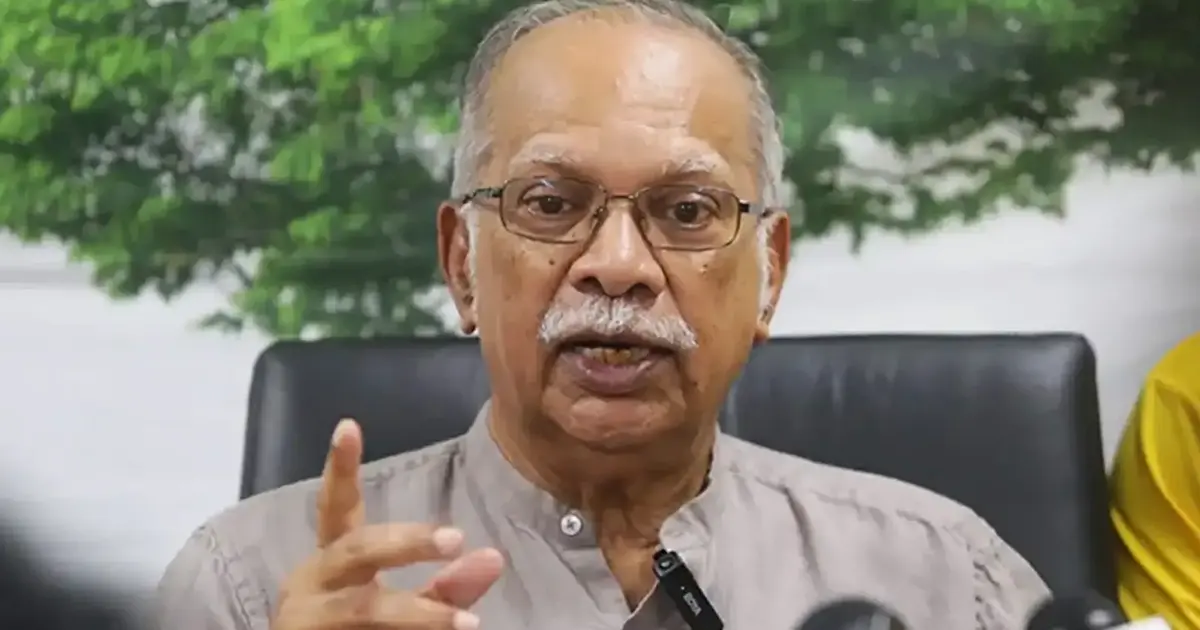
The Perikatan Nasional coalition faces mounting uncertainty after its latest emergency gathering failed to confront the fundamental question of Bersatu's place within the opposition alliance, according to Urimai chairman Ramasamy. The failure to tackle this critical issue head-on risks prolonging the political instability that has plagued the three-coalition since its formation, leaving stakeholders and observers increasingly anxious about the bloc's viability and direction.
Ramasamy's assessment cuts to the heart of a deeper malaise afflicting PN—the absence of a decisive framework for resolving disputes among its constituent parties. By sidestepping Bersatu's status during yesterday's meeting, coalition leaders appear to have opted for a strategy of managed avoidance rather than confrontation, a tactic that typically backfires in volatile political coalitions. The longer such fundamental questions remain unaddressed, the more likely unilateral actions and backdoor negotiations will proliferate, further eroding institutional coherence.
The widening chasm between Bersatu and PAS represents perhaps the most destabilising dynamic within PN. These two parties bring vastly different constituencies, ideological inclinations, and regional bases to the coalition. PAS maintains strong grassroots support in rural areas and among conservative Muslim voters, while Bersatu traditionally drew from urban and suburban demographics. Their competing visions for PN's future direction, coupled with historical mistrust, have created friction that superficial statements of unity cannot easily overcome.
Bersatu's predicament is particularly acute because the party's fate within PN will significantly influence the broader Malaysian political landscape. As a swing actor that has previously navigated between government and opposition, Bersatu's positioning carries disproportionate weight. Whether the party remains committed to PN, explores alternative alignments, or stakes out an independent course could reshape parliamentary mathematics and alter the balance of power between competing blocs. This uncertainty paralyses decision-making across the coalition.
The emergency meeting itself signals that PN's leadership recognises crisis conditions, yet the gathering apparently produced no substantive outcomes. This disconnect between acknowledging problems and implementing solutions is characteristic of coalitions beset by fundamental disagreements about shared direction. Without clear protocols for resolving such disputes or mechanisms for enforcing decisions, emergency meetings often become theatrical exercises that temporarily calm nervous members but solve nothing concrete.
Ramasamy's intervention as Urimai chairman—representing civil society perspectives—carries additional significance because it suggests growing concern beyond the parties themselves. When external observers publicly criticise coalition management, it indicates that PN's dysfunction has become visible enough to attract scrutiny from the broader political ecosystem. This visibility amplifies pressure on PN, even as internal dynamics remain frozen by competing interests and mutual suspicion.
The implications for Malaysian governance are substantial. A functioning opposition coalition serves as essential democratic machinery, providing parliamentary counterweight and presenting voters with credible alternative policy frameworks. When that opposition grows dysfunctional, the entire system suffers. PN's current trajectory suggests it may be heading toward fracture rather than consolidation, which would further fragment opposition politics and potentially entrench whatever government currently holds office by default.
For Southeast Asian observers, PN's instability offers a cautionary lesson about coalition politics in contexts where party-switching, defection, and rapid realignment are common. Unlike established Western multiparty systems where coalition partners maintain relatively stable identities and electoral bases, Malaysian coalitions must constantly renegotiate their internal contracts. The absence of binding institutional mechanisms for conflict resolution leaves these arrangements perpetually vulnerable to unravelling.
Bersatu's unresolved status also creates tactical complications for PN's parliamentary operations. Party members remain uncertain whether they should coordinate fully with PAS and other coalition partners, or maintain strategic distance pending clarification of their long-term alignment. This ambiguity translates into inconsistent voting patterns, unreliable bloc discipline, and reduced effectiveness in challenging government legislation or advancing opposition alternative proposals.
Moreover, the cost of procrastination extends to Bersatu itself. By remaining in limbo, the party cannot develop clear messaging to its supporters about its identity, values, and political trajectory. Members grow demoralised by uncertainty, potential recruits question the party's viability, and strategic partners—whether within or outside the coalition—hesitate to commit resources to collaboration. The party essentially treads water while competitors consolidate their positions.
The underlying question that yesterday's meeting should have addressed directly concerns PN's governance model. Does the coalition operate as a federal structure where members retain autonomy, or as an integrated alliance requiring submission to collective decisions? How are disputes between major partners arbitrated? What leverage does each party possess to enforce compliance? Without transparent answers, each disagreement reopens these foundational questions and threatens the entire architecture.
Ramasamy's diagnosis points toward the uncomfortable reality that PN may lack the institutional maturity or political will to function as an effective opposition coalition. Either these fundamental questions must be directly confronted through difficult negotiations and potential compromise by all parties, or PN will continue its slow dissolution through accumulated unresolved tensions. The political cost of continued avoidance grows steeper with each passing week.