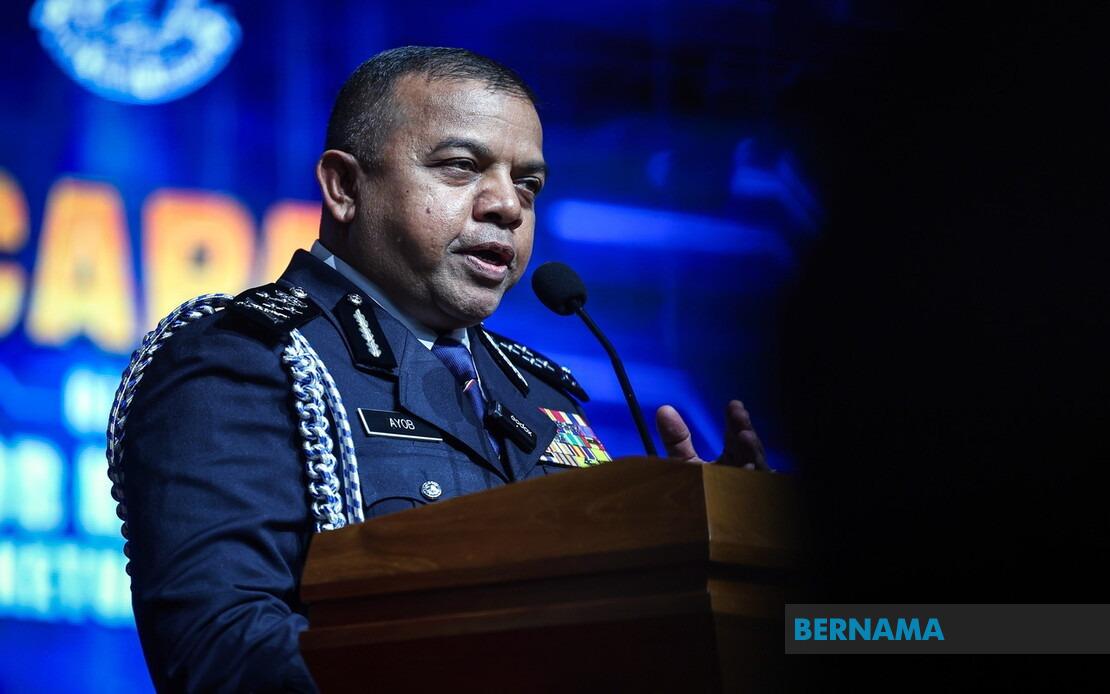
Tan Sri Ayob Khan Mydin Pitchay concluded nearly 35 years of service with the Royal Malaysia Police on Thursday with a poignant reminder to all personnel: maintain the force's integrity regardless of external scrutiny. Speaking during a handover ceremony at the Police Training Centre here, the retiring Deputy Inspector-General delivered what amounted to a clarion call for ethical governance within the PDRM, emphasising that institutional honour must supersede individual interests. His remarks came as Datuk Seri Ibrahim Darus officially assumed the role of Acting Deputy Inspector-General, with Inspector-General Tan Sri Mohd Khalid Ismail presiding over the transition.
Ayob Khan's farewell message resonated beyond ceremonial pleasantries, touching on the psychological and moral dimensions of police work that often remain unspoken in formal settings. He acknowledged the weight of institutional legacy, reminding officers that the force was built through the sacrifice and dedication of fallen comrades whose memory demanded respectful stewardship. This perspective underscores how institutional degradation affects not just operational capacity but the dignity of those who served before and those who continue to serve. His warning against tainting the institution's reputation carries particular weight in Malaysia's current policing landscape, where public confidence in the force has fluctuated amid periodic controversies.
The core thrust of his address centred on the distinction between public and private conduct—a theme increasingly relevant to discussions about institutional corruption. Ayob Khan stressed that integrity must be maintained not merely when visibility is high but especially in moments of solitude and absence of oversight. This emphasis reflects a deeper understanding that true ethical conduct emerges from internal values rather than external enforcement. The notion that "it is not about who we are when praised, but who we are when no one is looking" serves as a challenge to those tempted by the latitude that authority provides. Such framing moves beyond prohibition into the realm of character development, suggesting that institutional reform begins with individual moral anchoring.
In practical terms, Ayob Khan's exhortation against specific misconduct patterns—selling dignity for money, using power to suppress the vulnerable, and pursuing personal advancement through institutional resources—addresses perennial challenges facing police forces across Southeast Asia. Malaysia's PDRM has faced periodic scrutiny regarding corruption within its ranks, making his departure message a timely intervention. By naming these transgressions explicitly, he signalled that awareness of institutional vulnerabilities need not be swept aside in ceremonial transitions. Rather, acknowledging such risks transparently might strengthen resistance to them.
The spiritual dimension Ayob Khan introduced through his invocation of Allah's omniscience represents a significant rhetorical choice for a public figure. His statement that "humans may not see, superiors may not know, but Allah always sees" anchors ethical conduct in a framework that transcends organisational hierarchy and human fallibility. For a Muslim-majority force within an Islamic state, this appeal to divine accountability potentially carries more persuasive weight than secular ethical frameworks alone. It also reflects how Malaysian institutional leadership increasingly weaves religious principles into governance narratives, for better or worse.
Ayob Khan's career trajectory provides context for understanding his parting words. Having served as Johor Police Chief, headed the Narcotics Crime Investigation Department, and directed the Bukit Aman Criminal Investigation Department before elevation to deputy inspector-general in June 2023, he occupied positions where integrity failures would have been most visible and damaging. His progression through these sensitive portfolios without apparent scandal suggests he practised what he preached, lending credibility to his final message. The relatively brief tenure as Deputy Inspector-General—approximately one year—may have shaped the urgency with which he distilled his professional philosophy.
The timing of his retirement and message also carries implications for Malaysia's broader police reform agenda. With leadership transitions come opportunities to reset institutional priorities and expectations. Ayob Khan's emphasis on values rather than procedures suggests that true police modernisation involves cultivating organisational culture alongside structural reform. His successor, Ibrahim Darus, inherits not merely administrative functions but also the burden of sustaining this renewed emphasis on ethical foundations. The challenge will lie in whether such exhortations translate into concrete policy changes or remain inspiring rhetoric.
From a regional perspective, Ayob Khan's concerns about police integrity resonate across Southeast Asia, where many forces grapple with similar pressures regarding corruption, abuse of authority, and the corrosive effects of impunity. Malaysia's police leadership publicly affirming these principles, even at the point of retirement, signals commitment to standards that transcend short-term political convenience. This matters for international relations and the PDRM's standing within regional law enforcement networks. It also sets implicit expectations for successor appointments and institutional conduct going forward.
The balance Ayob Khan struck between acknowledging genuine hardships of police work—family separation, thankless labour, unappreciated service—and maintaining uncompromising ethical standards deserves emphasis. Rather than portraying integrity as costless virtue, he recognised that ethical conduct often demands personal sacrifice. This honesty about the difficulty of upholding standards while serving under pressure adds weight to his call for unwavering commitment. It validates the genuine sacrifices officers make while refusing to permit sacrifice as excuse for misconduct.
Moving forward, the test of Ayob Khan's legacy will be whether his farewell message catalyses substantive change within PDRM culture or fades into the institutional memory of transition ceremonies. His appointment as Acting Deputy Inspector-General, Ibrahim Darus, will face scrutiny regarding how effectively he embeds the ethical emphasis Ayob Khan articulated. Whether specific anti-corruption mechanisms, training protocols, and accountability structures align with this renewed commitment to integrity will ultimately determine whether the farewell address represented a genuine watershed moment or eloquent closure to an honourable career.

