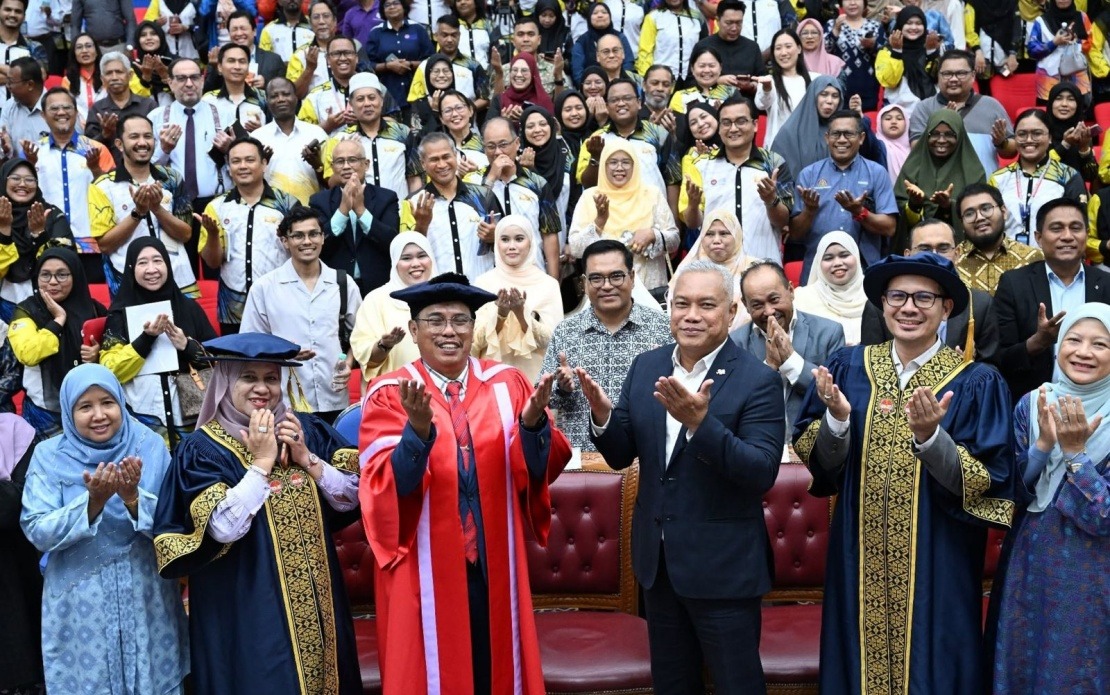
Universiti Pendidikan Sultan Idris (UPSI) is actively exploring possibilities to establish a private specialist hospital within its Tanjong Malim campus as a cornerstone initiative in transforming the educational institution into a comprehensive knowledge-based ecosystem. Vice-chancellor Prof Datuk Dr Md Amin Md Taff revealed the strategic endeavour, which reflects the university's forward-thinking approach to addressing contemporary healthcare demands whilst creating an integrated campus environment that extends beyond traditional academic offerings.
The proposed facility represents a pragmatic response to the growing medical requirements of UPSI's diverse student body and workforce, particularly its expanding international contingent. By bringing specialist healthcare services directly to campus, the university aims to eliminate accessibility barriers whilst establishing a modern medical infrastructure that aligns with evolving institutional aspirations. This positioning is significant for Malaysian higher education, where campus-integrated healthcare remains relatively uncommon outside major metropolitan centres, potentially setting a precedent for other regional universities seeking to enhance student welfare provisions.
The university's planning process remains in preliminary stages, with administrators currently evaluating various operational approaches and potential partnerships. UPSI is investigating whether existing private hospital operators might be willing to establish or relocate operations to Tanjong Malim, either utilising university land or establishing independent facilities within the vicinity. This consultative phase is crucial, as it allows institutional leadership to assess market viability, identify compatible business models, and determine whether the venture can achieve financial sustainability whilst maintaining its primary educational mission.
Md Amin emphasised that this healthcare initiative forms part of UPSI's broader strategic framework for creating supporting infrastructure that serves contemporary community needs. Rather than operating in isolation, the specialist hospital would function as one component within a larger vision of comprehensive campus development, reflecting international best practices where universities serve as anchors for economic and social development within their regions. For Tanjong Malim specifically, this approach could catalyse broader community benefits, potentially attracting healthcare professionals and generating employment whilst establishing the district as a secondary medical hub within Perak.
Beyond immediate healthcare objectives, UPSI is simultaneously developing long-term retention strategies for retired academic and administrative staff, envisioning specialised retirement communities integrated within the campus environment. This parallel initiative reveals institutional thinking about lifecycle engagement, where former employees remain connected to the university through purpose-built facilities. The proposed retirement resort concept acknowledges demographic realities within Malaysian higher education, where staff longevity means universities will increasingly house and care for ageing employee populations whilst potentially creating marketable lifestyle offerings.
The combined hospital and retirement facility developments signal UPSI's transition from a primarily educational institution towards a multifaceted community anchor. This evolution reflects global trends where universities function as economic drivers, healthcare providers, and integrated urban developments rather than insular academic centres. For Southeast Asian higher education, such transformations carry particular significance given rapid urbanisation and the increasing expectation that universities contribute visibly to regional prosperity and quality of life improvements.
For Malaysian policymakers and educational stakeholders, UPSI's initiative offers valuable lessons about institutional innovation and resource optimisation. By leveraging campus assets and institutional credibility to attract healthcare investment, the university potentially reduces direct government expenditure on medical infrastructure whilst improving provision in secondary cities. This model could encourage similar ventures among other university systems, particularly in regions where private healthcare investment remains limited due to perceived market constraints.
The private specialist hospital concept also addresses a documented healthcare disparity across Malaysia, where specialist services concentrate disproportionately in metropolitan areas. The Tanjong Malim location, whilst not remote, currently offers limited specialist medical options, creating a accessibility gap for surrounding communities. A UPSI-affiliated facility could partially address this imbalance whilst generating economic activity through patient flows and employment, strengthening the district's development trajectory during a period when many secondary Malaysian cities seek diversification beyond agriculture and light manufacturing.
Implementation timelines and capital requirements remain unstated, suggesting administrators are still in exploratory rather than committed phases. This cautious approach proves prudent given the substantial investment required for specialist hospital operations, regulatory complexities within Malaysia's healthcare licensing framework, and the necessity of establishing clear boundaries between university functions and commercial medical operations. Successful execution will require negotiating with relevant health authorities, securing appropriate financing, and identifying operators with proven track records in Malaysian private healthcare markets.
The initiative also raises interesting questions about UPSI's competitive positioning within Malaysia's higher education landscape. By developing distinctive campus amenities like specialty healthcare and retirement facilities, the institution differentiates itself from competitors, potentially influencing student recruitment decisions and staff retention rates. This strategy acknowledges that contemporary students and their families increasingly evaluate universities based on comprehensive lifestyle offerings rather than purely academic credentials, particularly among international cohorts accustomed to campus-integrated services.
For regional Southeast Asian universities, UPSI's approach demonstrates how institutions can leverage their geographic and institutional assets creatively during periods of constrained public funding. Rather than limiting functions to teaching and research, forward-thinking universities increasingly explore ancillary services that generate revenue, serve broader communities, and create distinctive institutional identities. As Malaysia's higher education sector matures and competition intensifies, such strategic innovations likely become increasingly prevalent among institutions seeking sustainable competitive advantages and meaningful community impact beyond their campuses' physical boundaries.

