The Upper Rajang Development Agency (URDA) is embarking on a comprehensive initiative to reshape the rural economy across Sarawak's interior regions through strategic partnerships focused on technology adoption and market-driven innovation. The agency's leadership has signalled a fundamental shift in development philosophy, moving beyond traditional reliance on primary commodity production toward building sustainable income streams anchored in research, knowledge transfer, and value-chain development.
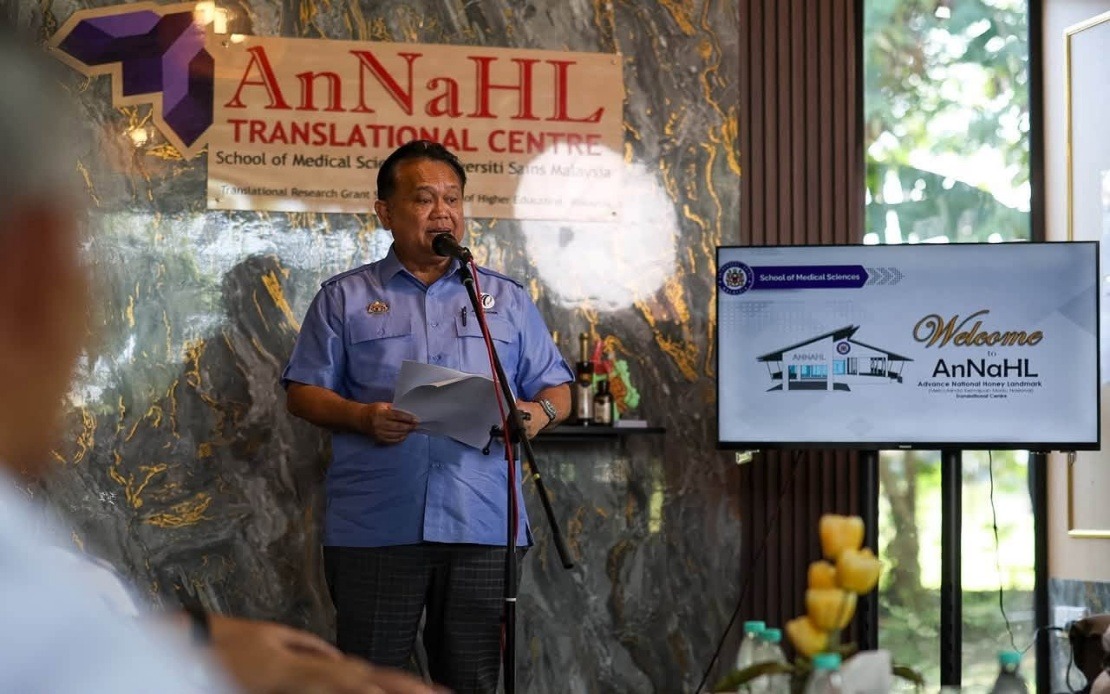
Datak Seri Alexander Nanta Linggi, URDA's chairman and Kapit Member of Parliament, articulated this strategic reorientation during a recent visit to the Advanced National Honey Landmark (AnNaHL) Translational Centre at Universiti Sains Malaysia's Health Campus in Kubang Kerian, Kelantan. His remarks underscored recognition that rural prosperity cannot be achieved through raw material extraction alone. Instead, deliberate investment in community capacity building, technological competence, and market connectivity must underpin regional development planning. This represents a departure from earlier development models that prioritised resource extraction at the expense of long-term livelihood sustainability.
Central to URDA's approach is the integration of higher education institutions as active economic partners rather than peripheral research centres. Nanta emphasised that universities possess untapped potential to translate academic research into commercially viable community enterprises. When academic inquiry is deliberately aligned with grassroots economic needs and supported by coordinated government implementation, the outcome transcends theoretical innovation to generate tangible livelihood transformation. This conceptualisation positions academic institutions as crucial nodes within rural development networks rather than isolated knowledge repositories.
The High Impact Community Projects (HICP) framework provides empirical validation for this development model. Participating communities have achieved average income increases exceeding 25 per cent, demonstrating that structured investment in research application, skills transfer, and technology adoption produces measurable economic outcomes. These results provide evidence that rural communities, when equipped with appropriate knowledge infrastructure and market access, can substantially improve income generation and economic resilience. The success metrics suggest potential scalability across Upper Rajang's various communities.
The delegation visit to AnNaHL represents concrete operationalisation of this partnership vision. The centre functions as a specialised hub for processing, training, and commercial development of stingless bee products—a high-value agricultural commodity increasingly recognised across Southeast Asia's premium food and pharmaceutical sectors. Stingless bee cultivation presents particular relevance for Sarawak's interior regions, where ecological conditions support sustainable apiary operations and where traditional knowledge of bee management exists within indigenous communities. The centre's infrastructure enables community producers to transition from subsistence-level production to commercially scaled operations with quality certification and market positioning.
Kapit parliamentary constituency has been identified as a focal point for these initiatives. Multiple communities within the constituency are being mobilised for high-impact community projects emphasising stingless bee production alongside complementary agricultural and value-added activities. This geographic concentration allows for coordinated resource deployment, streamlined technical support, and development of localised supply chains that strengthen inter-community economic linkages. The concentrated approach facilitates knowledge diffusion and peer learning across participating communities.
The collaboration between URDA and the Regional Corridor Development Authority (RECODA) reflects recognition that rural development transcends individual agency mandates. Coordinated institutional action across development authorities enhances programme coherence and resource efficiency. Such inter-agency partnerships become particularly critical when implementing initiatives requiring simultaneous attention to infrastructure development, skills training, market development, and quality assurance—dimensions typically fragmented across separate government agencies. The joint delegation signifies commitment to breaking departmental silos that historically constrained integrated rural development outcomes.
Market access constitutes a critical development lever that URDA's approach deliberately prioritises. Technological competence and production capacity remain insufficient without assured pathways to consumers. Stingless bee products command premium pricing in domestic and regional markets, particularly within health-conscious consumer segments in Malaysia, Singapore, and beyond. By positioning communities within formal marketing and distribution channels, URDA ensures that production investments translate into sustainable income rather than stagnating inventories. The AnNaHL centre's emphasis on marketing development alongside processing capability reflects this integrated market orientation.
The emphasis on knowledge transfer and skills development addresses a critical constraint limiting rural economic transformation. Many interior communities possess traditional ecological knowledge and resource access but lack contemporary business management competence, quality standardisation understanding, and digital marketing capability. URDA's framework deliberately bridges this knowledge gap through university partnerships that embed ongoing professional development within community enterprises. This iterative capacity-building approach creates sustained competitive advantage rather than one-time technology injection.
The strategic choice of stingless bee products as a development focus reflects sophisticated understanding of global agricultural trends and regional competitive positioning. Traditional honeybees require significant infrastructure investment and present management challenges in tropical forest environments. Stingless bee species native to Southeast Asia thrive in indigenous agroforestry systems and require minimal external input. Their products command global premium pricing due to distinctive medicinal and nutritional properties increasingly documented through scientific research. This commodity positioning enables Sarawak's interior communities to participate in high-value agricultural chains aligned with global wellness trends rather than competing within commodity markets dominated by large-scale operations elsewhere.
For Malaysian policymakers and development practitioners, URDA's model offers instructive lessons regarding rural economic transformation in the digital age. The integration of academic institutions, strategic government coordination, market-focused commodity selection, and deliberate capacity building creates development pathways more sustainable than earlier infrastructure-focused or commodity-subsidy approaches. As Malaysia navigates post-pandemic economic adjustment and seeks to reduce regional development disparities, similar innovation-anchored models merit broader replication across Peninsular Malaysia's interior regions and other federal territories facing comparable development challenges.
The coming months will determine whether URDA's strategic vision translates into sustained community economic improvement. Success requires consistent institutional commitment, adequate resource allocation, effective community participation, and sustained market development. Early results from AnNaHL's operations and expanding stingless bee initiatives will provide important indicators of whether this innovation-driven approach genuinely delivers the transformative rural development outcomes that current policy rhetoric promises.

