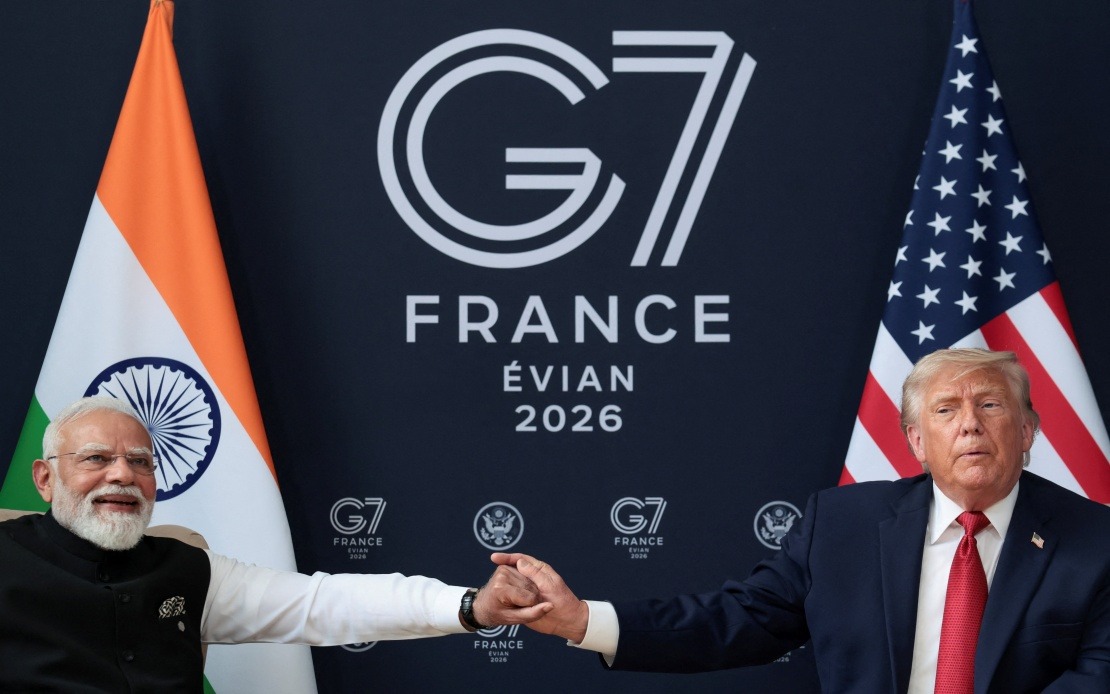
India has signalled substantial momentum in its long-running trade negotiations with the United States, with both governments instructing officials to accelerate efforts towards completing a comprehensive interim agreement. The announcement came following discussions between Indian Prime Minister Narendra Modi and US President Donald Trump at the Group of Seven summit held in Evian, France on Wednesday, marking a public show of confidence in the stalled talks that have dragged on for months.
In a statement issued by India's External Affairs Ministry, the two leaders expressed particular satisfaction with the headway achieved during negotiations, framing the discussions as moving towards an arrangement that would prove mutually beneficial and commercially substantive for both economies. The language employed signals a shift from previous impasses, suggesting that technical teams have identified common ground on several contentious issues that had previously halted progress. Both administrations have now mandated their officials to work expeditiously toward finalising the agreement, underscoring political commitment at the highest levels.
The timing of the announcement carries significance for Southeast Asia and the broader Indo-Pacific region, where trade relationships remain sensitive to geopolitical shifts. A US-India agreement would reshape regional commercial dynamics and influence how smaller economies position themselves within existing trading blocs. Malaysia, Thailand, and other regional nations have long watched US-India negotiations closely, recognising that outcomes could either expand or constrain their own trading opportunities with Washington and New Delhi.
US Trade Representative Jamieson Greer will undertake a visit to India in the coming week, a development that underscores the practical momentum behind the diplomatic rhetoric. Such official visits typically precede substantive breakthroughs, as trade representatives usually travel only when frameworks have been substantially resolved and final details require high-level bilateral coordination. The timing suggests negotiators have moved beyond preliminary discussions into concrete bargaining phases.
Trump characterised Modi as an exceptionally formidable negotiator during their G7 encounter, remarking that the Indian Prime Minister ranks among the toughest dealmakers he has encountered. The US President employed colourful language to underscore Modi's bargaining acumen, noting that while the Indian leader may present a benign exterior, his negotiating stance proves uncompromising. Such public acknowledgment of Modi's negotiating prowess carries subtle diplomatic weight, potentially signalling Trump's respect for India's willingness to defend its economic interests firmly.
The backdrop to these negotiations involves considerable complexity and past friction. Earlier this year, the two nations had reached an interim trade agreement that resulted in the US reducing certain tariff rates to 18 per cent, representing a moderation from earlier levels. However, Trump's broader tariff regime, implemented in 2025, imposed blanket 25 per cent duties on Indian imports while simultaneously applying an additional 25 per cent penalty specifically targeting Indian purchases of Russian oil. These measures created substantial economic pressure on India, incentivising New Delhi to pursue faster resolution of the broader bilateral trade framework.
The oil-related tariff component carries geopolitical implications that extend beyond simple commerce. India's energy imports from Russia have become economically crucial as New Delhi has sought cost-effective alternatives to Middle Eastern and African sources. The additional penalty imposed by Trump effectively penalises India for its independent energy policy and its refusal to fully align with Western sanctions regimes against Russia. Any interim agreement will likely need to address this punitive measure, either through outright removal or through structured reductions over time, making this a particularly contentious negotiating element.
For Malaysian observers, the trajectory of US-India talks warrants careful attention. Accelerated completion of their agreement could prompt Washington to intensify negotiations with other regional partners, potentially including Malaysia. Alternatively, if the US secures favourable terms from India through its tariff leverage, Washington may apply similar pressure tactics to other trading partners, creating both risks and opportunities for Malaysian exporters. The precedent established through these talks will likely inform how Trump's trade team approaches subsequent bilateral arrangements across Southeast Asia.
India's willingness to engage earnestly in these negotiations reflects broader strategic calculations. Beyond immediate tariff relief, New Delhi views a comprehensive US trade agreement as part of its larger Indo-Pacific positioning strategy, where economic ties with Washington reinforce security cooperation and counterbalance Chinese influence. The successful conclusion of trade talks would strengthen this multi-faceted relationship and provide India with additional leverage in regional forums where it competes for influence with Beijing.
The emphasis on achieving a "balanced, mutually beneficial, and commercially meaningful" agreement in both nations' statements suggests they have learned lessons from previous trade agreements that produced lopsided outcomes. Rather than pursuing maximal individual advantage, both sides appear to recognise that sustainable trade arrangements require genuine reciprocal benefits. This framing reflects maturation in how major powers approach commerce in an era of rising protectionism and decoupling pressures.
Completion timelines remain uncertain despite the optimistic rhetoric. While officials have been instructed to move swiftly, trade agreements of substance typically require months of detailed technical work, regulatory coordination, and parliamentary or congressional review. The Greer visit will likely establish specific benchmarks and deadlines, but actual implementation could extend well into the latter half of the year.
For ASEAN nations including Malaysia, a functioning US-India trade relationship offers potential stabilising effects in the region. Demonstrated economic cooperation between Washington and New Delhi could reinforce multilateral trading systems and reduce the likelihood of escalating trade wars that would inflict collateral damage on smaller economies. Conversely, any breakdown in talks would reinforce perceptions of rising protectionism and isolationism, potentially accelerating some nations' efforts to pivot toward alternative trading blocs or bilateral arrangements with China.