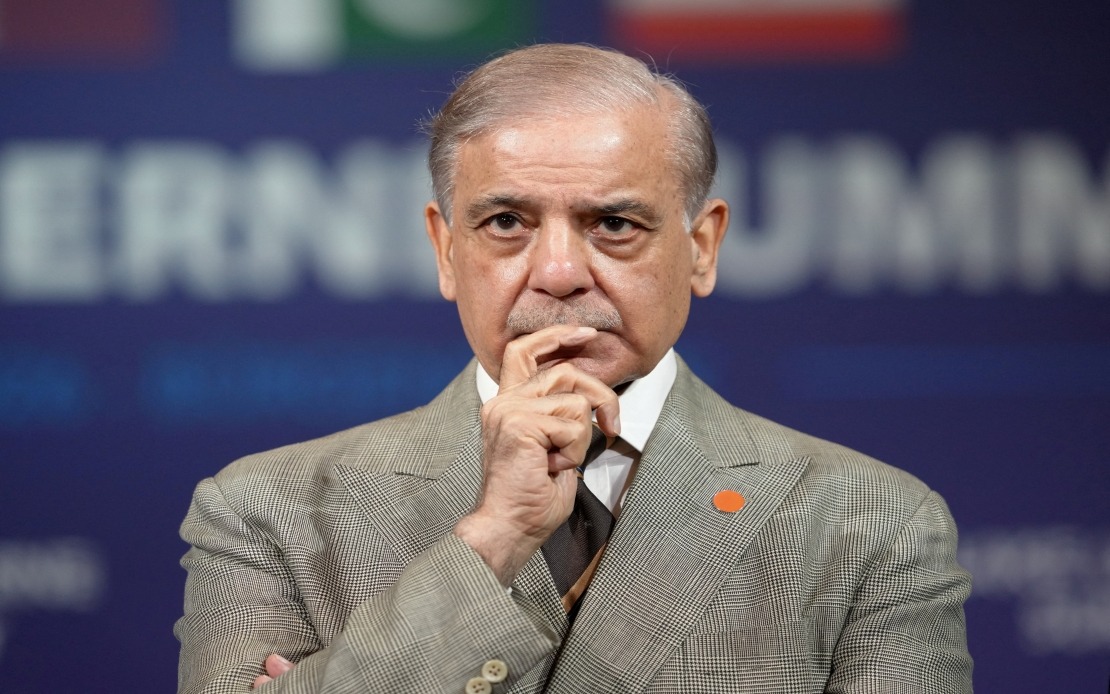
Pakistan's Prime Minister Shehbaz Sharif has disclosed that the United States and Iran have committed to intensive negotiations over the coming two months, with the goal of transforming a recently signed preliminary accord into a comprehensive, long-term arrangement. Speaking to Pakistan's National Assembly in Karachi on Tuesday, Sharif outlined the ambitious timeline and substantive agenda that emerged from the recent round of diplomatic engagement in Switzerland, signalling what both nations characterise as meaningful progress toward resolving years of tension and sanctions-related disputes.
The framework underpinning these discussions is the Islamabad Memorandum of Understanding, which Washington and Tehran inked on June 17, with Pakistan serving as an official mediator alongside Qatar. The MoU represents a rare moment of mutual commitment to dialogue on issues that have long divided the two countries, including Iran's nuclear programme, its ballistic missile capabilities, and the matter of Iranian assets that remain frozen under international sanctions regimes. For Malaysia and other Southeast Asian nations maintaining economic ties with both parties, the implications of these negotiations extend to broader questions of regional stability and the potential easing of sanctions that have disrupted international commerce.
During his parliamentary address, Sharif expressed optimism that the current 60-day window would prove decisive in transforming the preliminary understanding into a durable agreement. His framing of this period as critical reflects awareness that early momentum in complex negotiations can dissipate without concrete progress. The technical-level discussions envisaged during this phase suggest that both sides intend to move beyond rhetorical positions toward the granular work of hammering out verifiable commitments, inspection protocols, and mechanisms for dispute resolution. This shift toward operational detail represents a meaningful escalation from initial confidence-building measures to the substance of what a permanent deal might entail.
The talks held in Burgenstock, Switzerland, which concluded early Monday, have been characterised by both Pakistan and the negotiating parties as historically significant. The involvement of Pakistan and Qatar as mediators underscores the regional dimensions of the dispute and the importance placed on trusted intermediaries with standing in both capitals. Pakistan's role is particularly noteworthy given its own complex relationship with Iran and its strategic partnership with the United States, positioning Islamabad as a credible broker in this high-stakes engagement. For observers in Southeast Asia, Pakistan's prominent mediation role highlights how regional powers beyond the Middle East are shaping outcomes that could reverberate globally.
However, significant obstacles remain. Iran's Foreign Ministry swiftly issued a statement on Tuesday asserting that its ballistic missile programme was not part of the Switzerland negotiations and will not be placed on the table for discussion. Foreign Ministry spokesman Esmaeil Baghaei made explicit that Tehran views its missile capabilities as a matter of national sovereignty and deterrence, distinct from nuclear issues. This categorical position creates a potential fault line in the negotiations, as the United States has long sought constraints on Iran's missile development as integral to any comprehensive agreement. The divergence between Sharif's characterisation of the agenda and Iran's formal position suggests that considerable interpretative distance remains between the parties.
Baghaei also rejected any scenario in which International Atomic Energy Agency inspectors would be granted access to Iranian nuclear facilities that have previously been targeted by American and Israeli military action. This stance signals Iranian unwillingness to permit international scrutiny of certain sensitive installations, a position that directly conflicts with verification mechanisms typically insisted upon by Western powers in nuclear non-proliferation agreements. The refusal to allow IAEA access to targeted sites may reflect both security concerns and legal positions rooted in Iranian sovereignty arguments, yet it represents precisely the kind of verification gap that has historically derailed nuclear accords in this region.
The frozen assets question constitutes another complex dimension. Iran has for decades sought the release of billions in assets held abroad, primarily due to sanctions imposed after the 1979 revolution and subsequent designations following the 2015 Joint Comprehensive Plan of Action negotiations. The United States, conversely, has used asset freezes as leverage in negotiations and as tools for addressing other grievances, including alleged Iranian support for militant groups across the Middle East. Resolving this issue requires not only bilateral agreement but potentially coordination with multiple jurisdictions holding Iranian funds, complicating an already intricate negotiation.
For Malaysia and the broader Asian region, the stakes in these negotiations extend beyond the immediate US-Iran dispute. A successful conclusion could facilitate increased trade, investment flows, and stability in a region that supplies critical energy resources and maritime transit routes affecting Asian economies. Conversely, a failure in these talks risks renewed tensions, potential military escalation, and further economic disruption through sanctions and counter-sanctions cycles. Malaysian policymakers and businesses with interests in energy markets, shipping, or regional trade have direct interests in how these 60 days unfold.
The Islamabad MoU framework itself reflects evolving patterns of regional diplomacy in the Muslim-majority world, with Pakistan and Qatar positioning themselves as constructive mediators rather than aligning rigidly with either Washington or Tehran. This approach mirrors Malaysia's own historical inclination toward non-alignment and pragmatic engagement across geopolitical divides. The success or failure of this mediated process may establish precedents for how other regional disputes are managed in coming years.
Sharif's public pronouncements on the timeline and substance appear designed to build political space for compromise by both sides, highlighting progress already achieved while setting realistic expectations for the challenges ahead. His emphasis on the 60-day window creates both an opportunity and a deadline—sufficient time for serious negotiation but compressed enough to maintain urgency. The prime minister's personal investment in publicly championing these talks reflects Pakistan's strategic interest in regional stability and its desire to maintain credibility with both the United States and Iran.
The coming two months will reveal whether the technical-level discussions can bridge the substantive gaps separating the parties on missiles, nuclear facility access, and frozen assets. The divergence between Pakistani characterisations of the negotiating agenda and Iranian clarifications on what remains off-limits suggests that careful diplomatic interpretation will be required to prevent misunderstandings from derailing progress. Observers across Asia will be watching closely to discern whether this round of engagement represents a genuine turning point or merely another episode in the protracted cycle of confrontation and tentative dialogue that has long characterised US-Iran relations.