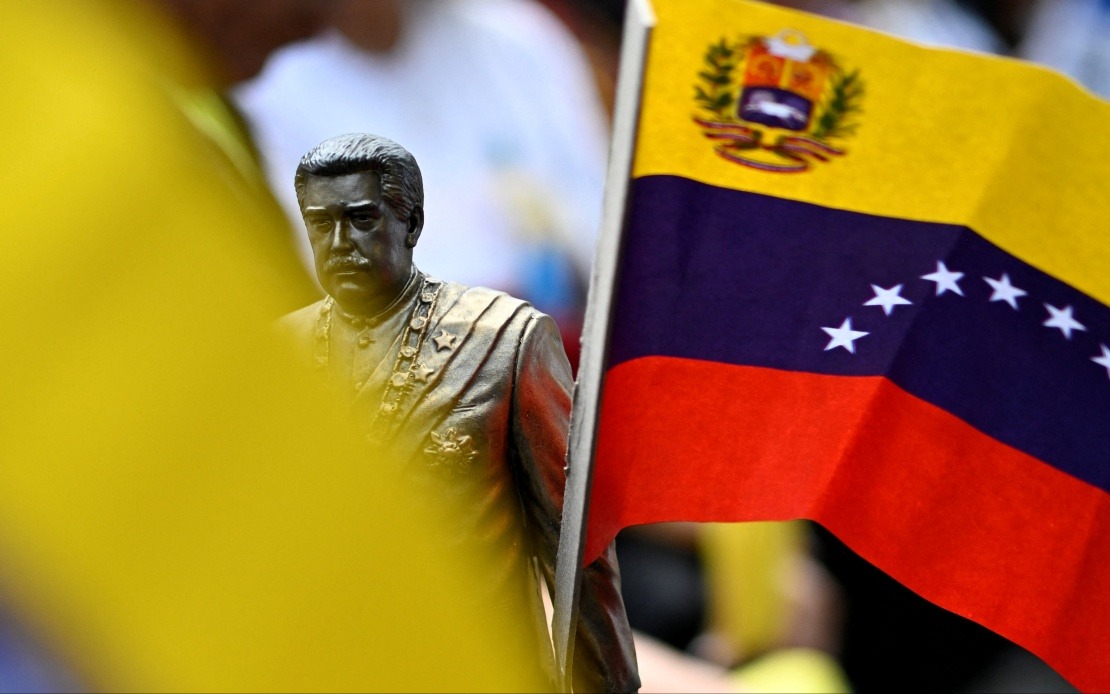
A United States federal judge has set June 1, 2027, as the trial date for Venezuelan President Nicolas Maduro and his wife Cilia Flores, marking a significant milestone in one of the most contentious legal proceedings involving a sitting head of state in recent memory. Judge Alvin Hellerstein issued the ruling during a brief 15-minute hearing in a New York courtroom on Wednesday, following requests from both the prosecution and defence to establish a concrete timeline for the high-profile case. The couple, who have pleaded not guilty to charges of drug trafficking and firearms violations, made their third appearance before the judge since their controversial detention began in January.
The circumstances surrounding Maduro's capture have drawn widespread international criticism and raised fundamental questions about the limits of US jurisdiction and military power abroad. On January 3, American military forces conducted what officials described as a large-scale operation against Venezuela, during which they forcibly apprehended Maduro and Flores in Caracas before transporting them to New York for prosecution. Since their seizure, the couple has remained detained at the Metropolitan Detention Centre in Brooklyn, where they have been held under strict security conditions for more than six months. This detention has become a focal point for protests both within the United States and among international observers who question the legality of the action.
Maduro's legal defence team, led by attorney Barry Pollack, has signalled its intention to mount a vigorous challenge to the charges through procedural means rather than by contesting the factual allegations directly. Pollack indicated that the defence will pursue a motion challenging the indictment on grounds of sovereign immunity, arguing that as the sitting president of Venezuela, Maduro enjoys legal protections that shield him from prosecution in foreign courts. If this argument succeeds, the defence contends that Maduro would be released and the entire case would effectively collapse without ever reaching trial. This legal strategy reflects the fundamentally novel nature of the prosecution, which operates in territory where international law remains murky and contested.
The January military operation that precipitated these charges shocked governments and civil society organisations across the globe, triggering a wave of official protests and diplomatic complaints. Many nations, including traditional American allies, expressed concern about the unilateral use of military force to apprehend a foreign leader without any apparent international legal framework or consensus supporting the action. The operation stands in sharp contrast to established international norms governing relations between sovereign states and raises troubling questions about whether military might can supersede diplomatic channels and judicial cooperation mechanisms that normally govern such situations.
For Malaysia and other Southeast Asian nations, the case carries particular significance as it relates to broader principles of sovereignty and non-interference that form the foundation of the ASEAN framework. The incident demonstrates how geopolitical tensions can escalate into direct military action and underscores the vulnerability of smaller nations to the military capabilities of larger powers. Regional observers have watched the unfolding legal drama with concern, recognising that if such military interventions become normalised, it could fundamentally alter the international rules-based system that provides stability for smaller countries in the region.
Protest activity surrounding the trial has grown increasingly visible as the case progresses. On Wednesday, demonstrators assembled outside the heavily fortified Manhattan courthouse, voicing demands for Maduro's immediate release and opposition to American military interventions in foreign territories. Allison Gunderson, a participant in the demonstrations from Minneapolis, articulated the core argument of those challenging the legitimacy of the prosecution, describing it as persecution of a sovereign nation's leader following what she characterised as an illegal kidnapping operation. The protesters represent a diverse coalition of anti-war activists, left-wing political groups, and those concerned with broader questions of international law and American foreign policy.
Tom Burke, who serves on the steering committee of the Anti-War Action Network, expressed the perspective that the seizure, detention, and prosecution collectively violate established international legal principles. Burke employed provocative but deliberately stark language to describe American conduct, likening it to armed robbery and suggesting that global observers have lost confidence in the integrity of the United States government as a result of such actions. His comments reflect frustration among activist circles that the operation represents precisely the kind of unilateral military action that international law ostensibly prohibits, yet which powerful nations can undertake with minimal consequence.
American political commentator Sara Flounders observed that Wednesday marked the 200th day since Maduro's detention began, treating the milestone as a symbolic moment for reflection on broader patterns of American military and political interventions. Flounders drew explicit connections between the Venezuela operation and historical US actions toward other nations, particularly Iran and Cuba, suggesting that this case represents a continuation of longstanding American policies toward adversarial governments in the Western Hemisphere. Her framing attempts to situate the Maduro prosecution within a larger narrative of American imperialism and extra-legal power projection, emphasising that protest movements view this single case as emblematic of systemic problems in how the United States exercises global influence.
The timeline established by Judge Hellerstein means that the case will remain in legal limbo for nearly three years, during which time the defence will pursue its sovereign immunity challenge and potentially mount additional preliminary motions. The extended period before trial provides opportunity for diplomatic pressure to mount, for international opinion to crystallise, and for potential political changes in the United States that could affect how vigorously the prosecution pursues the charges. The Venezuelan government and its international allies will likely intensify efforts to challenge the legitimacy of the proceedings through diplomatic channels and international organisations.
For Maduro and Flores personally, the June 2027 date represents both a legal hurdle and a potential endpoint to their detention, assuming the trial proceeds as scheduled and the couple is not released through preliminary motions. The case will unfold against a backdrop of ongoing Venezuelan political turbulence, with the couple's fate intertwined with broader questions about Venezuela's political future and the international community's response to the country's governance challenges. The trial will inevitably examine whether the drug trafficking allegations that form the technical basis for the prosecution can withstand scrutiny, or whether the proceedings will be perceived primarily as a political prosecution dressed in the language of criminal law.
The broader implications of this case extend far beyond the immediate fates of the defendants. The prosecution tests the outer boundaries of American criminal jurisdiction over foreign leaders and challenges fundamental principles of sovereign immunity that have governed international relations for centuries. The eventual outcome, whether through dismissal on immunity grounds or through conviction on the merits, will send powerful signals about the future of such prosecutions and whether military seizure of foreign leaders can become a normalised tool of American foreign policy.

