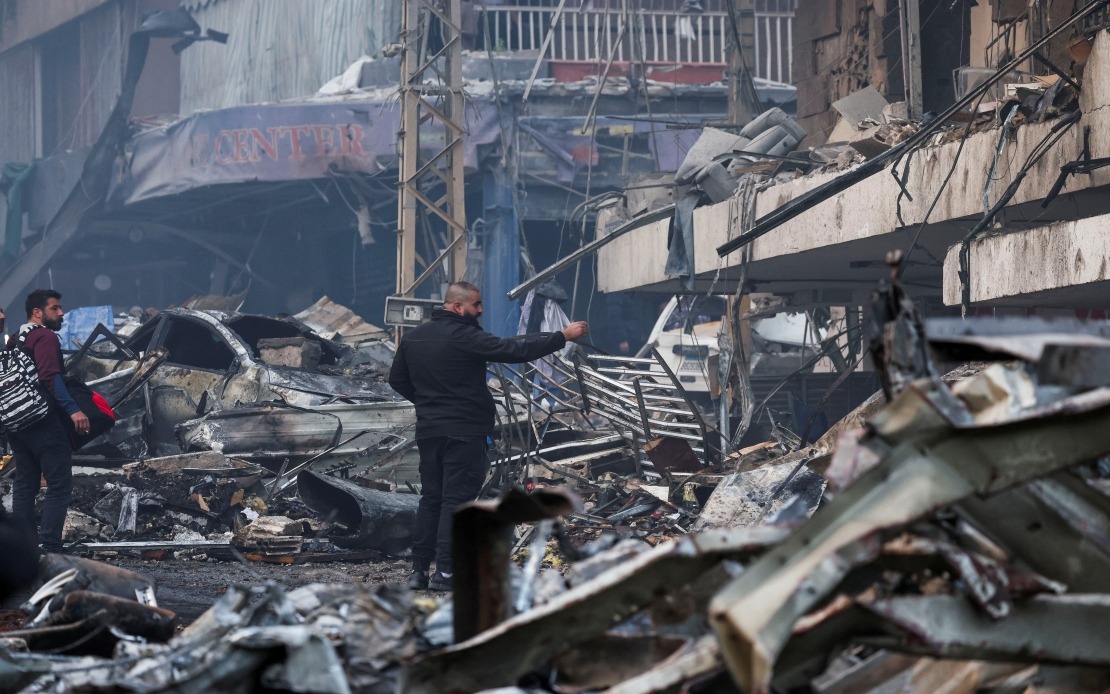
The United States has activated a military surveillance system designed to monitor hostilities between Israel and Hezbollah across Lebanon on a continuous basis, according to announcements made by American officials on Monday. The initiative represents a significant escalation in direct American involvement in mediating the long-running dispute, moving beyond traditional diplomatic channels to incorporate real-time operational oversight through the Pentagon's Central Command structure. This development underscores Washington's commitment to preventing a resumption of large-scale violence while negotiations proceed toward establishing a more durable political settlement between the two parties.
The decision to implement this monitoring apparatus follows a series of high-level telephone conversations conducted on Friday between US Secretary of State Marco Rubio, Israeli Prime Minister Benjamin Netanyahu, and Lebanese President Joseph Aoun. During these discussions, the officials focused specifically on reinforcing the existing ceasefire arrangement and mapping out the parameters for subsequent diplomatic engagements. American officials characterised the talks as instrumental in moving the process forward, though they declined to provide additional specifics about the surveillance system's precise operational methodology or the specific metrics it would use to assess compliance with ceasefire terms.
According to an anonymous US government spokesperson, the fundamental objective underpinning these coordinated efforts remains straightforward: dismantling the established cycle of military escalation that has plagued the Lebanon-Israel relationship for decades. The statement emphasised that Washington views its principal function as facilitating conditions whereby both Israel and Lebanon can engage as independent sovereign entities capable of negotiating directly with one another. This framing is significant because it positions American mediation as a framework-building exercise rather than as a substitute for direct bilateral engagement, a distinction that reflects lessons learned from previous regional peace initiatives.
Delegations from both the Lebanese and Israeli governments were scheduled to arrive in Washington beginning June 23, with negotiations continuing through June 25 under American auspices. These talks represent a critical juncture in the diplomatic process, as they provide the first opportunity for officials from both sides to convene in the American capital since the monitoring mechanism was formally announced. The presence of these official delegations suggests that despite the surface-level hostilities, both parties harbour sufficient interest in a negotiated resolution to commit time and political capital to sustained engagement.
Parallel diplomatic initiatives underway demonstrate the complexity of the regional security environment and the multiple international stakeholders invested in Lebanon's stability. Qatar and Pakistan, acting as co-mediators, issued a joint statement on Sunday outlining their agreement to establish a specialised "de-confliction cell" bringing together representatives from the United States, Iran, and Lebanon. This trilateral mechanism operates under the framework established in the Islamabad Memorandum of Understanding and is explicitly designed to enforce compliance with the cessation of military operations across Lebanese territory. The involvement of Iran reflects the geopolitical reality that no sustainable peace arrangement in Lebanon can ignore Tehran's significant influence over Hezbollah, which remains the organisation's primary patron and military supplier.
The broader diplomatic context involves a landmark memorandum of understanding that the United States and Iran remotely signed in the preceding week, initiating a 60-day period during which negotiators from both nations will work toward resolving several outstanding disputes. This agreement, encompassing 14 distinct provisions, addresses issues ranging from Iran's uranium enrichment activities and nuclear programme advancement to freedom of navigation through the Strait of Hormuz and removal of American naval restrictions on Iranian commerce. The agreement's emphasis on an immediate and permanent cessation of military operations across all fronts, including Lebanon specifically, demonstrates how the Lebanon conflict has become embedded within the broader US-Iran strategic competition.
For Malaysian observers and regional policymakers, these developments carry significance beyond their immediate Middle Eastern context. The establishment of American military monitoring infrastructure in the Levantine theatre signals a shift toward more technologically sophisticated forms of conflict management and ceasefire verification. This approach could serve as a precedent for other regional disputes, including those affecting Southeast Asia, where the balance between preserving strategic autonomy and accepting external verification mechanisms remains contested. The model of using neutral military technical systems to track compliance, rather than relying purely on political commitments, offers potential lessons for managing territorial and maritime disputes in the Indo-Pacific region.
Moreover, the multilateral nature of the diplomatic framework—involving Qatar, Pakistan, Iran, and the United States in addition to the primary belligerents—reflects how Middle Eastern conflicts have become increasingly internationalised. Malaysia, as a significant actor in Muslim-majority international forums and as a nation with interests in maintaining global maritime stability, has a vested interest in outcomes that prevent regional destabilisation. The Strait of Hormuz, mentioned explicitly in the US-Iran memorandum, remains crucial to global energy markets and Malaysian economic interests, making the success or failure of these negotiations relevant to Southeast Asian prosperity.
The timing of the American initiative suggests policymakers believe a window of diplomatic opportunity currently exists, potentially reflecting military fatigue among the parties or calculations about shifting strategic circumstances. The parallel establishment of multiple monitoring and verification mechanisms—the CENTCOM system for Israel-Hezbollah interactions and the de-confliction cell for Iran-related compliance—indicates American confidence that the framework can accommodate both direct and indirect stakeholder interests simultaneously. Whether these mechanisms prove effective will depend substantially on whether all parties genuinely prioritise achieving a comprehensive settlement over achieving temporary tactical advantages.
The coming weeks will prove pivotal in determining whether these diplomatic structures translate into genuine movement toward peace or represent merely another cycle of negotiation followed by renewed conflict. The presence of Israeli and Lebanese delegations in Washington through late June provides a concrete opportunity for negotiators to elaborate the terms of any broader agreement and to establish mechanisms for addressing grievances without resorting to military action. American officials deliberately refrained from speculating about timelines for reaching a comprehensive accord, instead emphasising the commitment to advancing negotiations methodically and supporting both parties' sovereign decision-making processes. This careful calibration of expectations reflects awareness that the Lebanon-Israel relationship remains deeply fractious and that premature declarations of success could undermine the fragile progress achieved thus far.

