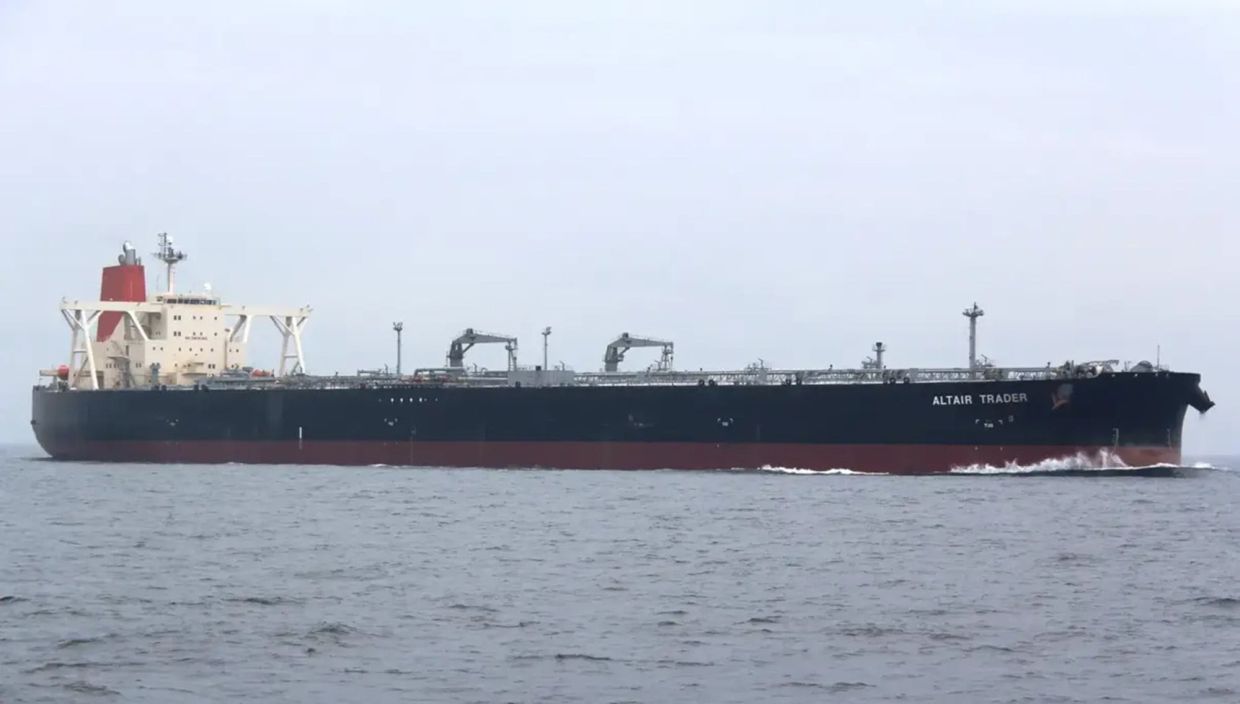
The United States has escalated its economic pressure campaign against Iran by imposing sanctions on eight shipping firms based in mainland China and Hong Kong, accusing them of facilitating the transfer of Iranian crude oil and petrochemical products through what Washington terms a "shadow fleet" designed to evade international restrictions. The action, announced by the US State Department, represents a significant tightening of the financial noose around Tehran's ability to monetise its hydrocarbon exports, a critical lifeline for an economy struggling with severe inflation and capital shortages.
The newly designated entities—six rooted in Hong Kong and one each in mainland China and the Marshall Islands—operated a network of tankers that allegedly transported millions of barrels of Iranian crude to China throughout 2025 and 2026. According to the US Treasury Department, these vessels deliberately obscured their origins and ownership to circumvent international sanctions regimes. The sanctions freeze any assets held by these companies within American jurisdiction and effectively isolate them from the global financial system, as foreign banks and institutions face exposure to secondary sanctions if they engage in designated transactions with the targeted firms. This multilayered approach transforms shipping companies into pariahs in international commerce, making it extremely difficult for them to access credit lines, insurance, or payment systems.
The sanctioning of these entities is explicitly coordinated with the US Navy's ongoing enforcement operations along Iran's ports and coastline. State Department spokesman Tommy Pigott framed the action not merely as an economic measure but as an integral component of a broader blockade strategy designed to suffocate Iran's oil revenue streams. This direct linkage between financial sanctions and military presence underscores Washington's determination to create multiple overlapping barriers to Iranian crude exports, leaving Tehran with diminishing options for moving its petroleum products to international markets. The enforcement strategy targets both the supply side—by penalising those who transport the oil—and the demand side, by pressuring potential purchasers through sanctions threats.
Among the sanctioned vessels are the Lily, owned by Hong Kong-based Confident Apex Limited, which has transported millions of barrels of Iranian crude since 2025; the Al Salmi, operated by Billion Nexus International, which delivered hundreds of thousands of barrels to China; and the Breeze V, managed by Nevada Spirit Company, which allegedly moved millions of barrels to Chinese ports this year. The Natsumi, controlled by Hong Kong-based Marinova Freight, carried crude to China continuously since 2022, suggesting a long-standing operational relationship. These vessels typically employ flags of convenience—registered to nations like the Marshall Islands and Mozambique—to obscure their true ownership and complicate efforts to track their movements through international shipping databases. This regulatory arbitrage allows operators to circumvent transparency requirements and reduce their exposure to sanctions enforcement.
China has swiftly rejected the American accusations, with Liu Pengyu, spokesman for the Chinese embassy in Washington, characterising Beijing's cooperation with Iran as "open, transparent, lawful and legitimate." The statement represents a fundamental disagreement over the legitimacy of unilateral sanctions, particularly those with extraterritorial reach affecting Chinese companies. Beijing's defence reflects a broader geopolitical stance that opposes what it views as American hegemonic imposition of economic restrictions beyond Washington's borders. Liu explicitly warned that China would "continue to do what is necessary to firmly defend the legitimate and lawful rights and interests of Chinese companies," signalling that Beijing may take countermeasures to shield its businesses from sanctions exposure—a troubling prospect that could further destabilise international trade relations.
The sanctions action extends beyond the shipping firms themselves to target two Iranian entities accused of operating an extortion scheme masquerading as maritime insurance. The Persian Gulf Marine Insurance Company and Hormuz Safe Marine Services Authority allegedly coerce commercial vessels transiting the Strait of Hormuz to purchase insurance policies against risks they claim to mitigate, even though those dangers are overwhelmingly created by Iranian government actions themselves. Hormuz Safe, developed by Iran's Ministry of Economy, accepts bitcoin and other digital assets as payment, suggesting Tehran has adapted its revenue collection mechanisms to digital currencies that may be harder to track through traditional banking channels. Treasury characterised these insurance arrangements as manufactured risk schemes in which Iranian entities profit by creating dangers and then selling protection against those self-inflicted hazards—a circular model that generates revenue for the Islamic Revolutionary Guard Corps while charging passing vessels hundreds of thousands of dollars per transit.
Treasury Secretary Scott Bessent contextualised the sanctions within Iran's broader economic distress, noting that "with its economy in free fall and inflation in the triple digits, the regime is desperate for cash." This observation reflects Washington's analysis that Tehran's financial pressures are intensifying, making oil export earnings increasingly critical to regime survival. The sanctions campaign targets Iran's ability to convert crude exports into usable foreign currency, thereby constraining the government's capacity to fund military operations, sustain social programmes, and service external obligations. By systematically dismantling the shadow fleet infrastructure, the United States aims to force Iran into an impossible choice: either accept dramatically reduced oil revenues or risk escalating military confrontation with the US Navy in the Persian Gulf.
The Strait of Hormuz remains central to this strategic struggle, as approximately one-third of global maritime petroleum trade transits through its narrow waters. State Department officials have emphasised that protecting navigational freedoms in the strait constitutes a "global interest" requiring coordinated allied action to contain Iranian overreach. Washington's framing presents the sanctions as defensive measures necessary to preserve international commerce from Iranian disruption, rather than as offensive economic warfare. This rhetorical positioning seeks to mobilise international support for what critics might characterise as a comprehensive blockade aimed at coercing Iranian policy change through economic asphyxiation. The distinction between legitimate enforcement and punitive sanctions remains contentious in international law and relations.
For Malaysian and Southeast Asian readers, these developments carry significant implications. Southeast Asian shipping companies and maritime services providers operating in the Persian Gulf region face heightened regulatory scrutiny and compliance risks, as Western authorities increasingly investigate cargo origins and beneficial ownership of vessels involved in Iranian trade. Financial institutions across the region must implement enhanced due diligence procedures to avoid secondary sanctions exposure when processing transactions related to Iran. Additionally, regional oil importers may experience volatility in crude supplies if Iranian export volumes contract further, potentially affecting energy security planning and refinery operations across Southeast Asia. The precedent established by these extraterritorial sanctions also raises broader questions about the limits of unilateral economic coercion and the potential for similar measures targeting other regional trading relationships deemed objectionable by Washington.

