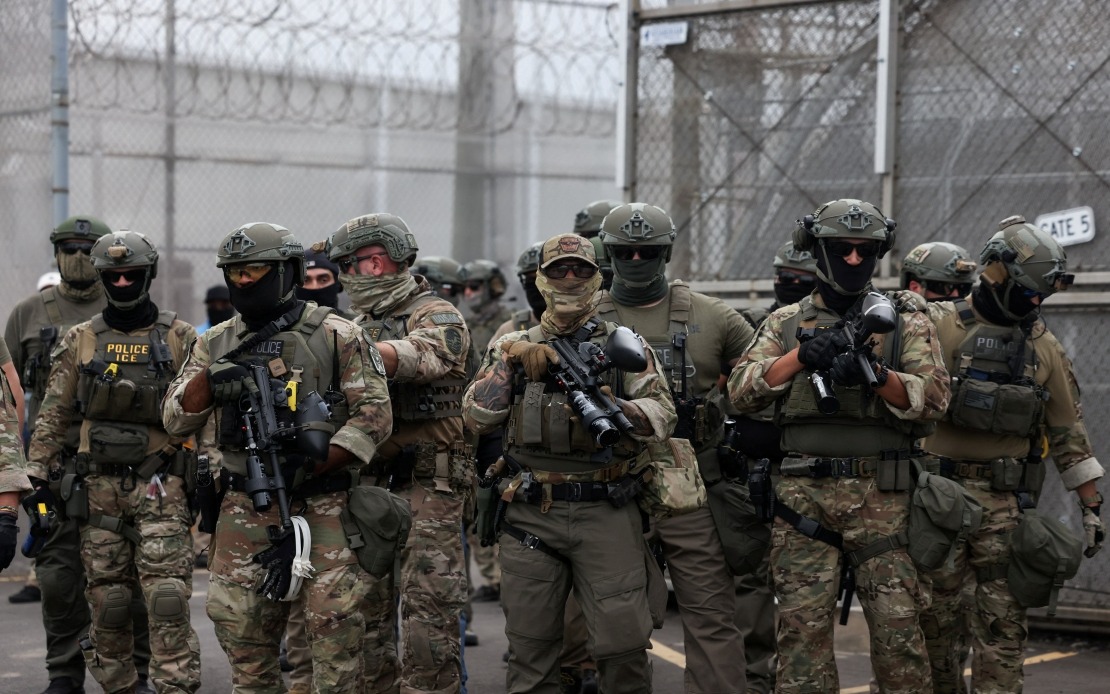
A federal judge in California has issued a nationwide order prohibiting United States Immigration and Customs Enforcement from conducting arrests of migrants within immigration courthouses and their surrounding areas, marking a significant legal setback for the Trump administration's more aggressive deportation strategy. The ruling effectively terminates a practice that has seen ICE officers conduct enforcement operations at the precise locations where migrants are defending themselves against removal proceedings, raising serious concerns about judicial integrity and immigrant access to legal representation.
The practice of arresting migrants at courthouse facilities has proven especially controversial because it targets individuals who are actively engaged in the legal process designed to determine their immigration status. By apprehending migrants before, during, or after their hearings, ICE officers created a chilling effect that discouraged migrants from appearing for their scheduled proceedings. Immigration courts, which operate under the Department of Justice and handle deportation cases, became sites of dual confrontation where individuals faced both judicial proceedings and enforcement actions simultaneously.
Critics have long argued that courthouse arrests fundamentally undermine the rule of law by transforming judicial venues into enforcement zones. When migrants fear arrest while attending hearings, they may avoid court appearances altogether, leading to default judgments and expedited deportations without adequate legal consideration. This dynamic creates a system where immigrants effectively cannot access their right to a hearing while simultaneously being pursued for removal. The practice essentially weaponises the court system against the very individuals it is designed to serve.
The Trump administration introduced enhanced guidelines favouring courthouse arrests at the beginning of the president's second term, positioning such operations as efficient immigration enforcement tools. Internal agency documentation highlighted the strategic advantages of apprehending migrants at courthouses, where officers could be certain of finding their targets and where logistical coordination with court schedules offered operational efficiency. However, the administration's policy shift lacked the detailed legal and policy analysis typically required when federal agencies substantially alter their operational approach.
The federal judge determined that Immigration and Customs Enforcement had failed to adequately analyse or address the significant legal vulnerabilities inherent in the revised policy. Specifically, the court found that the agency had not properly considered how courthouse arrests might violate established principles regarding safe access to judicial proceedings. The judge emphasised that when federal policy represents a meaningful departure from previous practice, agencies must provide transparent reasoning that demonstrates how the new approach complies with existing law and constitutional principles.
The judiciary's concern reflects broader constitutional considerations about maintaining courthouse neutrality. Federal and state court systems have long protected courthouse premises as spaces where individuals can seek justice without fear of enforcement action. This protection exists because courthouses serve as forums where the government's power is theoretically balanced against individual rights through judicial review. When immigration enforcement operates within courthouses, it disrupts this foundational principle and converts judges into involuntary participants in enforcement operations.
From a practical standpoint, this ruling carries substantial implications for immigration administration across the United States. Thousands of pending cases in immigration courts, particularly in regions with aggressive ICE enforcement, may now proceed with greater predictability regarding courtroom safety. Migrants facing deportation will be able to attend hearings with reduced anxiety about immediate arrest, potentially leading to more robust legal presentations and fuller judicial consideration of cases.
The decision also reflects broader tensions within the judicial system regarding immigration enforcement policy. Immigration courts operate under administrative law rather than traditional criminal procedure protections, yet they adjudicate matters that fundamentally affect human liberty. When executive enforcement agencies blur the boundaries between prosecution and judicial spaces, courts must intervene to maintain the integrity of adjudicatory processes. This ruling affirms that even immigration courts, despite their civil rather than criminal character, deserve protection as neutral forums.
For Southeast Asian observers and Malaysian readers monitoring US immigration policy, this decision illustrates how judicial oversight can constrain executive power even within domains traditionally controlled by immigration authorities. Malaysia and regional nations that cooperate with US immigration enforcement may notice shifts in how American officials conduct their operations, particularly regarding coordination with judicial processes in third countries. The ruling demonstrates that courts can impose meaningful constraints on how aggressively immigration enforcement proceeds.
The broader implications extend to questions about immigration policy's relationship to judicial legitimacy. When enforcement and adjudication blend too thoroughly, both functions suffer. Judges lose their position as neutral arbiters, and enforcement becomes entangled with judicial processes in ways that undermine confidence in both systems. This case suggests that courts will protect the institutional separation necessary for immigration systems to function with credibility.
Going forward, the Trump administration faces the task of restructuring its immigration enforcement approach within the legal boundaries established by this ruling. Officials may pursue alternative enforcement strategies that do not depend on courthouse operations, though such alternatives may prove less efficient operationally. The decision represents a judicial assertion that efficiency cannot override constitutional and due process considerations.
The ruling ultimately reflects a fundamental principle: that courthouses must remain spaces where individuals can seek justice without fear of punishment for their presence. By protecting that principle, federal courts maintain not only immigrant rights but also the legitimacy of the judicial system itself. This decision will likely influence how immigration enforcement operates nationwide for years to come.

