The Trump administration has directly implicated Singapore and 39 other countries in facilitating Chinese exporters' efforts to circumvent United States tariffs through what it terms illegal transshipment—the practice of routing goods through intermediate jurisdictions to conceal their true origin. The White House issued its findings on August 13 through a report titled "The Great Transshipment Scam", signalling a hardening stance on trade evasion that carries significant implications for Southeast Asian economies and global supply chains.
The administration's diagnosis of the problem rests on documented shifts in trading patterns. Following the imposition of tariffs on Chinese goods in 2018, the direct share of US imports from China declined measurably, yet the combined import share supplied by the 40 identified transshipment countries rose correspondingly. This reallocation, the White House argues, reflects not merely legitimate business recalibration but systemic exploitation of regulatory weaknesses. Using estimates compiled from government agencies and private research, the report calculates that tariff-evading transshipments may have deprived the US Treasury of between US$40 billion and US$303 billion in customs revenue—a figure that underscores the scale of the alleged scheme and the administration's motivation to act.
The architecture of this evasion, according to the White House analysis, involves "products made largely in China, lightly touched abroad and exported to America under new identities". Goods undergo minimal processing or assembly in intermediate countries, gain new paperwork documentation, and then proceed to American markets classified as products of the transshipment nation rather than China. The sophistication of this arrangement lies not in manufacturing complexity but in logistics choreography and regulatory arbitrage—exploiting the differences between stringent US tariff classification rules and more permissive enforcement elsewhere.
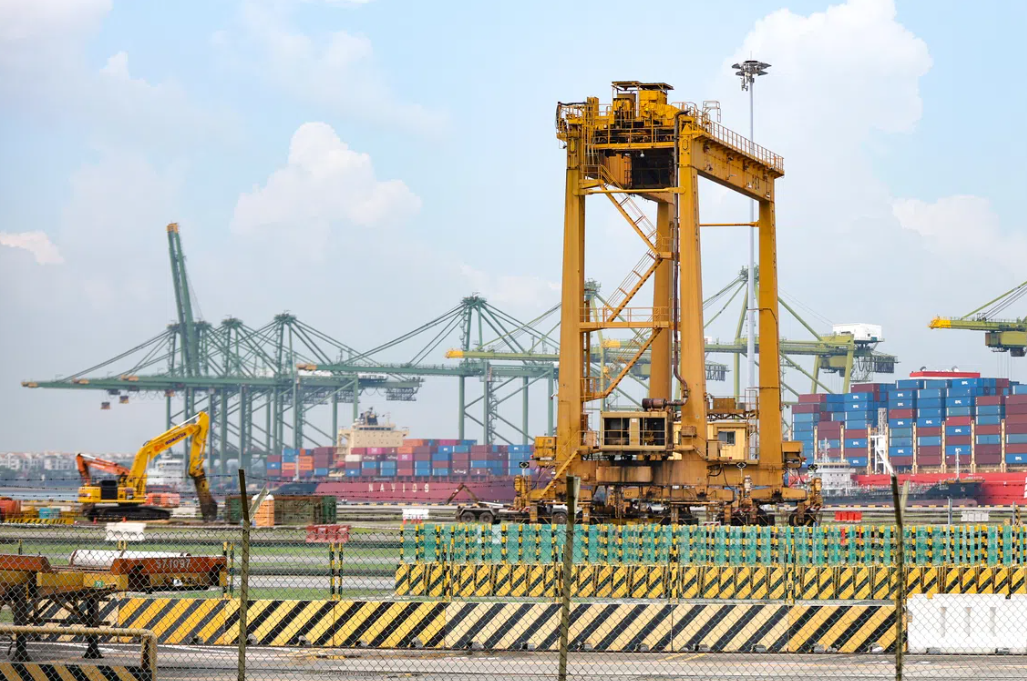
Singapore occupies Tier 3 of the administration's three-tiered classification system, grouped alongside Cambodia, Laos, Myanmar and the Philippines. The White House characterises these five economies as "small, opportunistic Chinese targets" that present particular vulnerability despite their lower absolute volumes of transshipped goods. According to the report, what makes these Tier 3 economies attractive for rerouting are specific structural advantages: low-cost labour, free trade zones, strategic port or border access, bonded warehousing facilities, niche assembly capacity, preferential trade access to the United States, and comparatively limited customs enforcement capacity. For Singapore specifically, its world-class port and logistics infrastructure, combined with free trade zone designations, may have inadvertently created conditions facilitating such activity.
The tiered approach reveals the White House's analytical framework. Tier 1 economies—Canada, the European Union, India, Israel, Japan and Taiwan—are viewed as major export platforms where transshipment risks nestle within legitimately voluminous trade flows, making detection and isolation more challenging. Tier 2 nations including Brazil, Indonesia, Malaysia, Thailand, Turkey and Vietnam are characterised as having significant economic integration with China, creating structural incentives for goods rerouting. This categorisation positions Southeast Asian economies prominently, reflecting the region's role as a critical node in global supply chains and its deepening commercial ties with Beijing.
The administration's response toolkit includes deployment of an artificial intelligence-powered system termed "Detective Border", designed to identify suspicious shipment patterns and flag goods for enhanced scrutiny. In August 2025, the US already announced an additional 40 per cent tariff on goods determined to have been illegally transshipped to evade duties—a measure that would dramatically increase compliance costs for companies engaged in such practices. The White House's declaration that "the age of untraceable illegal transshipment is over" signals intent to reshape enforcement capabilities, though the specific mechanics and timeline for implementation remain unclear from the report itself.
Singapore's Ministry of Trade and Industry and Singapore Customs have responded by emphasising the jurisdiction's compliance with international standards. Singapore Customs stressed that its legislative framework aligns with World Customs Organization best practices and that transshipped goods cannot legally be relabelled as originating from Singapore—a technical distinction that may prove insufficient to address American concerns about goods that have been "lightly touched" in assembly zones before reclassification. The agency underscored its cooperation with international counterparts in detecting illicit activities, yet such assurances come against a backdrop of rising US protectionism and heightened scrutiny of Southeast Asian trade infrastructure.
The broader geopolitical dimension extends beyond tariff collection. The White House warns that as smaller economies become increasingly dependent on Chinese inputs, logistics networks and capital investment, "Beijing may gain additional commercial and geopolitical leverage while preserving indirect access to the US market". This framing transforms transshipment from a customs matter into a strategic vulnerability, suggesting that countries permitting such flows risk entanglement in Sino-American competition and potential loss of autonomy in trade policy. For Southeast Asian nations already navigating complex balancing acts between Washington and Beijing, the report introduces new pressure to enforce stricter transshipment regulations, even at the cost of reduced port activity and customs revenue.
It remains analytically important to note that the White House acknowledges not all trade reallocation represents illegal evasion. The report concedes that "some of the shift reflects legitimate changes in production, investment and sourcing". Distinguishing between genuine regional manufacturing expansion and transshipment schemes proves operationally difficult, and overzealous enforcement could penalise legitimate supply chain adjustments. Nevertheless, the "timing, magnitude and direction" of observed trade shifts have prompted the administration to pursue further investigation and heightened enforcement action, raising the compliance bar for companies operating across these jurisdictions.
The timing of this report reflects broader Trump administration efforts to rebuild its tariff apparatus following legal setbacks. A court decision earlier in 2026 had undermined aspects of the administration's tariff regime, creating openings for challenges and workarounds. The White House is reasserting control through both regulatory designation and technological enforcement. In July, a new 12.5 per cent levy was imposed on goods from numerous economies, including Singapore, allegedly over forced labour concerns—a move that stacks additional duties atop existing tariff structures and demonstrates Washington's willingness to deploy multiple enforcement channels simultaneously.
For Malaysian policymakers and regional business communities, the White House report serves as a warning and a wake-up call. Malaysia's placement in Tier 2, alongside Vietnam, Thailand and Indonesia, suggests moderate but substantive scrutiny. The region's position as a manufacturing hub and entrepôt for Asian trade makes it simultaneously valuable and vulnerable to US enforcement actions. Companies relying on transshipment structures or complex supply chain arrangements through the region should anticipate increased documentation requirements, longer customs clearance periods, and higher tariff exposure. Governments across Southeast Asia face pressure to strengthen enforcement capacity, update regulations and demonstrate compliance—investments that may crowd out other policy priorities.
The report ultimately reflects a hardening American approach to trade enforcement centred on protecting domestic manufacturing and customs revenue against what Washington perceives as systematic evasion. Whether the legal and practical distinctions between legitimate transshipment and illegal evasion can be successfully administered remains an open question, one that will significantly affect Southeast Asian trade flows, government revenues and business planning over the coming years.

