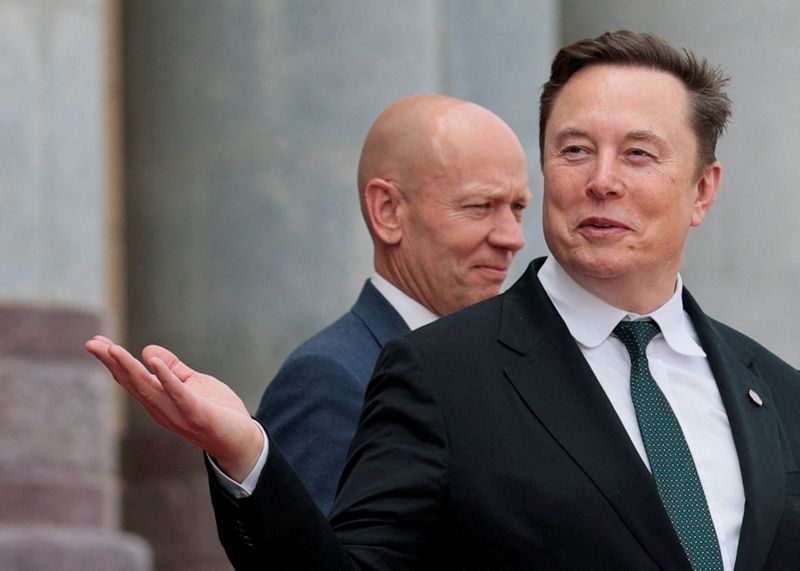
A federal judge in San Francisco has dealt a significant blow to Elon Musk's legal efforts by rejecting his attempt to have a jury verdict overturned, which found him liable for defrauding Twitter investors during his acquisition of the social media platform. U.S. District Judge Charles Breyer's decision on Monday dismantles what appeared to be a final avenue for Musk to escape the consequences of the March fraud verdict, which concluded that the world's richest person had engaged in deliberate misconduct when purchasing Twitter for $44 billion in 2022.
The judgment has far-reaching implications for corporate accountability and the responsibilities of high-profile executives during major acquisitions. Judge Breyer's ruling demonstrates that even billionaire entrepreneurs with significant resources cannot easily circumvent jury verdicts through post-trial motions, a legal principle that resonates across international business communities. For Malaysian investors and those monitoring corporate governance standards in Southeast Asia, the case underscores how legal systems can hold even the most powerful figures accountable for allegedly misleading shareholders during transformative deals.
While Breyer granted Musk one partial victory by finding him not liable for statements made in a May 17, 2022 tweet, he upheld liability for the May 13 tweet of the same year. Both tweets centred on Musk's claims that Twitter was overrun with fake and spam accounts, commonly referred to as bots. The judge determined that the May 13 tweet contained substantial evidence of falsity and directly caused Twitter's stock price to decline significantly, establishing the causal link necessary for fraud liability. However, because the May 17 tweet failed to produce any measurable market reaction, Breyer concluded that Musk bore no responsibility for that particular statement, demonstrating the court's nuanced approach to assigning liability based on actual market impact.
The broader trajectory of this case began when Musk launched his takeover bid for Twitter, subsequently attempting to back out of the agreement by arguing that the platform had misrepresented the prevalence of bot accounts. According to the jury's findings, Musk's strategy was deliberately calculated to suppress Twitter's stock price, thereby creating leverage to renegotiate or entirely abandon the $44 billion transaction. This sequence of events prompted investors to pursue litigation against Musk, claiming they suffered losses based on his misleading public statements about the company's fundamental challenges.
Judge Breyer also denied Musk's motion to decertify the investor class, meaning the fraud verdict applies to all shareholders who purchased Twitter stock during the relevant period. This decision prevents Musk from fragmenting the case into individual disputes and effectively preserves the collective nature of the litigation. The class certification ruling has particular significance for shareholder protections, as it affirms that large groups of investors can pursue coordinated legal action against corporate figures without facing dissolution of their collective claims. For Southeast Asian markets where minority shareholder protections remain an ongoing concern, this judgment offers a template for how legal systems can protect broader investor populations against alleged misconduct.
Additionally, Judge Breyer granted the investors' motion for prejudgment interest, meaning Musk will be required to pay accumulated interest on any damages from the date of the alleged fraud through the judgment date. This decision increases the financial burden of the verdict, as interest compounds over time, particularly relevant given the length of this litigation. Musk's legal team has not yet indicated whether they intend to pursue an appeal, though such challenges are likely given the stakes involved and the possibility of reaching higher courts that might reconsider the verdict's foundations.
Estimates from the plaintiffs' legal representatives suggested in March that damages could reach approximately $2.5 billion, though the final amount will depend on precise calculations that incorporate Breyer's ruling on prejudgment interest and any adjustments to liability arising from the judge's partial exoneration on the May 17 tweet. This figure, while substantial, represents only a portion of Musk's overall wealth and investment portfolio, yet carries significant symbolic weight regarding corporate accountability and the consequences of misleading shareholders during major transactions.
The case has attracted international attention as a bellwether for how wealthy executives face legal scrutiny in major economies. For Malaysian corporate stakeholders, regulators, and legal professionals monitoring global standards, the case illustrates how US courts navigate complex issues of intent, market impact, and causality when determining fraud liability. The distinction between statements that materially affect stock prices and those that do not, as evidenced by the judge's differential treatment of Musk's tweets, provides a practical framework for understanding fraud claims in securities law.
Musk's unsuccessful bid to overturn the verdict also reflects broader challenges facing defendants in high-profile cases where public perception and media coverage intersect with legal proceedings. The social media platform he now owns, X, has itself been central to business discussions surrounding corporate governance and shareholder communications, adding an additional layer of irony to litigation focused on his public statements about Twitter's condition. As the litigation proceeds toward final judgment on damages and potential appeals, the case continues to shape conversations about executive responsibility and shareholder protection in the modern business environment.

