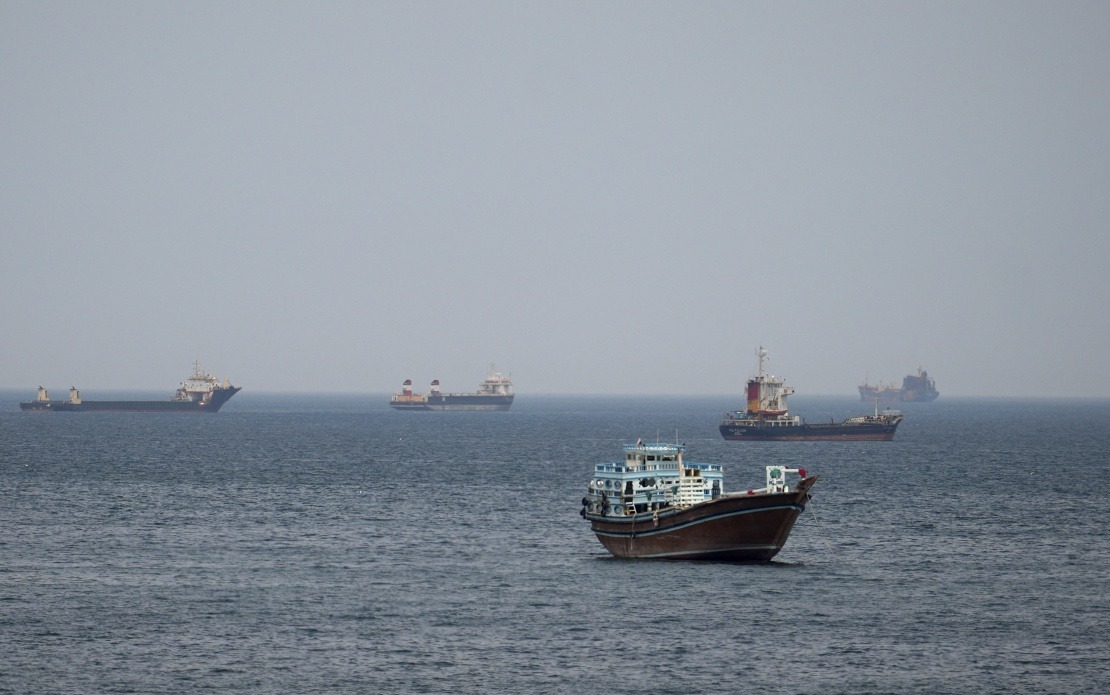
The United States military has successfully facilitated the transit of over 800 commercial vessels through the strategically vital Strait of Hormuz since the beginning of May, according to a statement released Thursday by US Central Command. Accompanying these commercial movements has been the passage of approximately 380 million barrels of crude oil through the waterway, underscoring the economic significance of maintaining freedom of navigation in one of the world's most critical chokepoints for global energy supplies.
The Strait of Hormuz, which separates Iran from Oman and connects the Persian Gulf to the Arabian Sea, serves as the passage route for roughly one-third of all maritime-traded oil globally. Any disruption to traffic through this narrow corridor reverberates across international energy markets and affects economies worldwide, making US efforts to ensure open passage a matter of considerable geopolitical weight. The announcement by CENTCOM represents a deliberate demonstration of American commitment to upholding international maritime law and protecting commercial shipping against regional threats.
The timing of this statement is particularly significant as relations between Washington and Tehran have deteriorated markedly over recent weeks. The announcement coincides with a dangerous escalation cycle in which Iran and the United States have exchanged military strikes across multiple days. Iranian forces launched a series of attacks Thursday targeting US military infrastructure positioned across the region, including facilities in Bahrain, Kuwait, Qatar, and Jordan. These strikes represented retaliation for preceding American military operations that had themselves been carried out in response to earlier Iranian aggression.
The immediate trigger for this dangerous spiral was Iranian attacks on three commercial vessels operating within the Strait of Hormuz, actions that demonstrated Tehran's willingness to target merchant shipping despite the potential consequences. Such attacks risk destabilizing the already fragile status quo and raising the cost of doing business in one of the world's most important shipping lanes. The targeting of civilian vessels represents a significant escalation in tactics and signals Iranian frustration with the current military balance in the region.
Despite the volatile security environment and the genuine risks posed by direct military confrontation, commercial shipping has surprisingly continued to flow through the waterway. This persistence reflects both the economic desperation of shipping companies operating on thin margins and the protective presence of American naval forces, which have effectively underwritten the security of commercial traffic. Captains and owners face difficult calculations daily: the risks of transit through contested waters must be weighed against the enormous costs of rerouting cargo around the African continent, a journey that would add weeks and substantial expense to supply chains already strained by global economic uncertainty.
For Southeast Asian countries, particularly Malaysia, the implications of any prolonged disruption to Strait of Hormuz traffic would be severe. The region's energy-dependent economies rely heavily on predictable oil supplies from the Persian Gulf, and any sustained blockade or significant attacks on shipping would drive up energy costs and potentially trigger wider economic repercussions. Malaysia's status as a major trading nation means that disruptions to global shipping lanes, regardless of their location, ultimately affect domestic prosperity and industrial competitiveness.
The US military's protective role in the Strait has become increasingly necessary as tensions have mounted. Beyond simply escorting vessels, American forces conduct surveillance, provide intelligence to shipping companies about safe corridors, and maintain a visible deterrent presence intended to discourage further Iranian aggression. This represents a substantial resource commitment undertaken primarily for the benefit of global commerce rather than American national interest, though Washington views freedom of navigation as aligned with its broader strategic objectives in the region.
The fragile truce that has characterized recent weeks now appears to be unraveling under pressure from multiple directions. Iranian domestic politics, American policy decisions regarding sanctions and regional military posture, and the inherent uncertainties of proxy conflicts across the Middle East all contribute to escalatory dynamics that neither side appears fully capable of controlling. The danger lies not necessarily in deliberate war plans but in the potential for miscalculation and accident in an environment where military forces operate in close proximity with limited communication and high tension.
The scale of vessels assisted—over 800 in just two months—demonstrates both the volume of traffic dependent on American security guarantees and the critical importance of maintaining stability in the region. Each vessel represents not merely commercial cargo but employment for crews, profits for shipping companies, and essential supplies for consuming nations worldwide. The loss or damage to even one major carrier can have ripple effects across multiple industries and economies.
Looking ahead, the challenge for regional stakeholders and the international community is finding pathways to de-escalation before an accident or miscalculation triggers a larger conflict. The current arrangement, wherein American military forces essentially guarantee safe passage while Iran tests boundaries through selective attacks, is unsustainable. Both regional and global powers have interests in maintaining the flow of energy and commerce through the Strait, yet mechanisms for coordination and crisis management remain underdeveloped. For nations like Malaysia with significant maritime interests, ensuring that diplomatic channels remain open and conflict resolution mechanisms are strengthened should be a priority.

