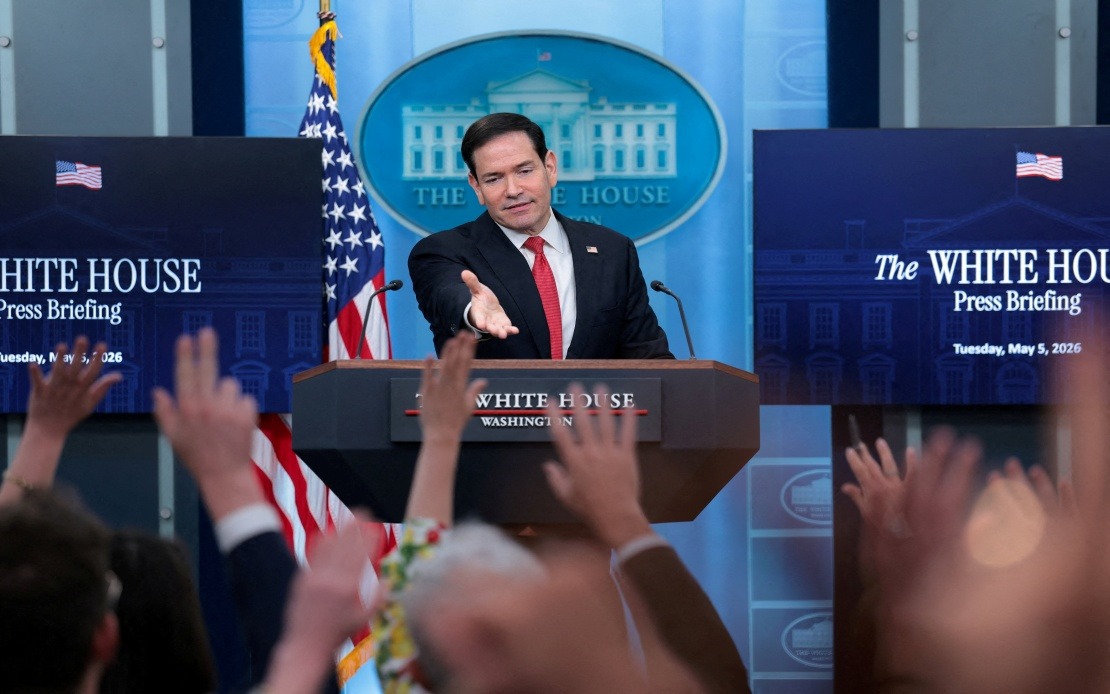
The United States has signalled continued openness to resolving its differences with Iran through diplomatic channels, according to Secretary of State Marco Rubio, who made the remarks during an ASEAN gathering in Manila on Wednesday. Rubio's statement suggests the Trump administration has not abandoned the possibility of negotiated settlement despite years of tension between Washington and Tehran. The declaration comes amid broader regional security concerns in Southeast Asia, where US involvement and strategic relationships remain central to regional stability discussions.
Rubio emphasised that American commitment to diplomatic engagement extends across all bilateral relationships, with Iran representing no exception to this principle. He underscored that the United States maintains a principled willingness to pursue negotiated outcomes, provided both parties approach talks with genuine intent. This framing positions the US as the party favouring dialogue while implying that responsibility for breakthrough or deadlock rests partly with Iranian decision-makers. For Malaysian observers following US foreign policy, the statement reflects a long-standing American diplomatic doctrine that reserves the door for talks even amid deep strategic disagreement.
According to Rubio, Iran has maintained communication channels with the United States through both direct and indirect means, indicating that behind-the-scenes contact has continued. These channels serve as potential conduits for future negotiations should political will align on both sides. The existence of such communication pathways, whether official or through intermediaries, preserves diplomatic flexibility and prevents complete severance of ties. This aspect of US-Iran relations carries implications for regional actors including Malaysia, which maintains its own relationships with various powers and must navigate complex geopolitical dynamics.
However, Rubio tempered optimism about near-term breakthroughs by questioning Iran's earnestness in pursuing dialogue. He characterised the current problem not as an absence of willingness from Washington but rather as lack of seriousness from Tehran in advancing meaningful discussions. This diplomatic language frames any stalled negotiations as resulting from Iranian reluctance rather than American inflexibility. The distinction matters for international audiences and regional partners assessing whether blame for continued deadlock lies with either party.
The secretary of state articulated a conditional approach to US policy, stating that American seriousness in talks would match Iranian seriousness in kind. If Iran demonstrates genuine commitment to negotiated settlement, Washington would respond in corresponding fashion. Conversely, should Iran continue what Rubio characterised as half-hearted engagement, the United States reserves the right to pursue alternative measures to safeguard its interests. This reciprocal formulation provides Washington with strategic flexibility while placing the burden on Iran to prove its diplomatic credentials.
Rubio stressed that protecting American interests and those of allied nations remains paramount in US foreign policy calculations. This commitment to allied security extends throughout the Indo-Pacific region, where Southeast Asian nations have grown increasingly concerned about regional stability. Many ASEAN members maintain neutrality in US-Iran disputes while simultaneously relying on American security guarantees and trade relationships. The emphasis on allied interests signals that any US-Iran settlement must account for broader regional security architecture rather than representing bilateral accommodation alone.
A key component of the American position involves enforcement of international commitments made through diplomatic agreements. Rubio indicated that Washington's openness to talks hinges upon certainty that any negotiated outcomes would be honoured by all parties. He referenced previous instances where commitments were not maintained, suggesting that trust deficits complicate current negotiations. This emphasis on commitment credibility reflects American frustration with past agreements perceived as inadequately implemented or verified. For Southeast Asian nations considering their own diplomatic engagements, this American insistence on enforceable agreements carries cautionary implications.
When commitments are broken, Rubio made clear that consequences must follow. This statement underscores that American flexibility in diplomacy does not extend to allowing repeated violations of negotiated terms without response. The threat of consequences operates as both deterrent and incentive, designed to encourage serious negotiating partners while warning potential violators of American resolve. The consequence framework establishes stakes for any future US-Iran agreement, making negotiations consequential for both parties rather than exercises in diplomatic theatre.
Rubio's remarks at the Manila ASEAN meeting reflect broader American strategy in the Indo-Pacific region, where competing powers increasingly vie for influence and alignment. The statement positions the United States as a responsible power willing to exhaust diplomatic options while remaining prepared to defend its interests. For Malaysia and other ASEAN members navigating between great power competition, understanding US diplomatic postures toward regional and global actors informs their own strategic calculations. The openness to Iran talks, coupled with conditionality regarding seriousness and commitment compliance, illustrates how American diplomacy balances engagement with firmness across multiple relationships simultaneously.

