The United States Pacific Command has doubled down on its pledge to sustain operations throughout the South China Sea, framing its presence as integral to broader efforts aimed at ensuring security and stability across the Indo-Pacific region. Speaking at a high-level conference in Kuala Lumpur, senior officials underscored that the waterway remains strategically vital to American defence interests and to its network of allied nations across Southeast Asia. The statement comes amid ongoing tensions over maritime boundaries and territorial assertions in one of the world's most economically significant shipping lanes, through which trillions of dollars in annual trade flows.
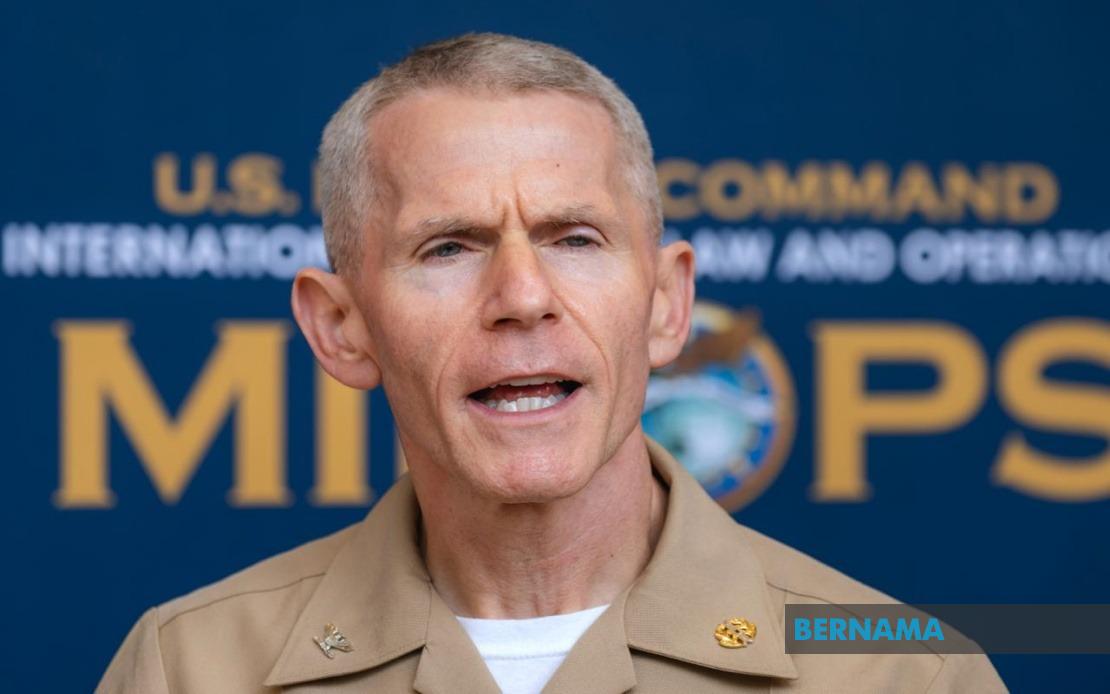
Navy Captain Dustin Wallace, serving as USPACOM's Staff Judge Advocate, articulated the command's core operational philosophy during remarks at the 37th International Military Law and Operations Conference, held in conjunction with Malaysia's Defence Ministry and the Malaysian Armed Forces. His comments emphasised that deterrence against aggressive actions and destabilising conduct forms the centrepiece of USPACOM's regional strategy. The articulation of this commitment reflects Washington's determination to counter what it views as coercive activities that threaten the established international order in Southeast Asia's most contested waters.
Central to USPACOM's stated approach is an unwavering dedication to upholding international legal frameworks, particularly those governing freedom of navigation and the unimpeded flow of commercial traffic. These principles, Wallace stressed, are not merely American preferences but foundational values shared across the alliance network encompassing multiple Southeast Asian governments. By anchoring its strategy in law-based mechanisms rather than purely military deterrence, the command seeks to legitimise its activities to regional audiences and frame American involvement as serving collective interests rather than narrow geopolitical advantage.
The distinction between individual nation interests within Southeast Asia received particular emphasis in Wallace's remarks. Rather than pursuing a one-size-fits-all engagement model, USPACOM has adopted a differentiated approach that respects each ASEAN member state's distinct strategic priorities and security concerns. This calibration acknowledges the reality that countries within the region hold varying perspectives on China's rise, possess differing economic dependencies, and maintain unique security vulnerabilities. Indonesia's archipelagic geography, for instance, shapes its maritime security outlook quite differently from Vietnam's position as a claimant state to contested islands.
ASEAN's collective role emerged as particularly significant in Wallace's framing of American regional strategy. By characterising ASEAN as critical to maintaining peace and security architecture across the Indo-Pacific, USPACOM signals support for the bloc's institutional mechanisms and consensus-building processes. This rhetorical positioning seeks to address long-standing concerns among Southeast Asian governments that great power competition might undermine regional unity or that Washington might attempt to bypass ASEAN structures in pursuing its strategic objectives. Such concerns have periodened in recent years as the United States and China have intensified their competition for influence across the region.
The broader context for these statements includes the Economic Framework for the Indo-Pacific, Regional Comprehensive Economic Partnership agreements, and various multilateral security dialogues that have proliferated across Southeast Asia. Within this crowded landscape of competing frameworks and initiatives, USPACOM's emphasis on building rather than dictating partnerships reflects a subtle recalibration of American strategy. Rather than imposing security arrangements or demanding exclusive alignment, the command frames its role as supporting each nation's own development of capabilities and strategic autonomy. This approach represents a departure from Cold War patterns when alliance relationships often required strict adherence to superpower-defined positions.
The conference itself, themed "From the Seabed to Space: Advancing Security, Freedom, and Prosperity for All Across the Indo-Pacific," drew more than 300 military leaders, security lawyers, policymakers and academic specialists from over 30 countries. The assembly of such diverse participants suggests growing recognition that South China Sea stability concerns extend beyond military dimensions into legal, commercial, environmental and governance spheres. Malaysian hosting of this gathering underscores the country's positioning as a neutral space where contentious issues can be discussed without the symbolic baggage that might attend similar forums held in explicitly aligned nations.
For Malaysia specifically, USPACOM's reaffirmed commitment carries multiple implications. As a claimant state to portions of the South China Sea yet also deeply economically integrated with China, Malaysia occupies a delicate diplomatic position that requires careful balancing. American assurances about maintaining freedom of navigation protect Malaysian shipping interests and fishing rights, while the emphasis on ASEAN centrality acknowledges Malaysia's role as a key voice within Southeast Asia's most important multilateral institution. The country's defence sector also benefits from continued American engagement and the security partnerships that such involvement facilitates.
The focus on international law and sovereign equality, reiterated throughout USPACOM's messaging, addresses concerns that have animated Southeast Asian governments throughout the contemporary era of great power competition. The fear that powerful nations might disregard established legal frameworks in pursuit of strategic advantage represents a substantive threat to smaller nations whose security depends fundamentally on rules-based systems rather than raw military capacity. By emphasising these principles, the United States attempts to position itself as defending an order that serves all nations' interests, not merely powerful ones seeking to expand their dominion.
Looking forward, USPACOM's strategy appears designed to sustain American influence and military presence in Southeast Asia while accommodating the legitimate sovereignty concerns and varying strategic preferences of regional states. This represents a conscious effort to avoid driving countries into exclusive alignment with Beijing while maintaining sufficient military capability to deter major power conflict. The success of such an approach depends substantially on whether the United States can continue demonstrating that its partnership arrangements genuinely respect regional autonomy rather than merely serving as tools for containing China. For Malaysian and broader Southeast Asian audiences, these distinctions between rhetoric and practice will increasingly determine the credibility and attractiveness of American regional engagement.

