The Office of the Comptroller of the Currency has conditionally approved a bank charter application for World Liberty Trust Company, marking a significant milestone for President Donald Trump's family-backed cryptocurrency enterprise. The preliminary approval, granted on Friday following an application submitted in January, enables the company to expand its stablecoin operations substantially and move toward direct issuance and custody of its USD1 digital currency without relying on third-party service providers.
Under the terms of the conditional approval, World Liberty Trust Company would gain the authority to manage and hold assets on behalf of customers and accelerate payment settlement processes through the newly established trust bank entity. Notably, this charter does not grant traditional banking privileges such as deposit-taking or lending capabilities, a distinction that separates it from conventional banking operations. Nevertheless, the charter permits crypto companies to manage assets for clients across the entire United States under a single federal regulatory framework, a capability that significantly enhances institutional appeal and operational efficiency.
The cryptocurrency industry has actively pursued such charters as a means of leveraging the Trump administration's favourable regulatory stance toward digital assets. These federal trust charters offer distinct advantages: they enable asset management and custody services nationwide, facilitate faster settlement mechanisms, and substantially streamline the process of acquiring major institutional clients who require rigorous regulatory oversight. Comptroller Jonathan Gould, appointed by Trump last year, has already granted preliminary approval to other notable crypto firms, including Ripple and Circle, demonstrating a pattern of regulatory openness toward the sector.
For World Liberty specifically, the charter represents operational transformation. Currently, the company partners with BitGo to handle both USD1 stablecoin issuance and custody of the underlying dollar reserves. The approved charter would consolidate these critical functions under World Liberty's direct control and unified federal supervision. Zach Witkoff, serving as president and chairman of World Liberty Trust, characterised the conditional approval as a watershed moment, emphasising that the arrangement would align the company's operations with longstanding banking standards and subject it to the same regulatory scrutiny applied to traditional financial institutions across generations.
The approval carries significant conditions that World Liberty must satisfy to secure final authorisation. The company must maintain minimum capital reserves of at least twenty million dollars, promptly notify regulators of any substantial modifications to its business strategy, and employ a qualified internal audit manager meeting regulatory standards. These conditions reflect standard practice in charter approvals, yet they underscore the regulatory framework within which World Liberty will operate moving forward.
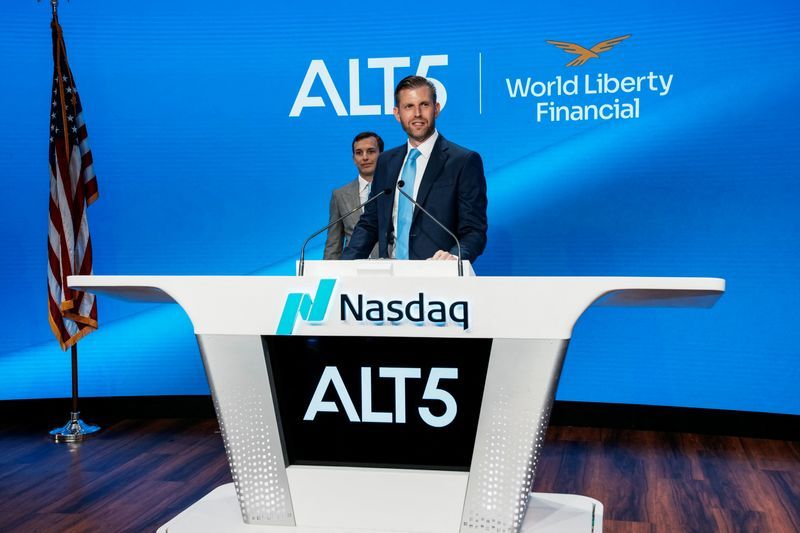
The OCC's approval letter specifically addressed concerns raised during the public comment period regarding non-U.S. investors in World Liberty Financial. The regulator determined that foreign investors would not qualify as principal shareholders in the bank structure. Furthermore, the OCC received passivity agreements from multiple foreign and domestic investors, including Eric Trump representing a Trump-family investment vehicle, committing that they would refrain from attempting to direct or influence the bank's operational or strategic decisions.
The approval itself occurred against a backdrop of heightened political scrutiny. In February, two Democratic members of the Senate Banking Committee requested that the Treasury secretary investigate potential national security implications stemming from a reported $500 million investment in World Liberty Financial connected to the United Arab Emirates' national security adviser. Additionally, Democrats have characterised the charter as presenting significant conflict-of-interest concerns and have questioned whether political considerations influenced regulatory decision-making. During a February congressional hearing, Democratic lawmakers pressured Comptroller Gould to disclose the company's complete, unredacted application, as the publicly released version excluded detailed information regarding capital structure and comprehensive business plans.
The leadership and ownership structure of World Liberty Trust reveals deep intertwining with Trump's personal network. Zach Witkoff, who serves as chief executive officer, is the son of Steve Witkoff, Trump's special diplomatic envoy. The Witkoff family emerged as co-founders of World Liberty Financial alongside Trump and his three sons in late 2024. Robert Witkoff, Steve's brother and a former insurance company executive, has been designated as a director of World Liberty Trust, while Scott Alper, serving as president of the Witkoff family's real estate operations, has been proposed as another director. This familial and professional concentration at the leadership level distinguishes World Liberty from conventional corporate structures.
In response to conflict-of-interest allegations, the OCC stated in its approval letter that Comptroller Gould and his staff adhered consistently to their statutory responsibilities and ethical obligations throughout the application review process. The regulator noted that career civil service employees conducted the application review and would similarly oversee ongoing supervision through nonpolitical examiners, a structural arrangement designed to insulate decision-making from political influence. However, observers note that the OCC operates without a bipartisan board structure, unlike many other financial regulators, which some view as complicating independence assessments.
World Liberty Financial represents the flagship venture within the Trump family's expanding cryptocurrency portfolio and has articulated an ambitious vision centred on democratising financial access by enabling individuals to circumvent traditional banking systems that the Trumps characterise as restrictive and inequitable. The USD1 stablecoin functions as the enterprise's primary product, engineered as a secure, U.S. dollar-backed digital asset granting access to diverse blockchain-based financial services. Since its announcement in March 2025, USD1 has demonstrated exceptional growth trajectories, now ranking as the fourth-largest stablecoin by market capitalisation at approximately four billion dollars.
The financial dimensions of the Trump family's cryptocurrency involvement prove substantial. Reuters calculations indicate that the Trump family earned approximately fifty million dollars from USD1 stablecoin operations through June 2026 alone. On a broader scale, World Liberty Financial has channelled more than $1.6 billion to President Trump and his family members as of April, according to Reuters' comprehensive financial analysis. These figures underscore the significant monetary stakes underlying the regulatory approval and the family's direct financial interest in World Liberty's expansion and success.
For Malaysian and Southeast Asian observers, the World Liberty charter approval illustrates the deepening integration of cryptocurrency ventures into mainstream financial infrastructure, particularly within jurisdictions where regulatory frameworks remain relatively permissive. The Trump administration's embrace of crypto-friendly policies contrasts markedly with regulatory approaches adopted by numerous Asian economies, creating potential competitive dynamics in digital asset development. The charter's approval also demonstrates how political connections and executive positioning can facilitate rapid advancement of crypto ventures through regulatory channels, a pattern relevant to understanding similar developments across regional markets seeking to position themselves within the emerging digital finance landscape.

