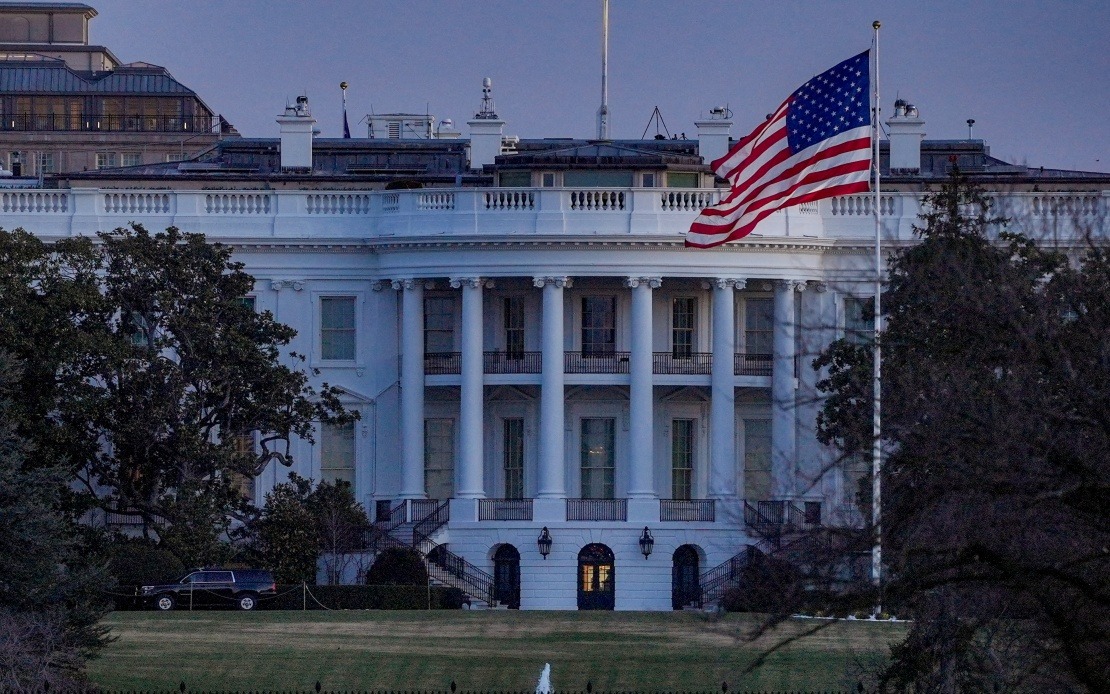
The task of protecting the President of the United States has grown markedly more complex and perilous in recent years, a reality now openly acknowledged by the agency tasked with this responsibility. On Wednesday, Sean Curran, the director of the US Secret Service, conceded that his organization is confronting what he characterized as a "heightened level of threat environment" for those under its protection—not only President Donald Trump but also other sitting and former presidents and senior government figures. His remarks came ahead of the White House Correspondents' Association dinner scheduled for July 24, an event that takes on added significance given its fraught recent history.
The threat landscape facing the American presidency has transformed dramatically over the past two years. Trump has narrowly escaped three separate assassination attempts in that period alone, a frequency that underscores the severity of the challenge confronting security personnel. The first incident occurred during a campaign rally in Pennsylvania in July 2024, when an assailant fired shots that struck Trump in the ear. Months later, in September of that year, a second attempt unfolded at Trump's private golf club in Florida. The third incident proved particularly shocking given its location and timing—during the White House Correspondents' Association dinner in April 2026, a shooting took place that the suspect was subsequently charged with attempting to assassinate the sitting president.
Beyond these three direct attempts on the president's life, law enforcement agencies have uncovered additional plots in the planning stages. In June 2026, the Federal Bureau of Investigation disclosed that it had thwarted a scheme targeting a UFC event at the White House, which the Department of Justice later classified as another assassination attempt against Trump. The sheer number of identified threats—both those carried out and those disrupted before execution—illustrates why security officials feel compelled to maintain elevated vigilance at all times.
Iranian intentions have featured prominently in the threat assessments conducted by American security agencies. Trump himself has publicly claimed that he stands as Iran's primary target, and in remarks made earlier in July, he asserted that the statistical probability of a sitting American president not surviving their tenure in office stands at 5.2 percent. However, Trump's own assessment of his personal safety appears somewhat at odds with the gravity of the situation his security team faces. When questioned about whether he felt endangered in light of reported Iranian assassination plots, Trump expressed that he perceived no particular reason for concern.
The scheduling and rescheduling of the White House Correspondents' Association dinner illustrates how security considerations now shape even ceremonial functions of government. The event, originally disrupted by the April shooting, has been postponed to July 24. Trump has confirmed his intention to attend despite the venue's troubled recent history, and Curran's briefing immediately before the dinner signaled that security preparations would be comprehensive and carefully coordinated. The decision to proceed with the event despite its previous disruption reflects a determination to maintain normal governmental functions while simultaneously acknowledging the reality of heightened risks.
For readers in Malaysia and across Southeast Asia, the intensification of security threats faced by the American president carries broader implications for geopolitical stability and regional security arrangements. The United States maintains significant military and strategic commitments throughout the Asia-Pacific region, and any disruption to American governance—whether through successful assassination or through the constraints imposed by elevated security protocols—could reverberate across alliance networks and defense partnerships. Nations throughout the region that rely on American security guarantees monitor American domestic stability with considerable interest, particularly when that stability is challenged by what appears to be a sustained campaign of assassination attempts.
The operational challenges facing the Secret Service extend beyond simply preventing specific identified threats. Curran's acknowledgment of a "heightened level of threat environment" suggests a recognition that the agency faces not merely discrete, isolated incidents but rather a broader shift in the threat landscape. This distinction matters considerably for resource allocation, personnel deployment, and strategic security planning. When threats exist at an elevated baseline level rather than occasional spikes, security operations must be continuously intensive rather than episodically heightened in response to specific warnings.
The apparent involvement of foreign state actors, particularly Iran, introduces a qualitatively different dimension to the security challenge. Unlike threats from independent actors motivated by ideological or personal grievances, state-sponsored assassination attempts typically involve greater resources, more sophisticated planning, and potentially higher levels of operational capability. The Secret Service must therefore calibrate its defenses not only against individuals but against the possibility of coordinated, well-funded, technically sophisticated operations potentially conducted by hostile foreign intelligence services. This represents an exponential increase in the complexity of protection operations compared to addressing threats from non-state actors.
Curran's public acknowledgment of the heightened threat environment itself serves a strategic purpose beyond merely informing the public. By speaking openly about the challenging security landscape, the Secret Service director signals both to the American public and to the international community that the agency takes the threat environment seriously and is adapting accordingly. Such transparency, carefully calibrated to avoid providing operational details that adversaries might exploit, can reinforce public confidence in security measures while simultaneously sending a message to potential threat actors that their intentions have been identified and are being actively countered.
The implications for how American political life unfolds in this environment remain uncertain. Historical precedent suggests that democracies can continue to function effectively despite elevated security threats, yet the frequency and apparent sophistication of recent attempts suggest that the United States may be entering a new phase of political violence. For observers internationally, including in Southeast Asia where democratic institutions are sometimes fragile, the American experience serves as a case study in how established democracies respond to and manage systematic threats to national leadership. The coming months will likely demonstrate whether current security measures prove adequate or whether further escalation in protective protocols becomes necessary.

