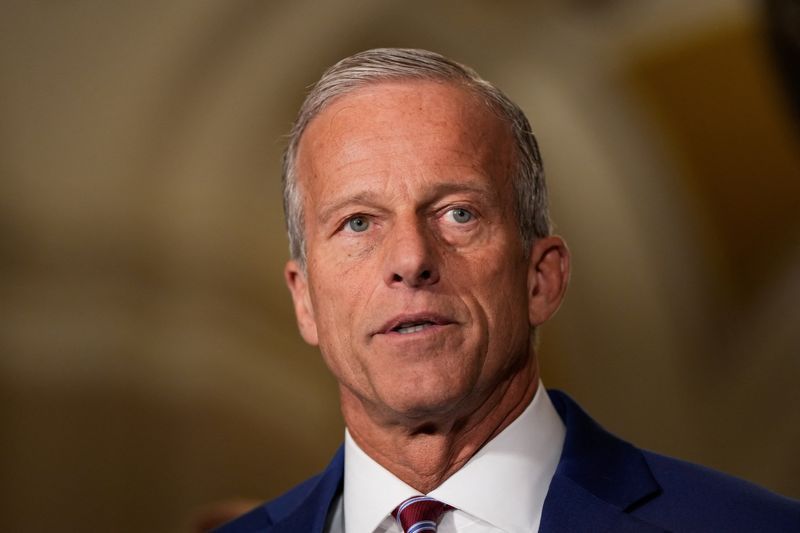
The United States Senate has entered a critical phase in its handling of cryptocurrency regulation, with Republican Majority Leader John Thune initiating procedural steps on Saturday to advance the Clarity Act, a sweeping bill designed to establish the first comprehensive federal regulatory structure for digital assets. Thune's move to schedule a key procedural vote for mid-September, after lawmakers return from their August recess, signals that Senate Republican leadership believes the legislation remains viable despite persistent opposition from Democratic lawmakers and other skeptics.
The Clarity Act represents the crypto industry's long-sought objective of obtaining a coherent national regulatory framework that would clarify the legal status of different digital tokens and assign oversight authority among federal regulators. Currently, the crypto sector operates in a fragmented regulatory environment, with various agencies claiming jurisdiction and creating confusion for businesses seeking to comply with federal law. The bill would establish definitions distinguishing between securities and commodities, potentially streamlining how companies navigate compliance requirements and reducing legal uncertainty that has hindered mainstream adoption of blockchain-based financial services.
For the Clarity Act to succeed, Senate Republicans must secure at least eight Democratic votes alongside the support of all Republican senators, a threshold that underscores the legislative arithmetic's challenge. Democrats have expressed reservations about the bill's approach and have raised concerns about conflicts of interest involving the Trump family's significant cryptocurrency holdings. These partisan divisions have made the path forward uncertain, though the timing of Thune's procedural filing suggests Republican leadership remains optimistic about persuading sufficient Democratic support before the September vote.
The financial stakes of this legislative battle are substantial. The cryptocurrency industry invested more than $119 million in the 2024 election cycle, with much of that spending explicitly aimed at supporting candidates who would advance the Clarity Act and related pro-crypto policies. This substantial financial commitment reflects the sector's view that federal regulatory clarity represents a transformative victory that could accelerate cryptocurrency adoption among mainstream consumers and institutions, ultimately expanding the industry's addressable market.
President Donald Trump has made cryptocurrency policy a priority during his second administration, viewing successful passage of the Clarity Act as a significant achievement for his legislative agenda. The White House has actively lobbied Senate Republicans and moderates in both parties, seeking to build the coalition necessary for passage. Trump's personal financial interest in cryptocurrency outcomes adds complexity to these efforts, as the President disclosed more than $1.4 billion in income from his family's crypto ventures during the previous year, creating a political vulnerability that Democrats have highlighted in criticizing the legislation.
The Clarity Act would represent the second major cryptocurrency policy victory for the Trump administration, following the passage and signing of legislation supporting stablecoins, or digital tokens pegged to the US dollar value, during the prior year. Stablecoins have emerged as a critical infrastructure component for crypto markets, enabling faster settlement and reduced price volatility. However, banks have actively opposed portions of the Clarity Act that would permit cryptocurrency companies to offer yield or interest-bearing products on stablecoin holdings, effectively allowing crypto platforms to function as deposit-taking institutions without traditional banking regulation. This banking sector opposition creates another dimension to the legislative challenge.
Democratic concerns extend beyond general regulatory philosophy to specific worries about the concentration of crypto wealth and decision-making power among a small group of individuals and firms. Several Democrats have advocated for stronger restrictions on government officials' personal participation in cryptocurrency ventures, citing conflict-of-interest concerns. Negotiations around these restrictions remain ongoing, with neither side having fully aligned on acceptable compromise language. The fluidity of these discussions suggests that final bill provisions may differ substantially from current drafts, particularly regarding ethics rules governing elected officials' crypto transactions.
For Malaysian and Southeast Asian observers, the Clarity Act's potential passage carries important implications. The region has emerged as a significant global cryptocurrency hub, with major exchanges and blockchain companies operating from jurisdictions including Singapore, Hong Kong, and Dubai. A comprehensive federal regulatory framework in the United States would likely influence how other countries, including Malaysia, approach their own cryptocurrency regulation. Many financial authorities globally monitor US policy developments closely when formulating domestic approaches, creating an opportunity for regulatory harmonization or divergence depending on the Clarity Act's final form.
The cryptocurrency industry's substantial political investment in securing the bill's passage reflects confidence that regulatory clarity would materially improve business conditions and consumer adoption. Banks and traditional financial institutions, conversely, view the legislation as a threat to their competitive position, particularly if crypto platforms gain authority to offer products competing directly with bank deposits. This fundamental conflict between the financial sector and crypto industry will likely continue shaping the legislative debate as the September vote approaches, with Senate moderates potentially holding decisive influence over the final outcome.

