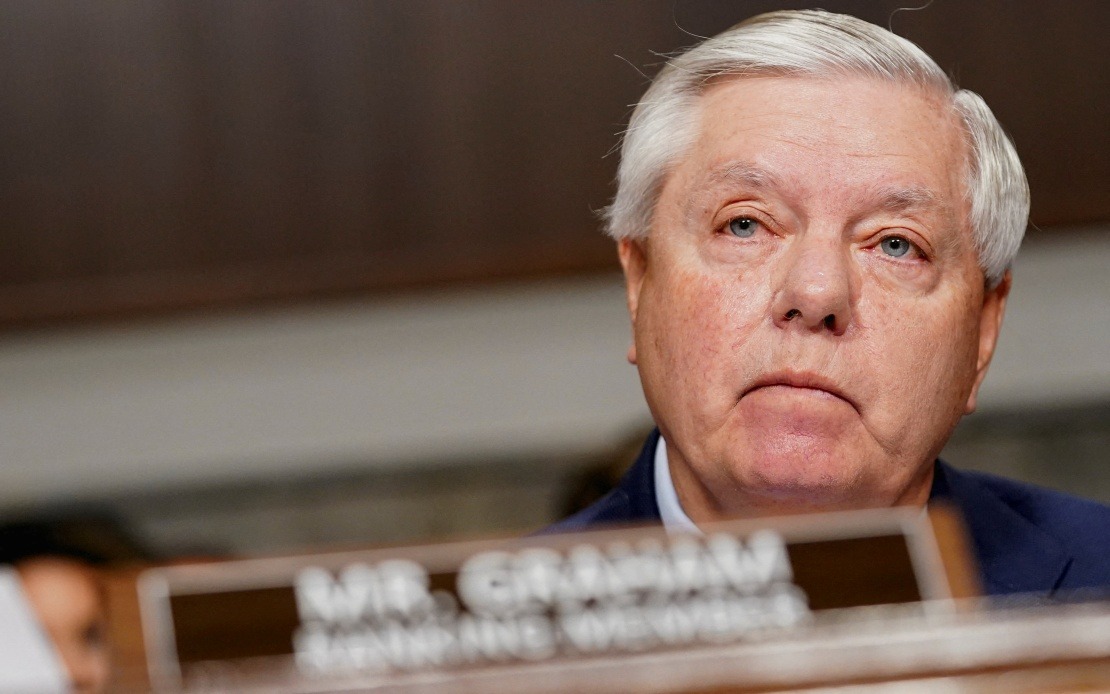
A prominent figure in American politics and staunch supporter of President Donald Trump, US Senator Lindsey Graham has died at the age of 71 following what his office described as a brief and sudden illness. The Republican politician from South Carolina passed away on Saturday evening, July 11, with his office releasing a formal statement on Sunday confirming his death. The announcement sent shockwaves through Washington and across the American political landscape, as Graham was widely considered one of the most influential voices within the Republican Party and a key ally of the former and current president.
Graham's family has requested privacy and asked for prayers during this difficult period, according to the official statement released by his office. Few additional details regarding the nature of his illness have been disclosed at this stage, with the emphasis placed on respecting the family's wishes at a time of profound loss. The sudden nature of his passing has left colleagues and political observers attempting to process the loss of one of the Senate's most vocal and recognisable personalities.
The South Carolina Republican had maintained a prominent position in the upper chamber since his election in 2002, demonstrating considerable political durability by securing reelection in 2008, 2014, and 2020. His tenure spanned two decades of American political upheaval, witnessing multiple presidential administrations and significant shifts in party dynamics. Graham's longevity in the Senate reflected his ability to navigate the complex political currents of his home state whilst maintaining influence on the national stage.
At the time of his death, Graham was serving as chairman of the Senate Budget Committee, a position of significant influence over federal spending priorities. This role placed him at the centre of crucial budgetary negotiations and policy discussions that shaped American economic priorities. Beyond his committee responsibilities, Graham had been actively preparing his campaign for a fifth consecutive six-year Senate term, with the November election on the horizon. His passing creates a considerable vacancy not only in the Senate but also in what promised to be a competitive election campaign in South Carolina.
Graham's relationship with President Donald Trump became particularly prominent during Trump's presidency and has remained influential in shaping Republican priorities and messaging. His alignment with Trump's political agenda marked a significant evolution from his earlier career, when he occasionally adopted more independent stances on foreign policy and other matters. This evolution made him a key figure in understanding the contemporary Republican Party's direction and internal dynamics.
The timing of Graham's death is particularly notable given his recent engagement in high-stakes international diplomacy. Just days before his passing, Graham had returned from a visit to Kyiv, where he met with Ukrainian President Volodymyr Zelenskyy on Friday. This visit underscored Graham's continued involvement in foreign policy matters, particularly regarding American support for Ukraine in its conflict with Russia. His engagement in these sensitive diplomatic discussions illustrated his position as a trusted voice in advising Republican leadership on complex international issues.
Graham's death removes a prominent voice from Senate debates over defence spending, foreign assistance, and America's global role. His views on these matters had become increasingly important as the Republican Party navigated questions about sustained support for Ukraine and broader American foreign policy priorities. The loss of his perspective and advocacy at this critical juncture in international affairs represents a significant development.
For Malaysian readers and observers of American politics, Graham's passing marks the departure of a senator who often advocated for robust American military presence and alliances in the Indo-Pacific region. His positions on Taiwan, China, and regional security arrangements had made him a relevant figure in discussions affecting Southeast Asian geopolitics. The senator had consistently supported strengthening American relationships with allies throughout the region, including through military commitments and strategic partnerships.
The vacancy created by Graham's unexpected death will inevitably lead to succession arrangements in South Carolina. Depending on state law and political procedures, this may involve gubernatorial appointment, special elections, or other mechanisms. The resolution of this transition will be watched closely by political observers seeking to understand how South Carolina Republicans navigate the succession and what direction the seat takes in the coming years.
Graham's three decades in electoral politics, combining his service in the House of Representatives before his Senate election in 2002, established him as a significant fixture in American conservatism. His evolution, conflicts with various political figures, and ultimate alignment with Trump's movement provided a case study in the transformation of Republican politics over the past two decades. His passing removes one of the Republican Party's most recognisable and prolific figures from public life.
The Senate will observe a period of remembrance for Graham, and his colleagues from both parties are expected to issue statements reflecting on his career and legacy. Discussions about how best to honour his service and continue his work in the areas he championed—defence, budget matters, and international engagement—will likely dominate Capitol Hill conversations in the coming days and weeks.

