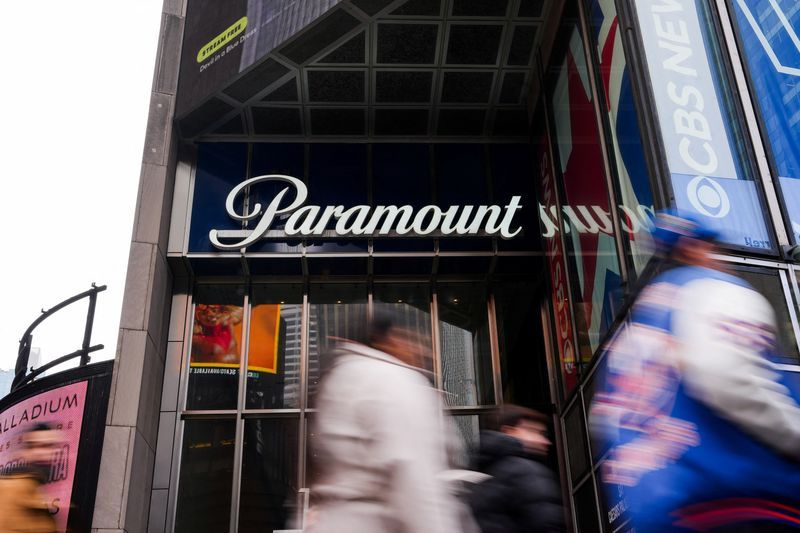
Twelve American states are mounting a legal challenge to Paramount's proposed merger with Warner Bros Discovery, arguing the combination of two major film studios threatens the viability of independently operated cinemas and basic cable television providers across the nation. The lawsuit, led by California and filed in July, contends that consolidating two of the five largest Hollywood distributors would create a media colossus capable of extracting punitive terms from theater owners and pay-TV operators who currently lack alternatives.
California Attorney General Rob Bonta, speaking from a vantage point before the Hollywood sign, articulated the core concern animating the states' case: that a merged Paramount-Warner entity would possess sufficient leverage to squeeze theatrical operators on revenue splits and service charges. This dynamic would force independent cinema chains to either absorb higher distribution costs or pass them along to consumers through elevated ticket prices. Simultaneously, studios could reduce the financial resources available for facility improvements that have become essential to competing against streaming platforms—investments in premium seating, expanded concession offerings, and advanced projection technologies that justify the theatrical experience.
The complaint identifies a troubling precedent in Disney's 2019 acquisition of Fox's entertainment assets. Between 2015 and 2018, the combined Disney-Fox operation distributed 112 wide-release films annually. By 2022 to 2025, that figure had collapsed to 54 releases, demonstrating how previous consolidation has already diminished the pipeline of content available to theaters. The current merger threatens to perpetuate this trend, further reducing the number of blockbuster titles that drive attendance and revenue for local exhibition venues still struggling to recover pandemic-era losses.
Theater owners have become increasingly vocal critics of the deal. Cinema United, the primary trade association representing multiplex operators, characterizes the merger as a threat not merely to commercial enterprise but to the cultural fabric of American communities. Michael O'Leary, the organization's president, framed cinemas as cornerstones of local identity and economic activity on Main Streets nationwide, suggesting that consolidation jeopardizes institutions whose value extends beyond their balance sheets. An unnamed executive from an independent theater chain articulated a more immediate fear: that a combined studio could leverage its enhanced market position to demand as much as 60 percent of ticket revenue, compared to the historical split of roughly 50 percent, leaving operators with diminished capacity to invest or maintain operations without aggressive price increases.
The financial mechanics of the deal itself underscores Paramount's motivation to complete the transaction swiftly. Chief Executive David Ellison has committed to paying Warner Bros Discovery shareholders a quarterly "ticking fee" of 25 cents per share—approximately $650 million every three months—should closing not occur before October. This escalating financial penalty creates powerful incentives for Paramount to exhaust remedies and proceed despite regulatory headwinds, potentially disadvantaging theater owners and consumers who lack equivalent leverage in negotiations.
Paramount has dismissed the states' allegations as a distortion of established antitrust doctrine. The company argues that claims of monopolistic leverage mischaracterize the competitive landscape of contemporary entertainment, where streaming platforms have fundamentally altered industry dynamics. Paramount further contends that blocking the merger would harm entertainment sector workers already weakened by technological disruption and employment contraction—a reference to the substantial job losses California's entertainment industry has experienced in recent years as production has shifted and business models have evolved.
The regulatory complaint identifies specific numerical thresholds highlighting the concentration risks. The merger would grant the resulting entity control over more than 27 percent of the theatrical distribution market and equivalent market share in basic cable television. This level of concentration, the states argue, would eliminate meaningful competition and grant the combined company unilateral power to dictate terms to distributors, a class of intermediaries already economically stressed by the structural transformation of the media industry.
Beyond exhibition, the merger threatens to restructure cable television economics. A unified Paramount-Warner would control an extensive portfolio of networks including CNN, TNT, Food Network, and HBO—properties that cable and satellite providers currently must negotiate for individually. By consolidating these assets under single ownership, the company would eliminate the negotiating advantage distributors currently enjoy by playing competing networks against each other. Cable and satellite providers would face a binary choice: accept the combined company's pricing and bundling terms or forfeit access to programming their customers demand, an asymmetry that would likely translate into elevated monthly bills for American households.
Box office data contextualizes the urgency of theater operators' concerns. Year-to-date receipts for 2026 reached $5.1 billion across the United States and Canada, representing growth of 10.6 percent year-over-year but remaining 16.3 percent below pre-pandemic 2019 levels. The persistent deficit underscores that cinemas have not yet fully recovered from pandemic-induced attendance collapse and remain vulnerable to further revenue pressures. Independent theater operators lack the financial reserves to absorb higher distribution costs or sustain unprofitable operations while awaiting recovery, making them particularly susceptible to the bargaining dynamics that the merger would enable.
The complaint does not object to Paramount's plans to combine its Paramount+ streaming service with Warner Bros' HBO Max, suggesting regulators view the theatrical and cable concentration concerns as analytically separate from and potentially more significant than questions surrounding streaming consolidation. This distinction may reflect recognition that theatrical distribution and cable television represent distinct markets where the merger would create distinct harms, even as streaming services operate under different competitive dynamics.
For Malaysian and Southeast Asian observers, the case illustrates how Hollywood consolidation reverberates through exhibition markets worldwide. As major studios concentrate bargaining power, regional cinema operators reliant on importing Hollywood content face parallel pressures to accept unfavorable terms, reduce facility investments, and raise ticket prices. The antitrust principles the states are defending—preventing concentration that enables dominant firms to extract excess rents from less-powerful trading partners—reflect fundamental competition policy concerns that transcend national borders and carry direct implications for cinema economics across Asia-Pacific markets.

