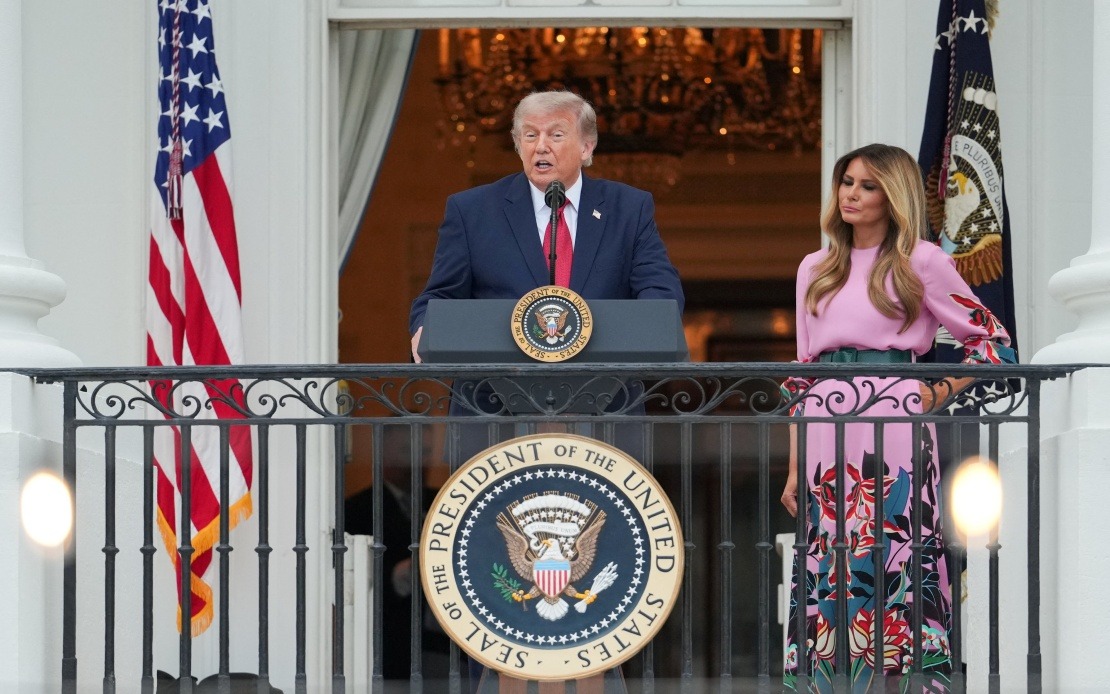
The United States Supreme Court has intervened in a lengthy legal dispute surrounding President Donald Trump's planned ballroom at the White House, issuing a temporary order on Friday that allows construction to proceed despite a lower court's earlier ban. Chief Justice John Roberts issued the brief directive suspending the appeals court's halt on construction work, clearing the path forward for a project that has become increasingly entangled in America's legal system. The top court's decision will remain effective until the justices themselves render a final judgment on the underlying case, a process that could extend months into the future.
This latest court order represents another chapter in what has become a years-long legal marathon over the ballroom proposal, which the Trump administration maintains is essential for national security purposes and updated state functions. The appeals court had recently determined that Trump could not proceed with construction without explicit Congressional authorisation, effectively blocking the project from moving forward. Heritage conservationists and various watchdog groups initiated the legal challenge, arguing that the administration circumvented proper procedures and failed to consult with relevant stakeholders before advancing what they characterised as a massive expansion.
The planned structure carries significant logistical and symbolic weight within the White House complex. Construction began in 2025 on the location of the former East Wing, with the extension spanning several thousand square metres. According to administration officials, the new facility will substantially expand the capacity for state banquets and formal diplomatic events, capabilities that current venues within the historic building cannot accommodate at the scale desired by the executive branch. The project's estimated cost runs into the hundreds of millions of dollars, a figure that has drawn particular scrutiny from conservation advocates concerned about both fiscal responsibility and architectural integrity.
The Trump administration's primary justification for the ballroom centres on security and functionality. Trump stated last month that the structure would incorporate advanced protective features, describing it as bulletproof, drone-proof, and resistant to missile attacks while maintaining aesthetic compatibility with the surrounding architecture. This dual mandate—combining contemporary security requirements with preservation of the White House's historical character—sits at the heart of the controversy. Critics question whether such ambitious structural additions can truly integrate seamlessly into one of America's most symbolically significant buildings, while also challenging whether the security rationale justifies the enormous expenditure and procedural shortcuts.
The legal pathway leading to this Supreme Court intervention reveals the complexity of balancing presidential prerogatives against institutional checks. Heritage conservationists argued that the administration pushed the project through without adequate consultation with relevant committees and preservation bodies. The appeals court agreed sufficiently to impose a temporary halt, finding that Congressional approval represented a necessary procedural requirement that had not been satisfied. The Supreme Court's decision to suspend that halt creates ambiguity about the ultimate constitutional question: whether the President possesses independent authority to undertake such modifications to the White House complex, or whether Congress must explicitly grant permission.
For Malaysian observers and regional stakeholders, this dispute offers insights into how democratic institutions navigate conflicts between executive efficiency and institutional restraint. While Malaysia's political system operates under a different constitutional framework, the tension between centralised decision-making and broader institutional consultation resonates across many governance contexts. The American ballroom controversy demonstrates how significant capital projects can become flashpoints for deeper questions about transparency, stakeholder engagement, and appropriate procedures—issues that matter to public accountability regardless of national context.
The Supreme Court's intervention suggests that the justices recognised sufficient legal complexity to warrant their attention, even as they permitted construction to continue pending resolution. This pragmatic middle path allows the administration to advance its objectives while preserving the court's opportunity to ultimately rule on the constitutional dimensions of the dispute. However, the temporary suspension of the lower court's ban does not resolve the underlying questions about whether proper authorisation was obtained and whether the ballroom project satisfies all relevant legal requirements.
Republican supporters defend the ballroom as a necessary modernisation of presidential infrastructure, particularly given contemporary security threats that were unknown when the White House was originally constructed. Democratic critics and conservation groups contend that the project exemplifies executive overreach and wasteful spending that should face greater scrutiny. The Supreme Court's eventual ruling could establish precedent regarding the scope of presidential authority over executive branch facilities and the degree to which Congress must be involved in major modifications to historic federal buildings.
The ongoing legal battle also reflects broader American debates about infrastructure spending, historic preservation, and institutional decision-making during a period of significant political polarisation. What might have been viewed as an ordinary facilities management question in previous administrations has become a proxy for larger arguments about executive accountability and constitutional limits on presidential power. As the Supreme Court prepares to address the central legal questions, the temporary continuation of construction work underscores the practical pressures that accompany extended litigation over major capital projects.

