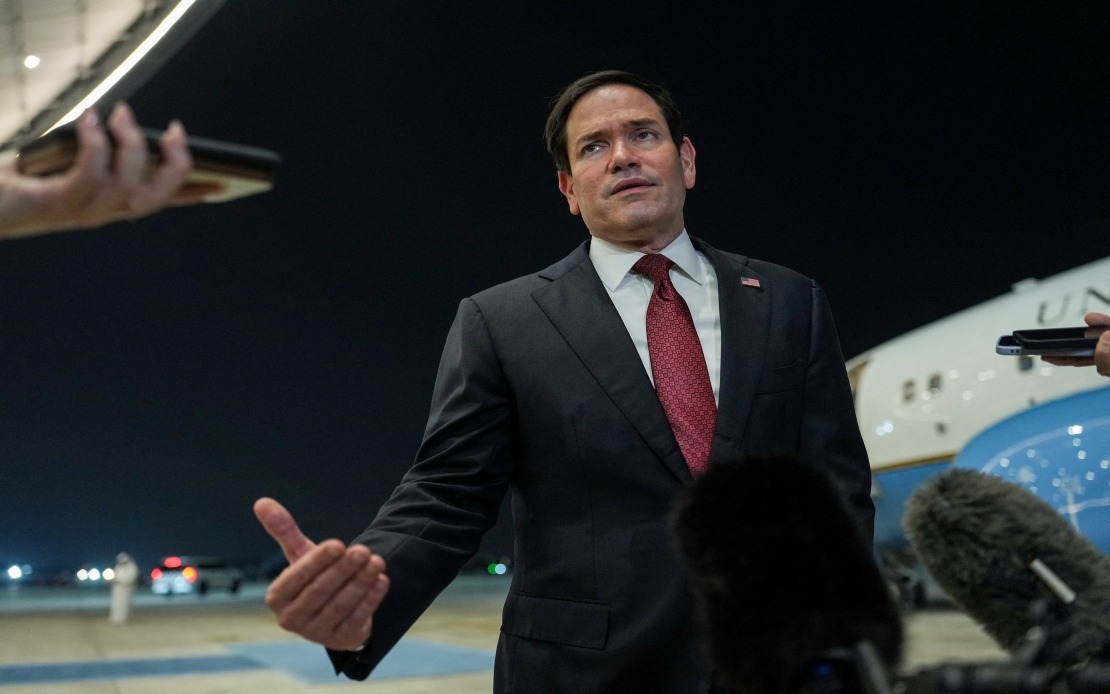
Washington moved swiftly to distance itself from speculation about American financial involvement in Iran's post-conflict reconstruction, with Secretary of State Marco Rubio explicitly rejecting the premise that US government funds would support such an initiative. Speaking to reporters on Tuesday, Rubio characterised any reconstruction financing framework as premature discussion, emphasising that while various parties might consider participation, the United States would not be among them. His remarks came amid reports circulating through international media channels regarding a potential reconstruction fund, which had earlier prompted President Donald Trump to dismiss specific figures being attributed to such a scheme.
The diplomatic context for Rubio's statement reflects an evolving relationship between the US and Iran following recent breakthrough negotiations. Last week, representatives from both nations signed a memorandum in a remote ceremony that effectively halted military hostilities that had escalated since February 28. This agreement represents a significant shift in US-Iran relations and suggests sustained diplomatic engagement despite historical tensions between the two governments. The timing of Rubio's clarification appears calibrated to manage expectations among Gulf state actors and other regional players who might view American financial commitment as a prerequisite for their own participation in reconstruction efforts.
The memorandum signed last week establishes concrete mechanisms for de-escalation and normalisation of economic relations, including provisions requiring the United States to lift its naval blockade and Iran to restore maritime traffic through the Strait of Hormuz. For Malaysian readers and the broader Southeast Asian region, these developments carry significant implications for global energy security and shipping routes, given the critical importance of the Hormuz Strait to regional trade flows. The agreement also addresses the nuclear dimension of US-Iran relations, with both parties committing to a separate negotiation process spanning 60 days, during which Iran pledges not to pursue nuclear weapons acquisition while the parties work toward a comprehensive nuclear accord.
Rubio's statement regarding reconstruction financing carries particular weight given its apparent deflation of speculation that had circulated internationally about the scope and scale of American involvement. While acknowledging that economic opportunities might materialise for Iran conditional on successful resolution of broader security concerns, the Secretary of State framed any reconstruction initiative as dependent upon future progress rather than current commitment. This formulation suggests the United States views reconstruction financing as a potential incentive mechanism for Iranian compliance with security obligations rather than an immediate priority.
The recent negotiations held in Burgenstock, Switzerland, underscore the critical role of mediators in facilitating dialogue between Washington and Tehran. Qatar and Pakistan's participation in these talks reflects their regional interests and their diplomatic relationships with both American and Iranian leadership. The delegation composition also highlighted the seriousness with which both governments approached the negotiations, with US Chief Diplomat JD Vance leading the American team while Iran's parliamentary speaker Mohammad Bagher Ghalibaf headed the Iranian contingent. Both delegations subsequently reported meaningful progress, lending credibility to the broader diplomatic trajectory.
From a Southeast Asian perspective, the stabilisation of US-Iran relations carries consequences for regional security architecture and economic opportunity. Malaysia's own diplomatic balancing act between various global powers means that reduced US-Iran tensions create space for more predictable international relationships. Moreover, the restoration of normal shipping patterns through the Strait of Hormuz would enhance maritime security and reduce insurance costs for vessels transiting Asian waters, directly benefiting Malaysian shipping and trade sectors.
Rubio's careful framing regarding Gulf state investment potential reflects Washington's awareness that its own financial participation would likely catalyse contributions from regional partners, particularly Saudi Arabia, the United Arab Emirates, and other Gulf Cooperation Council members. By explicitly ruling out American government investment, Rubio potentially signals that any reconstruction fund would need to depend on Gulf capital, which carries different implications for terms, governance, and long-term strategic alignment. This approach preserves American flexibility while potentially limiting the scope of international reconstruction architecture.
The nuclear dimension of the emerging settlement adds another layer of complexity to understanding American policy objectives. That both parties have committed to resolving nuclear issues through a separate 60-day negotiation process suggests recognition that military de-escalation and nuclear accountability represent distinct policy tracks requiring tailored approaches. For regional stability considerations relevant to Southeast Asia, successful nuclear resolution would substantially reduce the risk of renewed confrontation and the associated regional destabilisation that major power conflict in the Middle East typically produces.
Looking forward, Rubio's clarifications about financial non-participation appear designed to manage both domestic political expectations and international diplomatic positioning. The Secretary's framing that reconstruction depends on progress across security issues suggests the United States intends to maintain leverage over Iran's compliance through conditional offers of economic normalisation rather than through direct financial transfers. This approach aligns with traditional American statecraft while allowing space for allies and regional actors to develop their own relationships with Iran. For Malaysia and other Southeast Asian nations, the trajectory of US-Iran relations will continue shaping the strategic environment within which regional diplomacy and economic engagement occur.