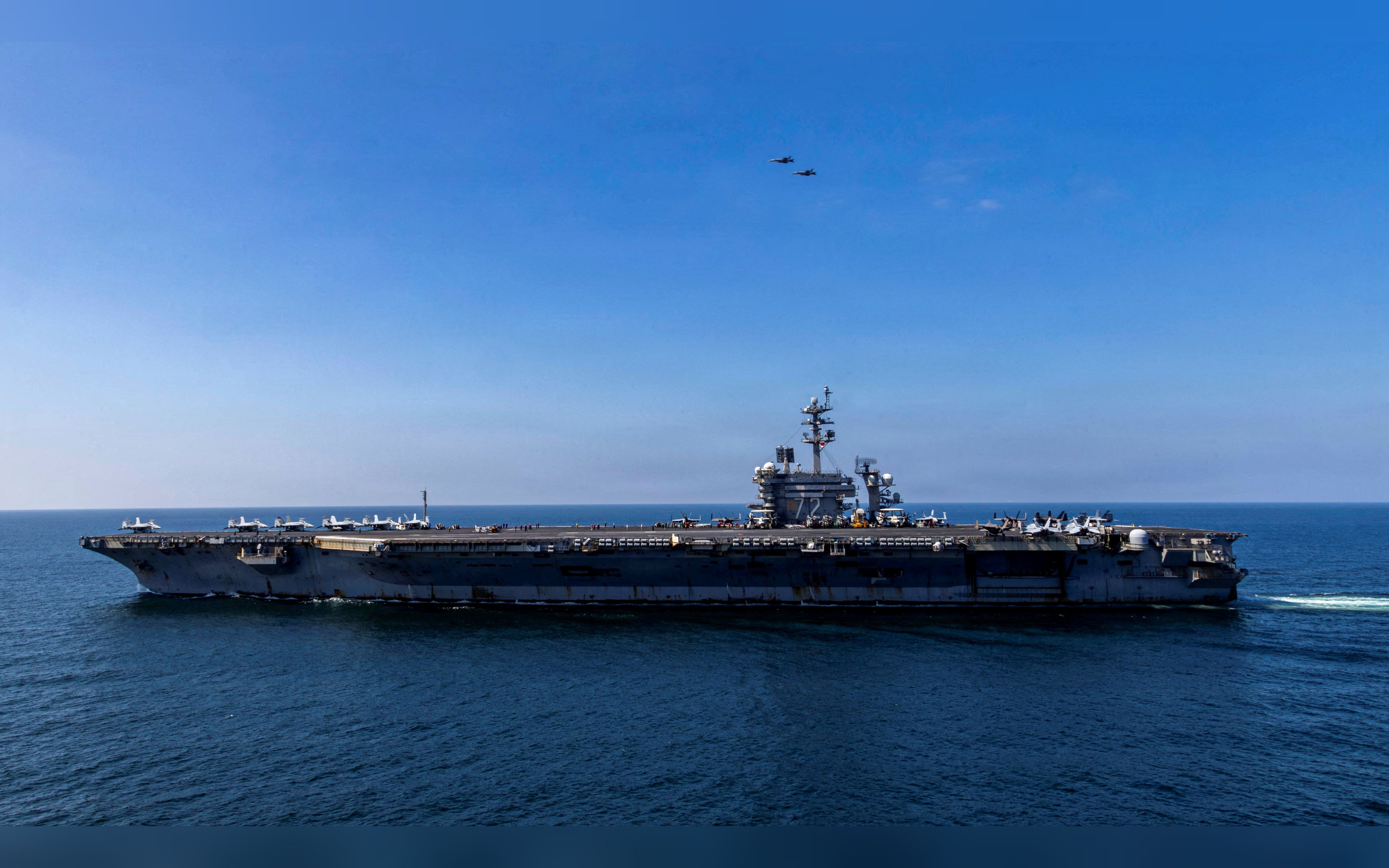
President Donald Trump has confirmed that the USS Abraham Lincoln aircraft carrier will be replaced in West Asia as part of a rotation aimed at addressing concerns about the extended deployment conditions faced by American naval personnel. Speaking to reporters on Friday, Trump acknowledged that the vessel is moving out of the region shortly and will be succeeded by another comparable carrier as part of a pre-planned operational schedule. The announcement comes after mounting pressure from family members and elected officials regarding the extended time the Lincoln's crew has spent at sea under demanding conditions.
The USS George Washington is slated to take over from the Lincoln as the central naval asset in the region, continuing America's sustained military presence across West Asia. This changeover represents a routine element of the US Navy's carrier rotation schedule, though the timing and circumstances surrounding the Lincoln's deployment have drawn unusual public attention. The rotation aligns with standard procedures for managing the global deployment of these massive warships, which typically serve as floating command centres and power projection platforms for American strategic interests.
The Lincoln began operations in November before being redirected to West Asia in January amid heightened tensions in the region. Since that redeployment, the carrier has remained in theatre for more than 250 days, with the last 200 days spent without any port calls—a gruelling operational tempo that has taken a measurable toll on morale and welfare across the vessel's complement. The extended deployment without shore leave has created cumulative stresses that range from basic supply shortages to psychological pressures on personnel operating under sustained combat conditions.
Senator Richard Blumenthal brought these concerns into the public eye through a letter to Defence Secretary Pete Hegseth and Acting Navy Secretary Hung Cao, documenting a series of welfare issues affecting the crew. His correspondence highlighted reports of insufficient basic supplies, contaminated water systems, plumbing failures, deteriorating mental health conditions among sailors, documented safety hazards on flight decks, and significant delays in postal delivery that have prevented care packages from reaching service members for extended periods. These details paint a portrait of accumulated strain across multiple dimensions of sailor welfare.
Acting Navy Secretary Hung Cao acknowledged the Lincoln's achievements while addressing the deployment challenges head-on. He announced that the vessel would indeed return home as part of the scheduled rotation, emphasising that the safety and security of sailors and marines represents the Navy's foundational priority. Cao framed the extended deployment as a necessary response to operational demands, noting that the mission itself determined how long the Lincoln would remain in theatre rather than arbitrary scheduling considerations alone.
According to figures released by the Navy leadership, the Lincoln's deployment spanned 266 days in total, encompassing 200 days of operations within an active combat zone. During this period, the carrier's aircraft executed more than 10,000 sorties—individual flight operations—and deployed ordnance exceeding 1.5 million pounds, demonstrating the intensity of air operations from the vessel. These statistics underscore the substantial military workload that has sustained the crew throughout their extended deployment.
While acknowledging the inherent hardships of military service, Cao recognised the particular difficulties imposed by sustained combat operations. He observed that warfare disrupts normal routines and creates unpredictability that extends beyond even the most comprehensive operational planning. Despite these challenges, he noted that a small number of sailors and marines sought mental health treatment during the deployment, though he emphasised that no deaths occurred among those receiving such care. This transparency about psychological impacts reflects evolving recognition within military leadership of mental health as a critical welfare concern.
Trump's dismissive characterisation of deployment length—stating it was "not nearly long enough"—contrasts markedly with the welfare concerns documented by Blumenthal and the concerns of sailors' families. His comment reflects a harder line on military operations and suggests the administration views extended deployments as strategically necessary rather than problematic. This philosophical divide between civilian political leadership and those documenting welfare impacts represents an ongoing tension within defence policy discussions.
For regional observers, the Lincoln's replacement by the George Washington signals continuity in American military commitment across West Asia despite the rotation. Both vessels represent comparable power-projection capabilities, suggesting no diminution in American naval presence. The changeover provides an opportunity for the incoming crew to deploy fresh personnel and resources, potentially addressing some of the accumulated maintenance and supply deficiencies that have characterised the Lincoln's extended stint. The rotation also reflects America's enduring strategic focus on maintaining dominance across sea lanes and chokepoints throughout the region.
The deployment challenges documented during the Lincoln's extended mission offer insight into the human costs associated with sustained military operations in the contemporary Middle Eastern environment. Issues ranging from contaminated water to delayed mail highlight how logistical strain compounds operational stress, affecting personnel morale across multiple dimensions simultaneously. As American naval policy continues adapting to the demands of extended regional presence, addressing sailor welfare has emerged as both a humanitarian concern and a practical factor in maintaining operational effectiveness and retention within the all-volunteer force.
The transition from the Abraham Lincoln to the George Washington also occurs within the broader context of American strategic competition and regional instability. West Asia remains central to American security calculations, encompassing critical petroleum transport routes, multiple alliance commitments, and ongoing counterterrorism operations. Maintaining continuous carrier presence requires rotating vessels through demanding deployment cycles, creating perpetual tension between mission requirements and personnel welfare. The Lincoln's rotation represents one manifestation of this systemic challenge facing military planners who must balance strategic necessity against human sustainability.

