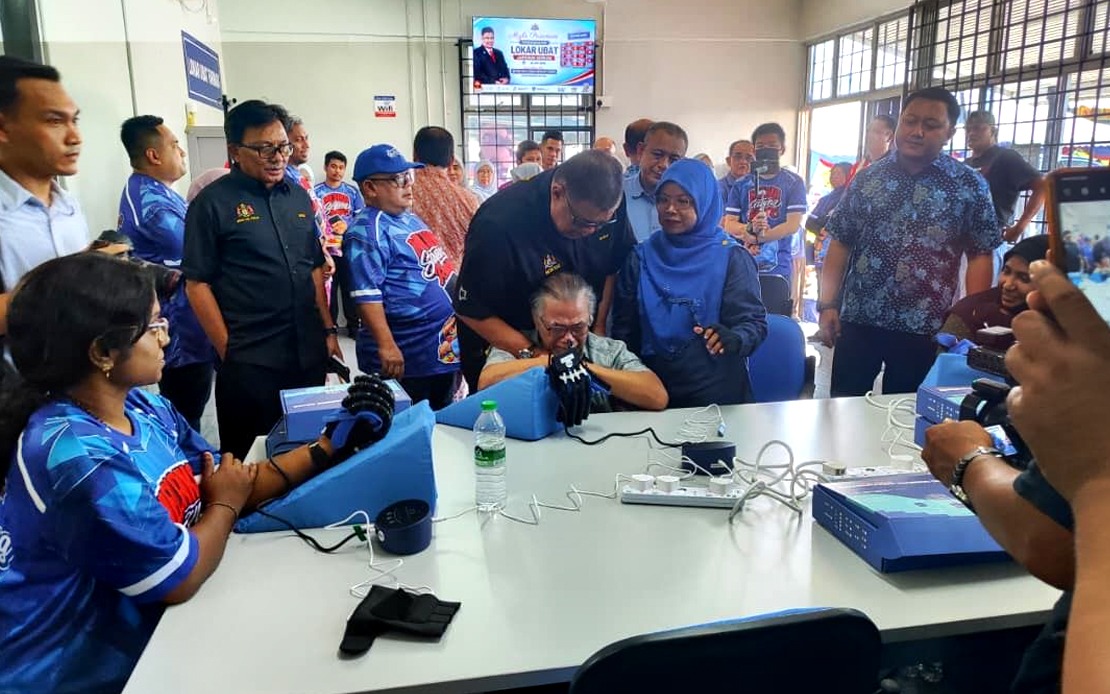
Universiti Teknikal Malaysia Melaka (UTeM) has opened an innovative rehabilitation facility in Serkam, Jasin, that integrates advanced robotics and assistive technologies to help patients recover from stroke, injury, and mobility disorders. The MADANI Community Rehabilitation Centre and Gymnasium represents an ambitious attempt to extend sophisticated medical rehabilitation beyond urban hospitals into community settings, funded through the Finance Ministry's UniMADANI 2024 Grant programme. Inaugurated by Chief Minister Datuk Seri Ab Rauf Yusoh during the Public University Community Empowerment Programme, the centre signals growing recognition that technology-enabled healthcare solutions can address accessibility gaps affecting rural and semi-urban populations across Malaysia.
The facility's technological arsenal reflects years of research by UTeM engineers and researchers working to democratise rehabilitation services. Three flagship innovations anchor the centre's treatment offerings: Roboglove, a hand exoskeleton that guides and supports finger and grip rehabilitation through automated training protocols; the Assistive Lower Limb Chair (ALLC), which enables patients with severe mobility restrictions to undergo structured lower limb exercises without manual therapist intervention; and a full-body exoskeleton system designed to enhance movement training effectiveness for patients recovering from stroke or spinal injuries. These devices represent the practical translation of engineering research into clinical applications, addressing a persistent shortage of qualified physiotherapists in Malaysia's regional centres.
The establishment of this centre reflects a broader strategic pivot among Malaysian public universities towards community engagement and translational research. Rather than allowing innovations to accumulate within laboratory environments, UTeM has created a demonstration site where university-developed technologies serve active patient populations. This model carries significant implications for how Malaysia approaches healthcare accessibility, particularly as stroke incidence continues climbing due to ageing populations and lifestyle-related risk factors. The centre simultaneously provides researchers with real-world feedback on device performance and user experience, creating a feedback loop that should drive continuous improvement of these rehabilitation tools.
Coordination across multiple stakeholder groups underpinned the centre's establishment, involving UTeM management, the Serkam State Constituency Development and Coordination Committee (Japerun), village-level development committees, the Social Welfare Department, and PERKESO—Malaysia's social security organisation. This layered governance structure reflects Malaysia's approach to integrating university resources with local government capacity and social welfare infrastructure. The collaborative model suggests that similar centres could theoretically be replicated in other constituencies, provided sufficient community buy-in and coordination mechanisms exist. Vice-Chancellor Prof Datuk Dr Massila Kamalrudin explicitly framed the centre as a catalyst for expanding technology-based rehabilitation access while demonstrating universities' responsibility to translate research into community benefit.
For stroke survivors and injured individuals in Melaka's regional areas, the centre potentially eliminates significant barriers to accessing rehabilitation that previously required travel to Kuala Lumpur or specialised private facilities. Stroke remains a leading cause of disability in Malaysia, and many patients plateau in recovery due to insufficient physiotherapy access after acute hospital discharge. Robotic assistance systems can supplement human therapist capacity, enabling more intensive training protocols during critical recovery windows. The ALLC system particularly addresses needs of severely disabled patients for whom conventional physiotherapy proves physically demanding or impractical, allowing safer, more consistent exercise regimens.
The centre's emergence also reflects Malaysia's growing focus on leveraging domestic research and engineering talent to solve healthcare challenges rather than depending entirely on imported medical technologies. Developing rehabilitation robotics locally reduces long-term costs, ensures device maintenance and modification can occur within Malaysia, and builds technical expertise in a sector where regional demand substantially exceeds current supply. As Southeast Asian healthcare systems prioritise rehabilitation services for ageing populations, local technological capacity becomes strategically important for regional competitiveness and cost management.
Access economics form another critical dimension of this initiative. Robotic rehabilitation devices imported from Europe or North America typically carry costs prohibitive for public healthcare systems or individual patients in Malaysia. Technologies developed locally can be manufactured more affordably, potentially reaching price points compatible with public healthcare budgets and community financing. PERKESO's involvement suggests that workers injured in employment accidents could potentially access the centre's services through occupational rehabilitation programmes, creating a revenue and patient stream that sustains long-term operations.
The centre's long-term success will depend on several operational factors beyond its initial inauguration. Trained operators must supervise robotic systems to ensure patient safety and optimal results, requiring ongoing staff development. Integration with existing physiotherapy and medical frameworks at state and federal levels will determine whether referral pathways develop organically or remain ad-hoc. Documentation of clinical outcomes will be essential for building evidence supporting replication at other sites and justifying continued investment in similar programmes. International collaboration with rehabilitation centres in other countries could accelerate refinement of protocols and device capabilities.
The MADANI Centre's launch also positions UTeM within competitive regional dynamics around healthcare innovation. Thailand, Singapore, and South Korea have invested heavily in medical technology clusters and rehabilitation innovation, setting benchmarks for neighbouring countries. Malaysian university-developed solutions gaining traction in local communities can strengthen the case for increased research funding and position Malaysian institutions as credible partners for intra-ASEAN healthcare technology collaboration. Success with this Melaka facility could catalyse similar projects elsewhere, gradually building a distributed network of technology-enabled rehabilitation capacity across the country.
Looking forward, the centre's integration of engineering research with clinical practice represents a model that Malaysian healthcare policymakers should evaluate for expansion. Other universities possess relevant engineering and design capabilities that could be similarly mobilised for community healthcare challenges. The Finance Ministry's UniMADANI grant structure evidently provides fiscal instruments for such initiatives, suggesting that replication requires primarily political will and institutional coordination rather than fundamental funding innovation. As Malaysia's healthcare system grapples with rising chronic disease burdens and fiscal pressures on public provision, community-based technology solutions offer pathways to improve outcomes while managing costs—precisely the kind of innovation that regional health systems urgently require.

