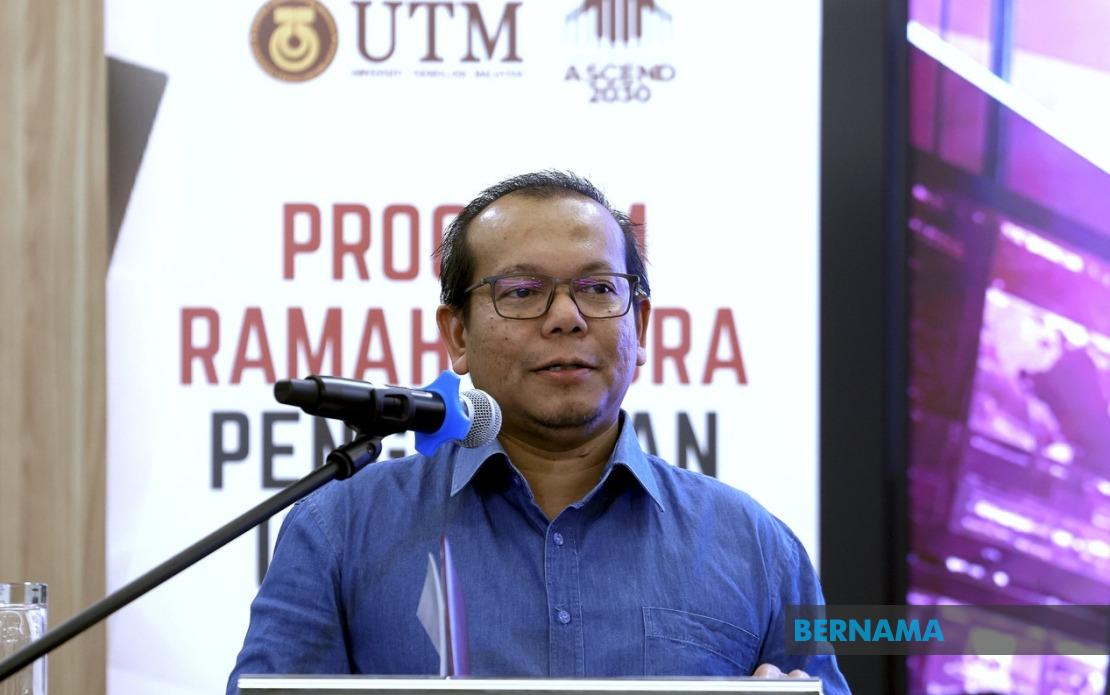
Universiti Teknologi Malaysia is moving to fortify its relationship with the media industry, recognising that robust partnerships are essential for transmitting factual information and protecting institutional credibility in an era vulnerable to distortion. Vice-chancellor Prof Dr Mohd Shafry Mohd Rahim articulated this strategy during the University Management's Media Networking Session, emphasising that contemporary higher education faces intensifying pressure from inaccurate portrayals that can swiftly erode decades of reputation-building.
The challenge confronting Malaysian universities extends beyond isolated incidents of poor reporting. Institutional leaders increasingly contend with a landscape where unverified claims and malicious narratives spread rapidly through digital channels, potentially undermining public trust and stakeholder confidence faster than factual corrections can circulate. Prof Mohd Shafry's observation that negative characterisations can damage an institution in months despite requiring decades to construct resonates particularly with Malaysia's academic sector, where universities compete for domestic enrolment, research funding, and international rankings. The reputational cost of misinformation can manifest in reduced student applications, difficulty attracting quality faculty, and diminished research partnerships.
UTM's approach addresses this vulnerability through deliberate structural engagement rather than reactive damage control. The university intends to position its subject-matter experts and researchers as accessible resources for journalists, creating pathways for reporters to obtain authoritative commentary that reflects institutional positions accurately and comprehensively. This strategy acknowledges that quality journalism depends on reliable sources willing to provide context and clarification. By facilitating media access to UTM's academic personnel, the university simultaneously strengthens journalism standards while ensuring its research and institutional activities receive appropriate representation.
Beyond source provision, UTM is planning training initiatives that would equip media practitioners with specialised knowledge in artificial intelligence, a field where academic expertise has particular value. As AI applications proliferate across Malaysian industries and governance structures, journalists require competent explanation of complex technical concepts to inform public understanding of policy implications and innovation benefits. By investing in media literacy around emerging technologies, UTM acknowledges that informed reporting depends on practitioners possessing sufficient technical background to evaluate claims and distinguish genuine developments from speculative hype.
The involvement of Bernama, Malaysia's national news agency, signals institutional commitment to this collaborative framework. As the primary distributor of official information and a foundational source for many regional media outlets, Bernama's partnership with UTM creates potential for systematic integration of research findings and academic expertise into national news flows. This arrangement moves beyond episodic feature coverage toward embedding academic knowledge as a standard information stream, particularly valuable for ensuring that Malaysian research receives prominence in domestic reporting rather than remaining confined to specialist publications.
UTM's intention to develop mechanisms for disseminating research findings through media channels reflects broader recognition that academic impact depends partly on public awareness and understanding. Research that remains confined to peer-reviewed journals reaches limited audiences, whereas findings communicated through mainstream media can influence policy conversations, business investment, and societal priorities. Universities globally have recognised that research dissemination requires deliberate communication strategies, and Malaysia's higher education institutions increasingly compete for visibility within crowded information environments. By treating media engagement as integral to research translation, UTM positions itself as a contributor to national development discourse rather than merely an isolated research institution.
The networking initiative also positions UTM strategically within Malaysia's higher education ecosystem at a moment when institutional differentiation increasingly depends on quality of engagement with external stakeholders. As the sector faces questions about graduate employability, research relevance, and social contribution, universities that demonstrate capacity to communicate effectively with media and public audiences gain competitive advantages. UTM's emphasis on fact-based explanations and expertise-sharing responds to documented concerns that misinformation and institutional opacity damage confidence in Malaysian universities.
For regional implications, UTM's approach offers a model that other Southeast Asian universities might adapt. The region's academic institutions frequently struggle with limited media coverage and inadequate representation of research in national policy discussions. By systematising media collaboration and positioning journalists as partners rather than potential critics, universities can reshape how academic work influences public conversation. This becomes particularly significant in policy areas—environmental sustainability, technological governance, public health—where research-informed decision-making remains underdeveloped.
The strategy also reflects implicit recognition that universities cannot control information flows in digital environments but can influence them through consistent engagement and reliable information provision. Rather than attempting to restrict media access or manage publicity defensively, UTM's approach embraces media partnership as a mechanism for ensuring accuracy and institutional voice. This fundamentally differs from older models where universities maintained distance from journalists. Contemporary institutions recognise that absence or silence creates vacuums that misinformation naturally fills.
Looking forward, the sustainability of this collaboration depends on mutual benefit and reciprocal respect. Journalists require reliable sources and access, while universities require fair coverage and opportunities to provide context. When these interests align through professional relationships built on trust, both parties strengthen their capacity to serve public understanding. UTM's initiative suggests Malaysian higher education is maturing toward recognising media engagement as central to institutional mission and national contribution, rather than peripheral public relations activity.

