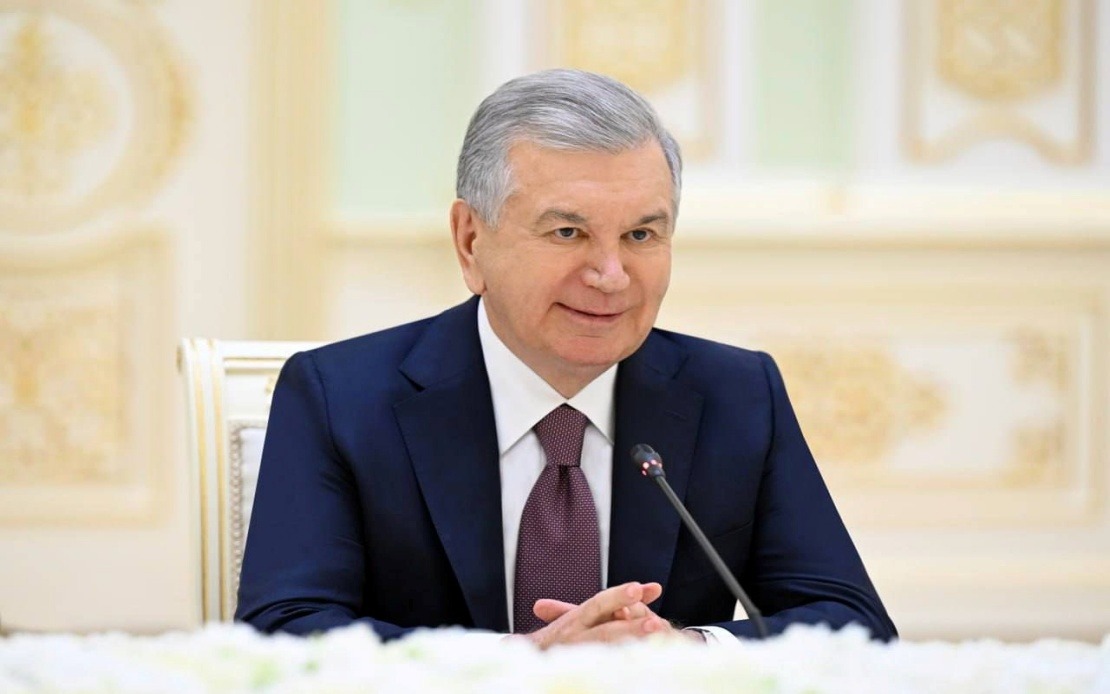
Uzbekistan's President Shavkat Mirziyoyev has positioned his nation as a convener of global intellectual dialogue, using the opening of a major international forum to advocate for peace and tolerance rooted in the scholarly achievements of Islamic civilisation. Addressing the First International Islamic Civilisation Forum in Tashkent, Samarkand and Termez, Mirziyoyev delivered a carefully calibrated message that frames scientific inquiry and educational advancement as antidotes to the polarisation, mutual suspicion and ideological extremism that characterise contemporary international relations. His intervention, delivered through presidential adviser Khayriddin Sultanov, reflects Uzbekistan's broader strategic positioning as a moderate Islamic nation and Central Asian thought leader capable of bridging East and West.
The forum itself represents an ambitious undertaking, convening approximately 300 scholars, religious leaders, government officials and cultural figures from more than fifty countries over five days. Rather than treating Islamic civilisation as a historical curiosity confined to the medieval period, Mirziyoyev's message reframes it as a living intellectual resource whose contributions to mathematics, medicine, astronomy and philosophy remain foundational to modern knowledge. The choice of venues—Tashkent, Samarkand and Termez—carries symbolic weight, as these cities embody Central Asia's historical role as a crucible where Chinese, Persian, Indian and European intellectual traditions converged and synthesised.
Uzbek policymakers have explicitly aligned this forum with the nation's long-standing "Enlightenment Against Ignorance" initiative, first presented to the United Nations in 2017. This framing deserves closer examination, as it suggests that ignorance and intolerance rather than theological disagreement represent the root cause of modern conflict. By anchoring his argument in science, education, cultural preservation and moral values rather than strict religious doctrine, Mirziyoyev appeals to a secular as well as religious audience. For Southeast Asian readers, this model offers instructive parallels: Malaysia, Indonesia and other nations in the region have similarly sought to demonstrate that Islamic values complement rather than conflict with modernity, rationalism and pluralism.
The forum's thematic focus—"The Path of Peace, Tolerance and Enlightenment"—underscores Uzbekistan's investment in positioning itself as a custodian of Islamic heritage during a period when Islam faces distorted representations globally. Mirziyoyev's explicit references to Islamophobia acknowledge real anxieties within Muslim-majority nations about negative stereotyping in Western media and policy circles. By showcasing Islam's scientific and humanitarian contributions, Uzbekistan seeks to counter the narrative that Islamic civilisation is fundamentally incompatible with progress, democracy or contemporary values. This represents a diplomatic strategy increasingly adopted across the Muslim world, though few nations have the historical credibility and institutional resources that Uzbekistan brings to the effort.
The intellectual giants Mirziyoyev enumerated—Muhammad al-Khwarizmi, Abu Rayhan Biruni, Abu Ali ibn Sina, Mirzo Ulugh Beg, Imam al-Bukhari, Imam al-Tirmidhi and Imam al-Maturidi—were products of Central Asian scholarship networks that flourished under conditions of relative stability, patronage and intellectual freedom. Their achievements in mathematics, astronomy, medicine, philosophy and Islamic jurisprudence demonstrate the depth and sophistication of Islamic intellectual traditions. For Malaysian and Southeast Asian policymakers, the relevance is clear: these figures exemplify the integration of Islamic learning with empirical science, suggesting a model for contemporary Muslim societies navigating the demands of technological advancement and global competitiveness.
Uzbek ambitions to construct a "Third Renaissance" anchor this vision firmly in the future while maintaining respect for historical heritage. The concept implicitly references the Italian Renaissance as a period when rediscovery of classical knowledge catalysed innovation, artistic expression and institutional transformation. By invoking this parallel, Mirziyoyev suggests that a comprehensive engagement with Islamic intellectual traditions might similarly animate contemporary Muslim societies. The emphasis on innovation, modern education, spiritual development and creative potential reflects a synthesis of religious identity with economic development aspirations—a balancing act that resonates with Southeast Asian nations attempting similar integrations.
The Islamic Civilisation Centre itself functions as the institutional engine for this agenda, positioned explicitly as an intellectual bridge linking past and future, East and West. The centre serves as a research facility, exhibition space and convening platform, bringing together scholars and religious figures to advance scientific cooperation while preserving universal ethical values. By framing the centre as an "open platform" rather than an ideologically circumscribed institution, Uzbek officials signal their commitment to inclusivity and intellectual pluralism. For observers from Indonesia, Malaysia and Brunei—countries with their own Islamic research institutions and heritage preservation efforts—the Uzbek model offers both inspiration and a comparative case study.
The forum's substantive programme demonstrates considerable intellectual ambition and sophistication. Eleven plenary sessions, four international scientific conferences, exhibitions of rare manuscripts and cultural artefacts, and presentations on digital humanities and artificial intelligence applications for Islamic manuscript preservation all reflect a commitment to engaging Islamic heritage through cutting-edge methodologies. The integration of artificial intelligence and digital preservation technologies suggests that Uzbek planners understand contemporary scholarship not as backward-looking antiquarianism but as a dynamic engagement with tradition through modern means. This technological sophistication strengthens the implicit argument that Islamic civilisation remains intellectually vital and capable of generating solutions to present-day challenges.
The anticipated adoption of a Tashkent Declaration, approval of the Islamic Civilisation Centre's 2027-2030 development roadmap, and signing of bilateral and multilateral cooperation agreements indicate that the forum's organisers view this gathering as inaugurating a sustained international collaborative effort. By establishing concrete institutional mechanisms and forward-planning documents, Uzbekistan signals the seriousness of its commitment and seeks to transform a high-profile gathering into lasting institutional structures. For Malaysian and Southeast Asian religious scholars, universities and cultural institutions, these cooperation frameworks offer potential pathways for participation in a broader network of Islamic intellectual exchange centred in Central Asia.
The timing of this forum warrants consideration within broader geopolitical contexts. As great power competition intensifies and ideological polarisation deepens globally, Uzbekistan's emphasis on science, education and cultural heritage as unifying forces carries implicit political weight. The forum simultaneously asserts Central Asian agency in shaping global intellectual discourse, resists simplistic civilisational conflict narratives, and positions Muslim-majority nations as knowledge producers rather than passive consumers. For Malaysia and the broader region, Mirziyoyev's intervention offers a template: investing in the intellectual dimensions of Islamic heritage while maintaining openness to diverse traditions and leveraging modern technologies to engage with historical traditions can bolster both cultural identity and international influence.
The gathering also reflects broader anxieties about extremism and sectarian division within the Muslim world itself. By emphasising the universalist aspects of Islamic intellectual achievement and the cosmopolitan character of medieval Islamic scholarly networks, Mirziyoyev implicitly critiques narrow, puritanical or violent interpretations of Islam. This internal conversation matters as much as external messaging. Southeast Asian nations have similarly grappled with countering violent extremism while affirming Islamic identity and values. Uzbekistan's demonstration that scholarly engagement, educational advancement and cultural preservation represent legitimate expressions of Islamic commitment offers regional counterparts additional rhetorical and institutional resources for navigating this delicate balance.
Moving forward, the success of this initiative will depend partly on whether the forum generates substantive research collaborations, funding commitments and institutional partnerships extending beyond the diplomatic event itself. The involvement of ICESCO (Islamic World Educational, Scientific and Cultural Organisation) alongside national institutions from multiple countries suggests that organisers have built broad coalition support. Whether these partnerships translate into sustained academic exchanges, joint research projects, and enhanced funding for Islamic studies programmes in participating nations will indicate whether the forum represents a genuine inflection point in international Islamic scholarship or primarily a prestige initiative for Uzbekistan. For Malaysian observers, watching how this unfolds will provide insights into the potential for deeper regional integration of Islamic intellectual networks across Southeast Asia and Central Asia, potentially enriching scholarship and strengthening interfaith understanding.

