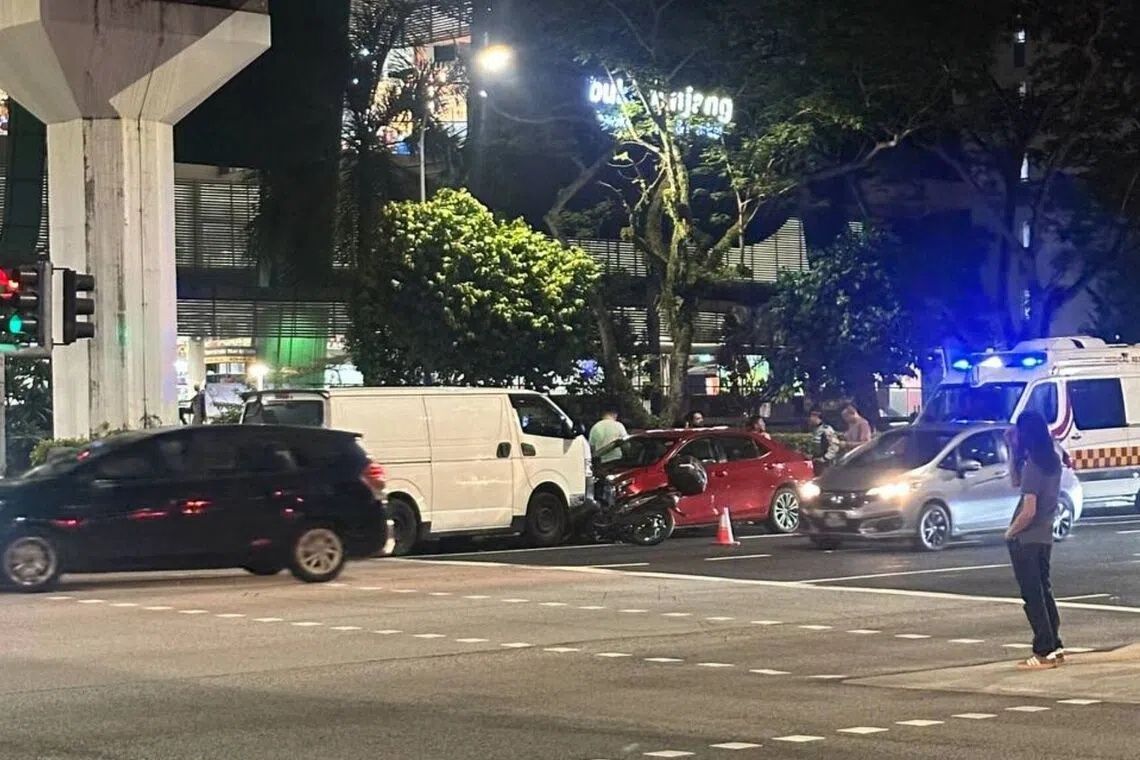
A 27-year-old van driver has been arrested for driving under the influence of drugs after a multi-vehicle collision occurred on Bukit Panjang Road in Singapore on Friday, August 14 at approximately 9 pm. The incident, which involved at least four vehicles and resulted in minor injuries to two individuals, has drawn heightened attention to the ongoing issue of drug-impaired driving in the city-state and the broader challenge of enforcing traffic safety regulations when substance use is suspected.
Singapore's police force and Civil Defence Force were dispatched to the scene on Bukit Panjang Road near Bukit Panjang Ring Road following emergency calls reporting the collision. Initial investigations revealed that a van, a motorcycle, and two cars had been involved in the accident. Video footage circulated on social media showed the van positioned head-to-head with a red sedan, with a motorcycle apparently trapped between the two larger vehicles, while a black car remained visible several metres behind the red vehicle.
Authorities conducting a search of the impounded van discovered two vaporisers and three pods, items typically used for inhaling aerosolised substances. The presence of these items has raised questions about the driver's state of impairment at the time of the collision and whether vaping or other substance inhalation may have contributed to the accident. The police have indicated that the vaporiser-related offence has been escalated to the Health Sciences Authority for further examination and assessment.
The collision resulted in injuries to two individuals involved in the accident, though both parties declined medical transportation to a hospital despite police and emergency responders advising them to seek professional evaluation. This refusal of medical assessment is not uncommon in minor traffic incidents across Singapore, though it potentially complicates the investigation into the full extent of any injuries sustained and may limit medical documentation that could support legal proceedings.
The arrest represents part of Singapore's continuing enforcement efforts against impaired driving, a serious public safety concern that combines the dangers of compromised reaction times, diminished judgment, and loss of vehicle control. Driving under the influence of drugs remains a particularly challenging enforcement issue because it requires specific evidence of impairment and often depends on toxicological testing conducted after arrest, unlike breathalyser tests used for alcohol-related offences.
For Malaysian motorists and regional observers, this incident underscores the significance of substance-related traffic enforcement in neighbouring jurisdictions and reflects broader Southeast Asian concerns about road safety. Singapore's swift police response and comprehensive investigation approach—including the referral to health authorities—demonstrates the multi-agency coordination required to address the intersection of drug use and vehicle operation.
The circumstances of the accident, particularly the positioning of the van described as moving against the flow of traffic, suggest potential cognitive impairment that may have contributed to the dangerous driving behaviour. Such directional confusion or disorientation could be symptomatic of drug influence, though the investigation continues to determine causality and the specific substances involved.
The ongoing investigation by Singapore authorities will likely focus on determining exactly which substances the driver may have consumed, the timing of consumption relative to the collision, and whether impairment from those substances was a material factor in the accident. Toxicological results and expert analysis of the vaporisers and pods seized will be crucial in building a legal case against the driver.
This incident also highlights emerging concerns about vaping and its potential impact on driving ability, a topic that has received less regulatory attention than traditional substance use but may warrant consideration by road safety officials across the region. The seizure of vaporiser equipment during a traffic investigation suggests that authorities in Singapore view this category of device and substance use with growing seriousness in the context of public safety.
For the broader driving public in Malaysia and Singapore, the case serves as a reminder that impaired driving takes many forms beyond alcohol consumption and that any substance affecting cognitive function or motor control poses genuine hazards on congested urban roads like those in Bukit Panjang. The quick response from authorities and the comprehensive nature of their investigation demonstrate the sophisticated approach now being applied to traffic safety enforcement in the region.

