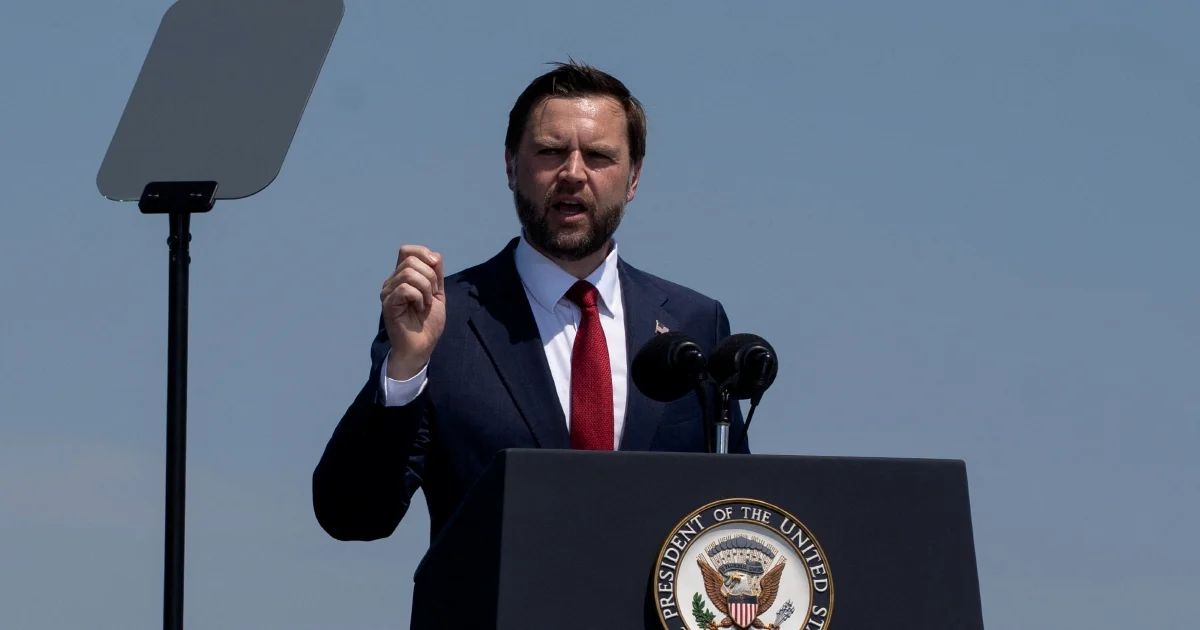
During a visit to London, US Vice President JD Vance delivered a scathing assessment of Britain's political landscape, characterising the nation as having suffered from prolonged institutional shortcomings. The remarks reflect broader American concerns about the stability and direction of one of Washington's closest allies, as the United Kingdom navigates a period of significant political transition. Vance's comments underscore the importance the incoming Trump administration places on relationships with established democracies, whilst simultaneously signalling that such partnerships will be evaluated on substantive outcomes rather than traditional diplomatic courtesy.
Vance articulated a view that Britain's governing structures have systematically disappointed its electorate over an extended period. Rather than pinpointing specific administrations or policies, his framing suggests a more fundamental critique of how Britain's institutional arrangements have functioned. This approach resonates with populist critiques that have gained traction across Western democracies in recent years, where voters express frustration not merely with individual leaders but with the systems those leaders operate within. For Malaysia and other Commonwealth nations that maintain close ties to Britain, such commentary from senior American officials carries weight in shaping diplomatic discourse.
The vice president's statement comes at a juncture when British voters have demonstrated considerable appetite for change. Recent electoral dynamics have reflected deep dissatisfaction with the status quo, manifesting in electoral shifts that successive governments have struggled to accommodate. Vance's acknowledgement of this sentiment validates the concerns animating public discourse, whilst his hope that a new prime minister can deliver meaningful reform suggests that the US administration expects tangible action rather than incremental adjustments. This positions the incoming British leadership under considerable scrutiny, not only domestically but from key international partners.
Structural change encompasses numerous policy domains, from economic competitiveness to social provision and institutional efficiency. Vance's invocation of this concept indicates that Washington expects Britain to undertake comprehensive reforms addressing systemic weaknesses. For regional observers including Malaysia, such expectations highlight how major Western powers increasingly demand modernisation and efficiency from their partners. The emphasis on structural transformation rather than cosmetic adjustments reflects broader global trends where competitiveness and institutional effectiveness have become paramount considerations in international relationships.
The timing of these comments carries significance within the context of bilateral relations. As the United States pursues its foreign policy agenda under new leadership, statements from senior officials about allied nations serve multiple purposes: they signal expectations, validate public sentiment, and subtly encourage specific policy directions. In Britain's case, Vance's remarks implicitly encourage the incoming government to prioritise reform agendas that align with American interests, particularly around economic policy, defence capabilities, and institutional modernisation.
Britain's political environment has been marked by considerable turbulence in recent years. Leadership transitions, internal party fractures, and policy reversals have created an impression of governmental instability. This instability carries implications extending beyond Britain itself, affecting confidence in Western institutional capacity and potentially influencing how other democracies approach governance challenges. For Southeast Asian nations like Malaysia, observing how established democracies manage periods of transition and reform provides instructive precedent regarding institutional resilience.
Vance's emphasis on voter expectations for structural change reflects recognition that traditional political responses no longer satisfy significant portions of Western electorates. The gap between public aspirations and governmental delivery has widened across multiple democracies, generating frustration that manifests in electoral volatility. By acknowledging this dynamic, the US administration signals understanding of underlying forces reshaping Western politics whilst positioning itself as aligned with reform-oriented constituencies. This represents a subtle shift from previous diplomatic conventions, where foreign powers typically refrained from publicly evaluating domestic governance arrangements of allies.
The incoming British prime minister inherits a mandate for change alongside substantial challenges in implementation. Whether structural reforms can proceed within existing constitutional frameworks whilst maintaining institutional continuity remains an open question. International partners, particularly the United States, will monitor whether promised change materialises into concrete policy outcomes. The pressure from Washington, articulated through Vance's comments, adds external dimension to domestic reform efforts, potentially accelerating timelines or shaping policy priorities.
For Malaysia and other regional partners, Britain's reform trajectory matters considerably. As former colonial relationships have evolved into more balanced partnerships, British institutional credibility and economic performance influence regional dynamics. A Britain successfully implementing structural reforms strengthens the broader ecosystem of Western institutional models, potentially offering lessons applicable to varying contexts. Conversely, reform failure might reinforce narratives questioning whether established democracies can respond effectively to contemporary challenges. Vance's implicit pressure on the incoming British administration thus reverberates beyond London, carrying implications for how Western governance models are perceived globally and their relevance to emerging economies navigating similar institutional pressures.

