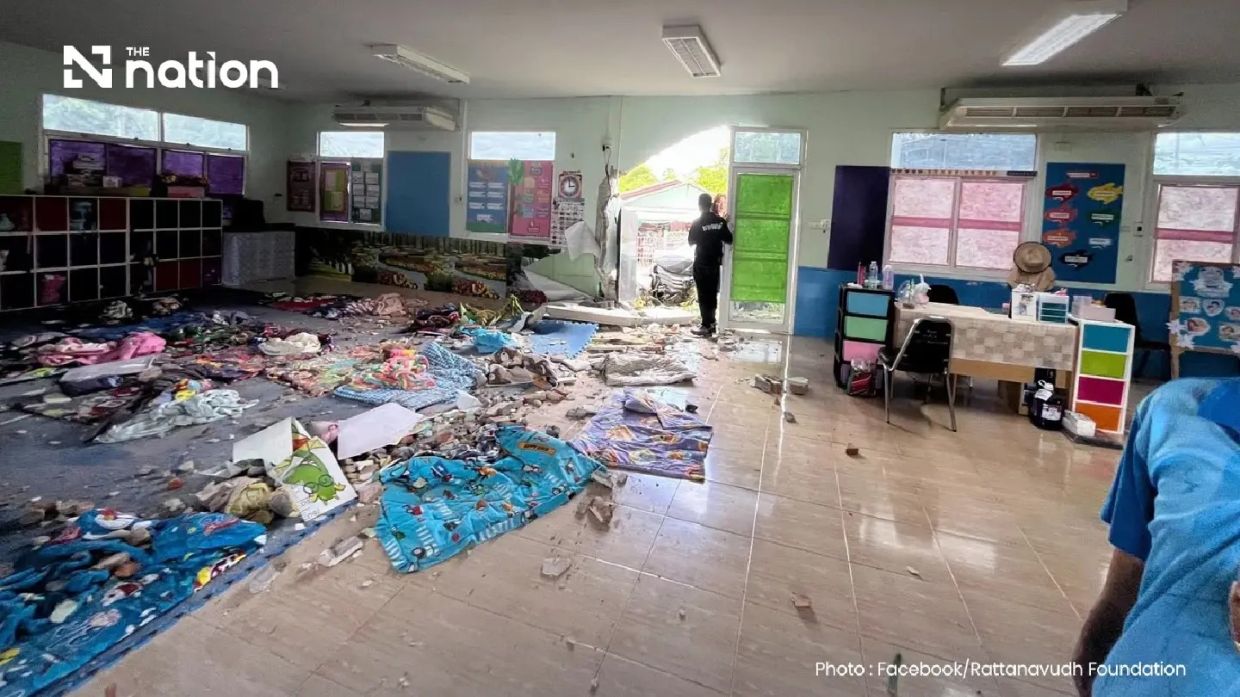
A private vehicle careened out of control and collided with the Ban Nong Song Ton Child Development Centre in Mueang Kanchanaburi district on Friday, August 7, 2026, leaving 15 children with injuries ranging from head wounds to trauma caused by structural debris. The incident occurred during afternoon naptime, when the facility's youngest charges were resting in a classroom that bore the full brunt of the impact.
The crash sent shockwaves through the local community, with emergency responders mobilising quickly to the scene. A total of 34 children had been present at the facility that day, meaning 19 remained unharmed in other areas of the building. The structural damage was substantial enough to generate significant debris and fragments that struck several of the sleeping children, compounding both physical and psychological harm. Beyond the visible injuries, many of the young victims experienced acute distress from the violent collision and its chaotic aftermath.
Local foundations, including the Rattanavudh Foundation and the Phithak Kan Foundation, coordinated the immediate response. Medical personnel administered first aid at the scene before swiftly transferring all 15 injured children to Phaholpolpayuhasena Hospital for comprehensive examination. Emergency services cleared the route through Mueang Kanchanaburi district to ensure rapid transport, with residents cooperating to allow ambulances and rescue vehicles unimpeded passage.
The hospital assessment that followed revealed injuries consistent with impact trauma. While most wounds appeared manageable, the potential for delayed symptoms in young children meant thorough observation remained essential. Medical teams conducted detailed evaluations to rule out internal injuries or complications that might not be immediately apparent. A teacher at the facility subsequently confirmed that all 15 hospitalised children had been declared safe following their medical examinations, though the psychological impact on such young trauma survivors would likely require ongoing support.
This incident highlights vulnerabilities in childcare facility design and traffic management that extend beyond Thailand's borders. Across Southeast Asia, many early childhood development centres occupy premises in residential or mixed-use areas where vehicle access remains relatively unrestricted. The question of bollards, barriers, or other physical deterrents between roadways and play areas has become increasingly relevant as societies grapple with preventing similar accidents. Malaysian facilities, which operate under different regulatory frameworks, may nonetheless benefit from examining whether current safety protocols adequately protect against vehicular incursion.
The timing of the collision—during a period when children are typically at their most vulnerable, asleep and unable to flee—underscores the particular danger such incidents pose. Unlike accidents in outdoor play areas where children might instinctively move away from danger, the confined classroom setting and the children's sleep state eliminated any possibility of evasion. This element particularly resonates with childcare operators throughout the region who must balance operational accessibility with child safety imperatives.
Investigation into the vehicle's loss of control would typically examine mechanical failure, driver incapacity, or external factors such as brake malfunction. Thai authorities would ordinarily conduct a full inquiry to determine whether negligence or equipment failure contributed to the accident. Such findings often inform policy discussions about enhanced safety measures at facilities accommodating very young children, where parental anxieties about security and supervision remain paramount.
The Kanchanaburi incident raises awareness among regional childcare providers about insurance implications and liability considerations. Facilities across Malaysia and Thailand increasingly face pressure from parents to demonstrate proactive safety measures. This may include installing protective barriers, reviewing emergency protocols, or establishing traffic management zones around premises. The financial and reputational consequences of such incidents motivate many operators to invest in preventive infrastructure.
Parental reactions to such incidents typically follow patterns of relief, reassessment of facility choices, and demands for stronger safeguards. Communities in Kanchanaburi and surrounding areas would likely experience heightened scrutiny of childcare standards and vehicle management. Educational institutions managing young populations face mounting expectations to prove they maintain environments where children face minimal risk from preventable external threats.
The fortunate outcome—with all children discharged safely—reflects both emergency response efficiency and what may be considered relative good fortune in the severity of injuries sustained. Had the vehicle penetrated the classroom more deeply or struck at a different angle, casualties could have been significantly worse. This reality underscores why childcare facility design considerations, though sometimes overlooked in discussions of educational curriculum and staff qualifications, warrant equal attention from regulatory bodies throughout Southeast Asia.

