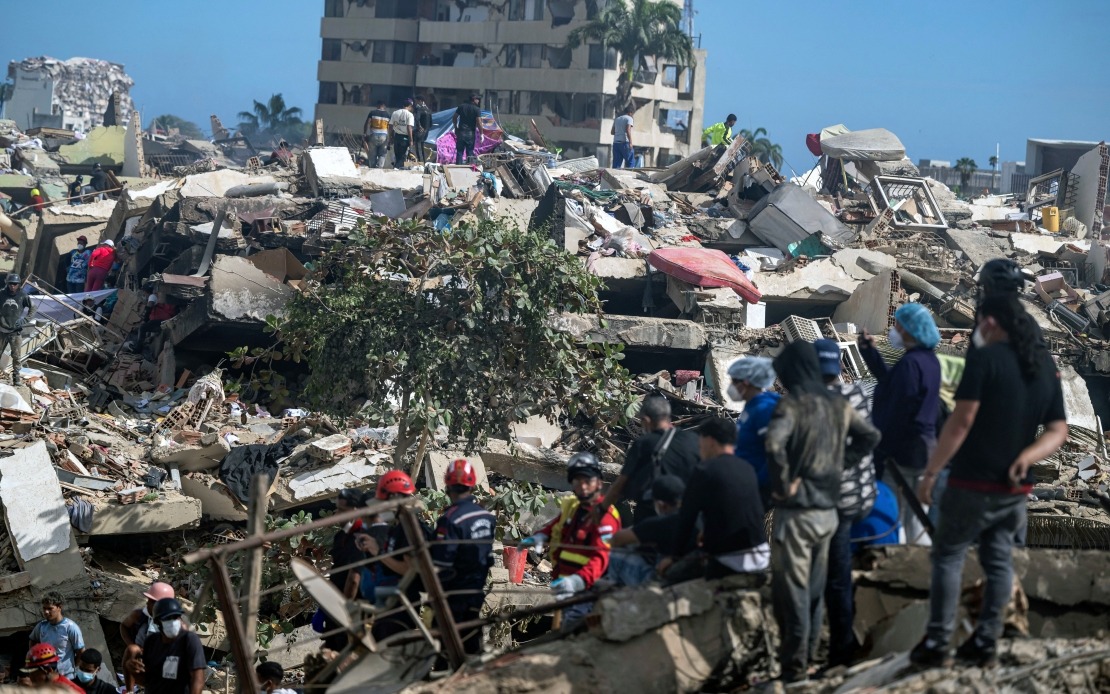
The humanitarian crisis unfolding in northern Venezuela has deepened significantly following the destructive twin earthquakes that struck the region on June 24. National Assembly President Jorge Rodriguez confirmed on Wednesday that the death toll has climbed to 2,295 people, marking one of the most severe natural disasters to strike the South American nation in recent years. Speaking during a national briefing broadcast on state television, Rodriguez laid bare the expanding scope of the catastrophe affecting thousands of families across multiple municipalities in the affected zones.
Beyond the confirmed fatalities, the scale of human suffering extends across multiple dimensions of devastation. Official records now document 11,267 injured individuals receiving treatment in overwhelmed medical facilities, while authorities have registered approximately 12,841 people displaced from their homes and communities. These figures underscore the profound disruption to daily life across the impacted regions, with families separated, livelihoods destroyed, and critical infrastructure rendered inoperable. The displacement numbers suggest that reconstruction efforts will consume considerable resources and time, potentially creating long-term social and economic consequences for Venezuelan society.
Rescue and recovery operations have mobilised unprecedented international cooperation, with teams from more than 30 countries engaged in the dangerous work of extracting survivors from rubble and collapsed buildings. Over 4,000 emergency personnel have been deployed across the affected zones, and their intensive efforts have already yielded measurable results—rescuers have successfully extracted 6,461 people from collapsed structures since the initial tremors. These figures demonstrate both the scale of structural damage across the region and the determination of first responders to locate survivors buried beneath concrete and debris.
Satellite imagery analysis conducted by NASA provides sobering evidence of the physical destruction inflicted by the seismic event. According to preliminary assessments of satellite data, more than 58,000 buildings sustained significant damage or were completely destroyed across the affected regions. This estimate indicates that entire neighbourhoods have been rendered uninhabitable, with residential properties, commercial establishments, and critical public facilities all suffering severe structural compromise. The building damage figures represent an enormous reconstruction challenge that will strain Venezuela's already fragile economic capacity and require sustained international humanitarian support.
The twin earthquakes themselves registered substantial magnitude readings of 7.2 and 7.5 on the Richter scale, demonstrating the tremendous energy released from deep within the earth's crust beneath northern Venezuela. The seismic instability has continued in the aftermath, with more than 782 documented aftershocks recorded across the region during the days following the initial rupture. However, seismologists monitoring the situation have provided some reassurance regarding the trajectory of these secondary tremors. Both the frequency of aftershocks and their measured subterranean intensity have declined measurably over the preceding 48-hour period, suggesting that the acute phase of seismic activity may be gradually subsiding.
Rodriguez nevertheless maintained caution in his public statements, warning citizens that while the immediate threat from further major earthquake activity appears to be diminishing, the danger has not entirely dissipated. Structural engineers and emergency management officials have emphasised the continuing risks posed by weakened buildings and unstable concrete masonry throughout affected municipalities. The collapsed or severely damaged buildings remain prone to secondary collapse, particularly in response to ground vibrations from persistent aftershocks, creating hazardous conditions for residents attempting to salvage possessions or assess property damage. Public authorities have issued strict directives against entering or approaching compromised structures without professional engineering evaluation.
The scale of international response reflects recognition within the global community of Venezuela's capacity constraints in managing a disaster of this magnitude independently. Rescue teams have arrived from nations across multiple continents, bringing specialized equipment, trained personnel, and essential supplies that are unavailable or insufficient within Venezuela itself. This multinational cooperation, coordinated through international humanitarian channels, has become essential to maximising the number of survivors extracted from debris and ensuring adequate medical and shelter provision for the displaced population.
The United Nations has undertaken logistical commitments reflecting the grim reality of the disaster's human toll. UN agencies have initiated procurement of 10,000 body bags, a figure that acknowledges both the confirmed death toll and the likelihood that additional fatalities may be discovered as search operations continue throughout the coming days. This preparation underscores the sobering recognition among international humanitarian organisations that the final death count may yet increase as rescue teams reach previously inaccessible areas and continue methodical searches through collapsed structures across the vast affected region.
For Southeast Asian observers, the Venezuela earthquake serves as a cautionary reminder of the vulnerability of densely populated regions situated along significant tectonic fault lines. Several countries in the region, including Indonesia, Philippines, and Malaysia, occupy similarly seismically active zones where major earthquakes remain an ongoing threat to urban populations and infrastructure. The Venezuelan experience demonstrates the critical importance of rigorous building codes, earthquake preparedness planning, and maintaining robust disaster response capabilities. The international cooperation evidenced in the Venezuelan response also highlights the mutual dependence among nations facing natural disasters, suggesting that regional Southeast Asian countries would benefit from strengthening multilateral disaster response frameworks and cross-border humanitarian assistance mechanisms.

