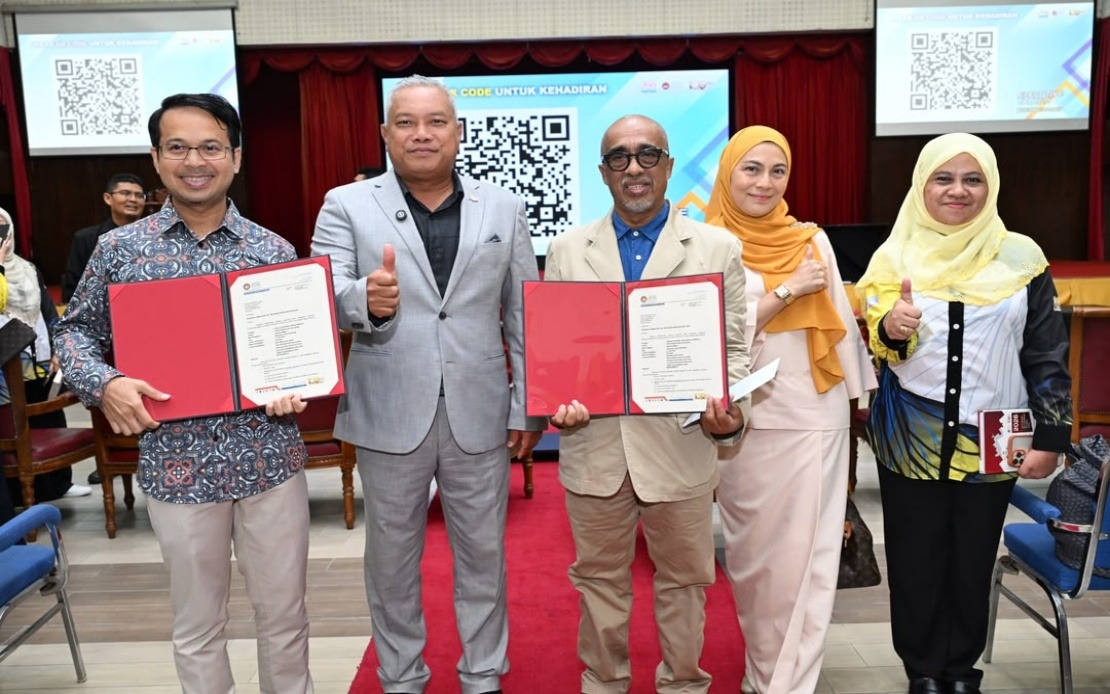
In a significant milestone for Malaysia's cultural sector, acclaimed actor and director Mohd Sabri Yunus has finally fulfilled a decades-old ambition to pursue tertiary education. The 65-year-old has accepted an offer to study for a Master of Education in Malay Literature at Universiti Pendidikan Sultan Idris (UPSI) in Perak, while television personality Ahmad Fedtri Yahya, aged 45, will pursue a Master of Education in Malay Language through the same institution. Both have gained entry via the Accreditation of Prior Experiential Learning for Award of Qualifications (APEL.Q) pathway, positioning them as the inaugural cohort in these newly developed postgraduate programmes under UPSI's Faculty of Languages and Communication.
Mohd Sabri's journey to higher education has spanned more than four decades of professional achievement, yet his quest for formal qualification remained unfulfilled until now. During his career at Dewan Bahasa dan Pustaka, beginning in 1982 as an illustrator, he twice attempted to transition into university study during the 1980s and 1990s but found the professional commitments incompatible with full-time academic pursuit. The APEL.Q framework has provided an alternative pathway that recognises the substantial knowledge and expertise he has accumulated through decades of creative work in Malaysia's arts and media landscape.
The APEL.Q mechanism represents an innovative approach to credential recognition within Malaysian higher education, particularly relevant for mature professionals whose career trajectories do not align with traditional university entry requirements. Rather than requiring candidates to undertake prerequisite qualifications, the system evaluates documented professional experience, creative output, and demonstrated expertise as equivalent to foundational academic work. For Mohd Sabri, this recognition validates the intellectual development that has occurred through his extensive career in film, theatre, and broadcasting, allowing him to pursue specialised postgraduate research without the necessity of completing undergraduate prerequisites.
Mohd Sabri expressed profound satisfaction with the opportunity, emphasising that his commitment to intellectual growth has never wavered despite the absence of formal institutional credentials. He articulated a philosophy of lifelong learning that transcends classroom boundaries, viewing every professional interaction and relationship as a source of knowledge. This perspective, shaped by decades navigating Malaysia's cultural industries, has prepared him for the focused research agenda he intends to pursue at UPSI, which he indicated would concentrate on specific dimensions of pantun, the traditional Malay verse form that represents a cornerstone of regional cultural heritage.
Ahmad Fedtri Yahya brings parallel experience from his extensive career as a television presenter and media personality. His motivation for pursuing postgraduate study centres on the urgent need to strengthen the Malay language's standing and usage patterns, particularly among younger populations. He recognises that contemporary communication practices among youth have undergone substantial transformation due to the pervasive influence of social media platforms and digital technologies, which have introduced new linguistic patterns and reduced exposure to formal or literary Malay. By undertaking formal study in Malay Language education, Fedtri positions himself to contribute to broader efforts aimed at linguistic preservation and pedagogical innovation.
The relationship between language usage and societal civilisation, which Fedtri highlighted as his motivating insight, reflects a sophisticated understanding of sociolinguistics. His observation that communication patterns reflect a culture's broader level of development acknowledges the role language plays in transmitting values, history, and collective identity across generations. This perspective resonates throughout Southeast Asia, where multiple societies grapple with the challenge of maintaining heritage language usage against the gravitational pull of English, Mandarin, and digital communication norms that often bypass formal linguistic structures entirely.
UPSI Vice-Chancellor Prof Datuk Dr Md Amin Md Taff has articulated an institutional vision extending beyond individual student achievement to encompass broader societal benefit. He identified the symbolic and practical value of welcoming established cultural figures into the academic community, suggesting that their presence enriches the institutional environment through direct interaction with approximately 25,000 students enrolled across UPSI's teacher training programmes. Given that UPSI's student body will substantially constitute Malaysia's future secondary educators, the exposure to accomplished practitioners in arts and language fields potentially influences how these future teachers conceptualise their professional responsibilities regarding cultural transmission.
The significance of this development must be contextualised within Malaysia's ongoing cultural policy landscape. The nation's educational framework has periodically shifted emphasis regarding the relative importance of heritage language studies versus international communication competencies. UPSI's development of these postgraduate programmes, coupled with the recruitment of culturally prominent practitioners, signals institutional commitment to elevating Malay language and literature scholarship within the higher education ecosystem. This positioning also reflects Southeast Asia's broader conversation regarding the preservation of national cultural identities amid globalisation pressures.
For Malaysia's creative industries and cultural sector, the APEL.Q pathway offers practical implications beyond this individual case. The mechanism potentially facilitates the transition of experienced practitioners into educational roles, addressing potential knowledge transfer challenges when specialist expertise exists primarily within practising professionals rather than formally credentialled academics. By enabling figures like Sabri Yunus and Ahmad Fedtri Yahya to formalise and extend their expertise through postgraduate study, the system creates pathways for enriching the pool of educators and researchers who can speak authoritatively about contemporary cultural practice.
The enrolment of these two figures also addresses equity considerations within Malaysia's educational landscape. The traditional pathway requiring completion of undergraduate degrees prior to postgraduate study can disadvantage talented individuals whose life circumstances, generational factors, or career timing placed them outside conventional university timelines. The APEL.Q framework demonstrates recognition that intellectual capability and substantive expertise need not correlate precisely with credential accumulation during specific biographical periods. This approach aligns with evolving international understanding of lifelong learning and credentialing flexibility.
Looking forward, the research undertaken by Sabri Yunus on pantun traditions and Ahmad Fedtri Yahya's work in Malay language education may yield outputs with practical application for primary and secondary language teaching in Malaysia. Both research agendas intersect with pressing educational challenges regarding student engagement with heritage languages and literary forms. Their studies could contribute evidence-based insights regarding effective pedagogical strategies for contemporary learners, particularly addressing the specific linguistic patterns and motivations of youth populations. The positioning of their research within UPSI's teacher training context suggests potential for direct translation of findings into classroom practice across Malaysia's national school system.

