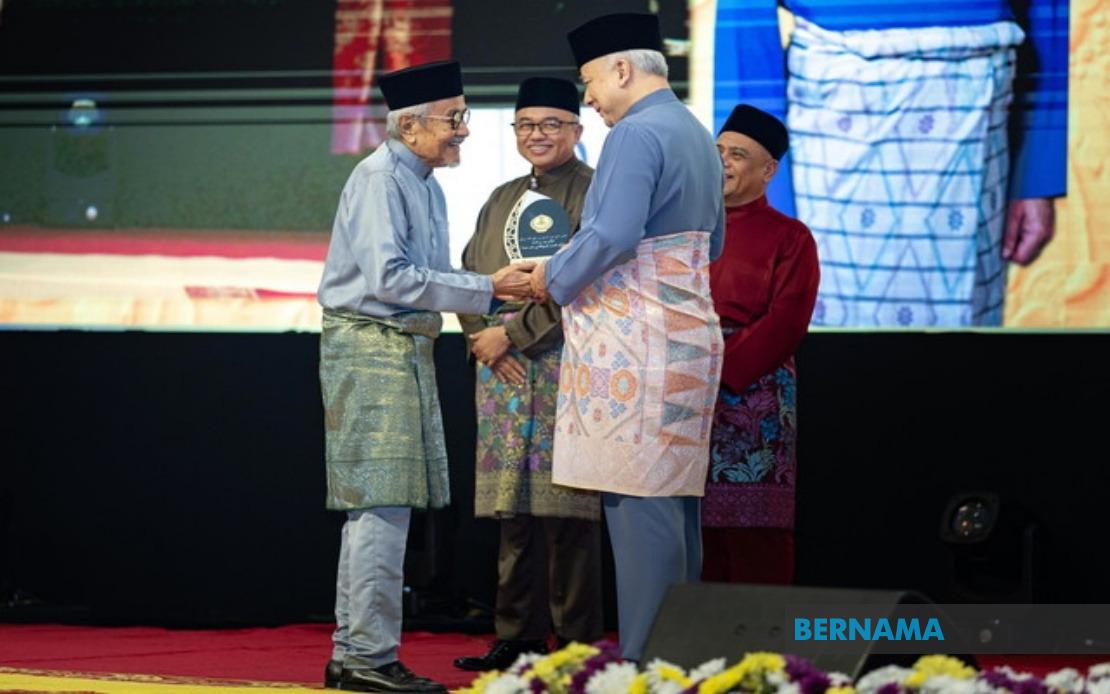
Datuk Rahim Razali, one of Malaysia's most respected figures in entertainment and media, has been recognised with the prestigious 'Tokoh Zaid Bin Thabit' Media and Communications Practitioner Icon Award at Perak's state-level Maulidur Rasul celebration held in Ipoh on August 25. The 87-year-old filmmaker received the honour from Sultan Nazrin Shah, along with a cash award of RM5,000 and a commemorative plaque.
Abdul Rahim Mohd Razali, as he is formally known, traces his roots to Batu Gajah in Perak, making this recognition particularly significant as it honours a native son for his lifetime of artistic and cultural contributions to the nation. His career spans multiple decades and encompasses diverse roles within Malaysia's entertainment industry, reflecting the evolution of the nation's media landscape from the era of state broadcasting to contemporary film production.
Razali's professional journey began in broadcasting, where he worked as an assistant at RTM, Malaysia's national radio and television network, during its formative years. Building on this foundation, he took an entrepreneurial step by establishing Angkatan Seniman Abad XX Sdn Bhd in 1981, a venture that would position him as an independent producer and allow greater creative freedom in storytelling and production decisions. This move from institutional employment to private enterprise reflects the broader shift in Malaysia's creative industries during the 1980s.
The filmmaker's body of work demonstrates remarkable productivity and artistic ambition. Throughout his career, he has produced 50 dramas for RTM, establishing himself as a key figure in Malaysia's television drama development when local content production was still establishing itself as a priority. His transition to feature films saw the creation of 15 full-length productions, a substantial achievement given the technical and financial challenges of Malaysian cinema during several decades when the industry lacked robust infrastructure and investment.
Razali is perhaps best known for his filmography, which includes the notable works Abang and Abang 92, titles that have become touchstones in Malaysian cinema history. Eight of his feature films achieved the distinction of selection for the Tokyo Film Festival, an international recognition that placed Malaysian cinema on the Asian film festival circuit and demonstrated that locally-produced work could meet international standards of artistic merit. This recognition from a prestigious Asian festival carries particular weight, establishing Razali as a filmmaker whose vision transcended regional boundaries.
Beyond his roles as director and actor, Razali has built a reputation as a knowledgeable sports commentator, bringing his communication skills and cultural literacy to yet another dimension of Malaysia's media ecosystem. This versatility is characteristic of entertainment professionals of his generation, who often worked across multiple platforms as broadcasters, producers, and performers, helping to establish professional standards across different media formats during Malaysia's post-independence decades.
The Maulidur Rasul awards ceremony also recognised other individuals and organisations contributing to society. Yang Walat, an 82-year-old single mother who has raised 15 children in Kuala Kurau, received the Exemplary Family Icon Award (Anugerah Keluarga Amar Yassir) accompanied by RM10,000, an Umrah pilgrimage package, and a plaque, reflecting the government's recognition of exceptional family values and perseverance. Radhi Kamarul Hailan, 56, was recognised as the Preacher Icon recipient, while Saharuddin Hassim, 74, and Yahya Man, 83, received the Mosque Official and Islamic Call awards respectively.
Other recipients included Mohd Hanafiah Idris, 56, who received the Imam Award, and Pertubuhan Wanita Prihatin Perak, which was recognised for its non-governmental organisation contributions to community welfare and women's issues. This broader range of awardees demonstrates the state government's multifaceted approach to recognising contributions across religious leadership, social welfare, and cultural domains.
Razali's recognition is particularly timely given contemporary discussions about preserving Malaysia's cultural heritage and celebrating the contributions of earlier generations who built the nation's institutions and creative industries during formative periods. His career trajectory mirrors Malaysia's own development in media and arts, from the early days of centralised state broadcasting to diversified film production and entertainment services. The award represents both personal achievement and acknowledgment of his role in shaping Malaysian cultural output during decades when the industry required pioneering vision and technical innovation.
The presentation by Sultan Nazrin Shah underscores the Perak state government's commitment to honouring excellence and contributions to social, cultural, and spiritual development. For viewers and readers across Southeast Asia, Razali's recognition illustrates how regional film industries produce artists whose work achieves international recognition while maintaining deep local roots and cultural authenticity, bridging contemporary and traditional Malaysian society through storytelling and visual media that has influenced generations of audiences and emerging practitioners.

