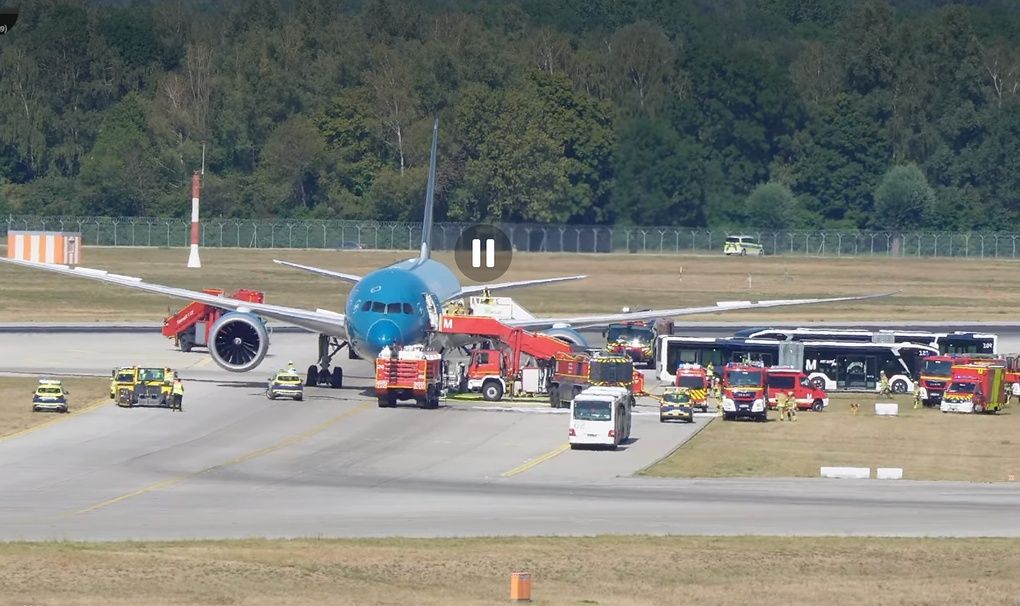
A Vietnam Airlines flight operating between Munich and Hanoi encountered a serious technical difficulty during takeoff on August 15, forcing the aircraft to return safely to Munich Airport in Germany after approximately two hours in the air. The Boeing 787-9 widebody jet had barely lifted off when the crew detected the problem and initiated emergency procedures, demonstrating the safety protocols that have become standard across major international carriers. No injuries were reported among the passengers and crew members, who were subsequently escorted to the terminal for assistance and rebooking.
The incident underscores the critical nature of the takeoff phase in aviation operations, a period when aircraft are most vulnerable due to extreme stress on structural components and systems. According to detailed reports from aviation monitoring services, the Boeing 787 experienced what specialists term a "late rotation", a condition where the aircraft's nose fails to lift at the optimal point during acceleration along the runway. This delay in achieving the correct flying attitude can trigger cascading complications, including what occurred in this instance: a tailstrike, where the rear fuselage makes contact with the runway surface, followed by a runway overrun as the aircraft consumed more asphalt than planned before becoming airborne.
Video evidence captured near the departure runway painted a vivid picture of the emergency. Observers recorded the aircraft accelerating powerfully along the tarmac before rotating steeply very close to the runway's end, with visible dust clouds billowing upward as the wheels finally left the ground. The delayed rotation, likely caused by the unidentified technical issue, had compressed the pilot's margin for error to an extremely narrow window. Despite these challenging circumstances, the crew managed to coax the aircraft into the air, albeit with damaged landing gear tyres resulting from the friction and contact with the runway surface.
Once airborne, the pilots implemented a holding pattern at approximately 9,000 feet, a tactical decision that served multiple purposes. The circling flight path allowed the aircraft to remain aloft while burning fuel, thereby reducing the weight and landing distance required for a safe return to Munich. Simultaneously, ground crews and maintenance specialists were given time to assess the damage, prepare emergency response protocols, and position fire and rescue services around the airport. This measured approach, rather than an immediate descent, reflected professional crisis management and an understanding that a lighter aircraft could land more safely even with compromised landing gear.
Vietnam Airlines issued statements confirming that its crew had adhered to established safety procedures throughout the emergency. The carrier emphasised its commitment to passenger welfare, noting that those on board were being provided with accommodation, meals, and rebooking options onto alternative flights. The airline pledged to conduct thorough inspections of the affected aircraft before returning it to service and committed to releasing additional information once technical investigations were complete. This transparent communication approach has become expected of major carriers in crisis situations, particularly when international travel is disrupted.
The Aviation Herald, a respected independent source for aircraft incident data, classified the event as involving a tailstrike and runway overrun, conditions that trigger mandatory regulatory investigations and damage assessments. The tyre damage sustained during the contact with the runway, while superficially straightforward, can have broader implications for the aircraft's structural integrity, particularly if the impact forces were transmitted through the landing gear to the fuselage and wings. Engineers would need to inspect not only the obvious damage but also check for hairline fractures and stress deformation in surrounding components.
Munich Airport, one of Europe's major transportation hubs and a key gateway for Asian carriers, managed the emergency response professionally. Emergency services were placed on high alert as the damaged aircraft descended, and ground personnel were positioned to respond immediately upon landing. The airport's experience handling international incidents—combined with its modern facilities and experienced emergency response teams—likely contributed to the incident concluding without further complications.
For Vietnamese travellers and the broader Southeast Asian aviation community, this incident carries particular relevance given Vietnam Airlines' established position as a major international carrier serving European routes. The airline operates regular direct services connecting Hanoi and Ho Chi Minh City with Munich and Frankfurt, utilising a modern fleet of widebody aircraft including Boeing 787 Dreamliners and Airbus A350 XWBs. These routes represent important business and leisure connections between Vietnam and Germany, with implications for commerce, tourism, and people-to-people ties. Any disruption to these services reverberates through the region's travel networks.
The incident also reflects ongoing global scrutiny of Boeing 787 Dreamliner operations, an aircraft type that has experienced several high-profile incidents over the past decade despite its generally strong safety record. The 787's advanced design and systems offer significant operational advantages in terms of fuel efficiency and range, making it attractive for long-haul services like the Munich-Hanoi route. However, each incident generates investigation and analysis that contributes to the overall understanding of aircraft performance across varying operational and environmental conditions.
Technical investigations by German aviation authorities, in coordination with the U.S. National Transportation Safety Board and Boeing engineers, would determine the precise cause of the malfunction that triggered the takeoff difficulty. These findings would potentially inform maintenance protocols across the global 787 fleet and could result in operational modifications if a systemic issue were identified. The transparency of such investigations, typically concluded within weeks or months, provides assurance to the flying public and the aviation industry that safety systems are functioning as intended.
Passengers on the affected flight, while experiencing considerable inconvenience and stress, benefited from the crew's professionalism and the safety systems inherent in modern commercial aviation. The incident serves as a reminder that despite rare equipment failures, multiple layers of protection—including redundant systems, trained personnel, and established emergency procedures—exist to protect those entrusted to aircraft. For Malaysian and Southeast Asian readers planning European travel, such events, while newsworthy, remain statistically uncommon, and commercial aviation continues to maintain safety levels far superior to ground transportation alternatives.

