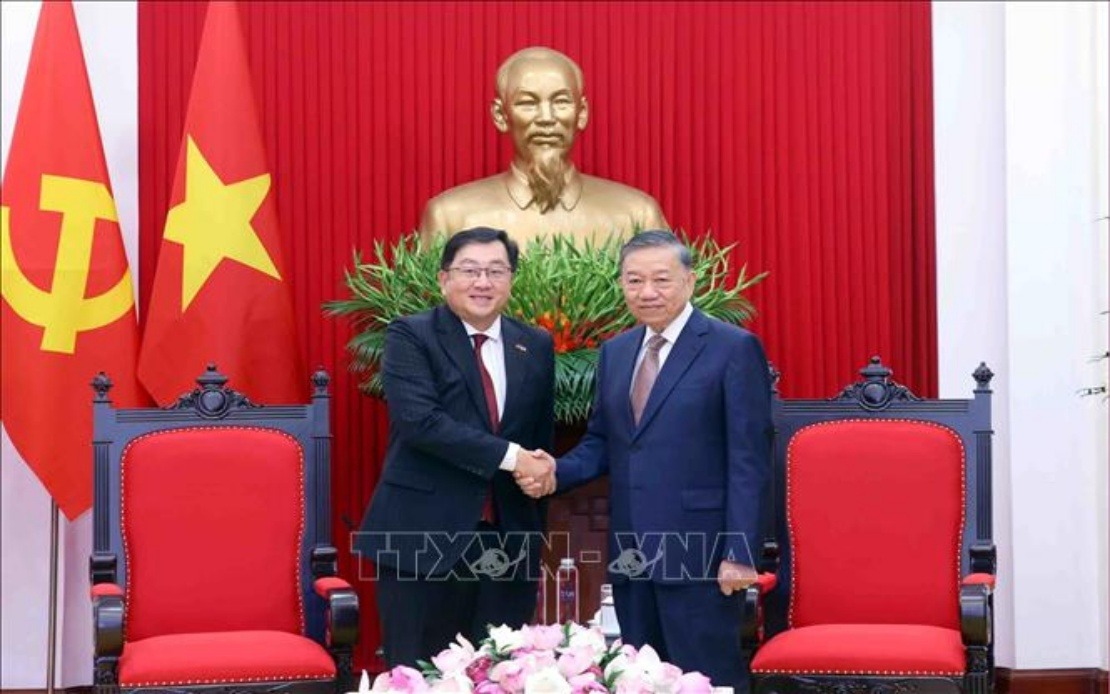
Vietnam and Malaysia are forging an increasingly robust partnership, according to Vietnamese President To Lam, who received outgoing Malaysian Ambassador Datuk Tan Yang Thai this week in Hanoi. The Vietnamese leader's characterization of bilateral relations as "increasingly dynamic" signals the momentum building between the two Southeast Asian nations, underpinned by what he described as strong political trust and deepening economic collaboration. The exchange reflects the careful attention both capitals are devoting to their strategic relationship at a critical moment for regional alignment and cooperation.
During the formal courtesy visit on Wednesday, President Lam conveyed warm regards to His Majesty Sultan Ibrahim, King of Malaysia, and Prime Minister Datuk Seri Anwar Ibrahim, extending an invitation for high-level visits from the Malaysian leadership to Vietnam. This diplomatic overture is significant given Malaysia's role as a major economic and political actor within ASEAN, and suggests Vietnam views strengthening ties with Kuala Lumpur as essential to its broader regional strategy. The president's gesture of extending a reciprocal invitation underscores the mutual commitment to maintaining elevated channels of communication and cooperation.
Ambassador Tan Yang Thai's tenure in Hanoi has coincided with a period of substantial expansion in the bilateral relationship. President Lam commended the diplomat's contributions during his mission and expressed confidence in his continued service to Malaysia's diplomatic efforts and the advancement of Vietnamese-Malaysian relations. The formal recognition of Tan's work signals appreciation not only for individual diplomatic efforts but also reflects satisfaction with the trajectory of relations during this period. Such acknowledgements often presage deeper institutional collaboration, as both governments prepare to transition to the next phase of their engagement.
The political dimension of the relationship has matured considerably, with regular exchanges occurring across multiple channels. Party-to-party contacts, state and government-level visits, and parliamentary interactions have all intensified, creating what both sides characterize as a network of effective bilateral mechanisms. This diversification of engagement pathways reduces dependency on any single channel and creates redundancy that strengthens the overall relationship. The emphasis on people-to-people exchanges adds a grassroots component that can provide long-term stability to the official diplomatic architecture.
The economic relationship between the two countries presents perhaps the most compelling evidence of deepening integration. Two-way trade reached US$10.8 billion during the first six months of 2026, representing a striking forty per cent increase year-on-year. This trajectory indicates that trade expansion is accelerating rather than plateauing, suggesting structural shifts in economic complementarity between the nations. Malaysia maintains its position as the third-largest investor among ASEAN member states in Vietnam and ranks tenth globally among 154 countries and territories investing in Vietnam, underscoring the significance of Malaysian capital in Vietnam's development strategy.
Beyond traditional commerce, both nations have identified shared priorities in emerging economic domains. Digital economy development, green economic transitions, energy and electricity connectivity, and maritime cooperation represent frontiers where collaborative advantage may be greatest. These sectors align with broader Southeast Asian developmental trends and reflect growing awareness that regional prosperity increasingly depends on coordinated approaches to shared challenges. Vietnam's particular emphasis on digital and green economy cooperation reflects its ambitions to leverage technology and sustainability for competitive advantage in the region.
President Lam articulated a vision for further deepening the Comprehensive Strategic Partnership between the two nations, suggesting concrete areas for expanded engagement. Strengthening political trust through enhanced exchanges and rigorous implementation of high-level agreements forms the foundation, while cooperation in defence, security, and maritime affairs represents the strategic dimension. Greater facilitation of balanced trade and investment would address economic imperatives, while collaboration in digital and green economies, science and technology, and innovation targets future growth sectors. This multifaceted approach suggests both nations recognize that modern bilateral relationships require attention across political, economic, security, and technological dimensions simultaneously.
Ambassador Tan responded with characterizations of Vietnam's remarkable development trajectory and expressed confidence in the capacity of both nations to contribute meaningfully to ASEAN unity and resilience. Malaysia's reaffirmation of the importance it places on Vietnam cooperation, particularly in digital economy, green economy, and renewable energy sectors, demonstrates alignment with Hanoi's strategic priorities. The ambassador's pledge to leverage professional experience and personal affection for Vietnam in promoting bilateral relations suggests continuity in diplomatic engagement despite the transition of personnel. Such personal commitments often translate into sustained institutional momentum.
The ambassador also conveyed an invitation from Malaysia's King for President To Lam to visit Malaysia, reciprocating the Vietnamese president's invitation to Malaysian leaders. These mutual invitations, often a diplomatic courtesy, carry substantive weight in establishing protocols for future high-level engagement. Such visits typically result in joint statements, bilateral agreements, and renewed commitments to cooperation. The formality and repetition of invitation protocols across both sides suggest these are not empty gestures but rather genuine intentions to elevate the relationship further.
For Malaysian readers and regional observers, the strengthening Vietnam-Malaysia relationship carries several implications. First, it reflects Malaysia's commitment to engaging with all major ASEAN players without sectarian preference, supporting the principle of constructive regionalism. Second, the emphasis on digital and green economy cooperation suggests these nations are moving in tandem on technological and environmental challenges that transcend bilateral interest. Third, Malaysia's position as a top investor in Vietnam and the robust trade flows underscore the interdependence between the economies, creating mutual incentives for peace and stability. Finally, the deepening political and security dimensions suggest both nations are prepared to coordinate on regional matters, potentially amplifying their collective influence on ASEAN dynamics and wider Southeast Asian affairs.

