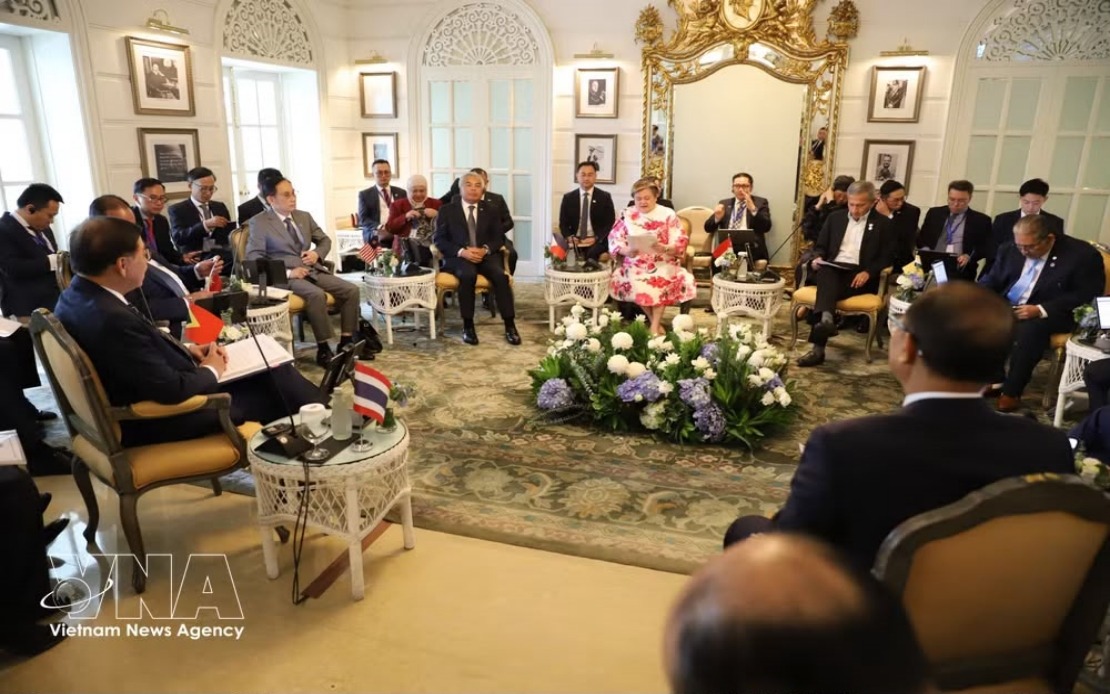
Vietnam has pledged its readiness to collaborate closely with fellow ASEAN members in supporting Myanmar's path towards political stability, economic revival, and social development. Speaking at a significant Bangkok gathering of regional foreign ministers on July 12, Vietnamese Foreign Minister Le Hoai Trung underscored his nation's consistent recognition of Myanmar as a full ASEAN member while stressing the central role of the Five-Point Consensus—the bloc's primary mechanism for assisting the country since the 2021 military takeover.
The informal meeting, chaired by Philippine Foreign Secretary Maria Theresa P. Lazaro, represented a watershed moment in ASEAN's engagement with Myanmar. It marked both the first substantial in-person gathering of regional foreign ministers with Myanmar's administration and the highest-level direct contact between the bloc and Myanmar's authorities since 2021. The significance of this assembly lies not merely in its occurrence, but in what it signals about ASEAN's determination to maintain dialogue and foster reconciliation within its ranks despite deep internal divisions over Myanmar's political crisis.
Minister Trung acknowledged progress that Myanmar has made in recent months across multiple fronts. He highlighted government efforts to stabilize the political environment, revitalize economic activity following years of instability, enhance governance structures, and intensify campaigns against transnational criminal networks—particularly the drug trade and cybercrime operations that have long plagued the region. Recognizing these incremental improvements reflects ASEAN's pragmatic approach: while many member states and the international community remain deeply concerned about Myanmar's democratic trajectory, the bloc is attempting to incentivize further positive developments through constructive engagement rather than isolation.
Beyond mere acknowledgment of achievements, Vietnam signalled that ASEAN must expand its toolkit for supporting Myanmar. While the Five-Point Consensus remains the foundational framework, Trung advocated for more concrete, practical interventions. He particularly emphasized the necessity of maintaining direct, frequent dialogue channels with Myanmar's authorities. This emphasis on ongoing communication reflects a broader understanding that sustainable change in Myanmar will require patient, consistent engagement rather than episodic diplomatic initiatives. For Southeast Asian policymakers watching Myanmar's trajectory, Vietnam's position suggests that the region views long-term stability as dependent on keeping channels open and demonstrating that cooperation with the international community yields tangible benefits.
Vietnam's commitment extends across the full spectrum of Myanmar's challenges. The country pledged to support Myanmar in economic reconstruction—a critical area given the severe economic deterioration since 2021, which has decimated currency values and created humanitarian pressures. Vietnamese officials also committed to assisting with governance improvements and joint efforts against transnational crime, domains where regional cooperation can yield concrete results without becoming entangled in Myanmar's internal political disputes. This compartmentalization of assistance—focusing on areas of technical cooperation while treading carefully around sovereignty concerns—reflects the delicate balance ASEAN has attempted to maintain.
The timing of this ministerial meeting reflected guidance from ASEAN's highest leadership. The gathering was convened in accordance with directions issued by ASEAN leaders at the 48th ASEAN Summit in Cebu, Philippines, which tasked the bloc with identifying fresh approaches to support Myanmar while adhering to the Five-Point Consensus principles. These principles, established in 2021, call for the cessation of violence, dialogue among parties, provision of humanitarian aid, non-interference, and appointment of an ASEAN envoy—though their implementation has proved contentious and uneven across member states.
During the Bangkok discussions, Myanmar's Foreign Minister Tin Maung Swe presented his government's perspective on current conditions and future intentions. He detailed a 100-day development plan and specific initiatives designed to advance peace, facilitate reconciliation, and establish stability. He also discussed Myanmar's efforts to maintain contact with various stakeholders within the country—a potentially significant indicator of attempts at internal dialogue, though the extent and seriousness of such efforts remain subject to debate among international observers. ASEAN ministers engaged in what officials characterized as frank and constructive discussion, suggesting that while there is consensus on the value of continued engagement, disagreements persist over assessment of Myanmar's progress and the efficacy of the current approach.
The assembled foreign ministers reaffirmed ASEAN's broader commitment to supporting Myanmar in discovering what they termed a Myanmar-owned, Myanmar-led resolution to its political crisis. This language underscores ASEAN's commitment to non-interference principles, which remain deeply embedded in the organization's founding charter. However, it also reflects the practical reality that Myanmar's internal actors have shown limited ability to negotiate solutions without external pressure and incentive structures. By positioning itself as a facilitator rather than an imposer of solutions, ASEAN hopes to maintain sufficient credibility with Myanmar's government while also demonstrating to the international community that it is actively engaged in promoting democratic principles and human rights within acceptable cultural and political parameters.
For Malaysia and other Southeast Asian nations, Vietnam's stance carries particular relevance. Vietnam's emphasis on balancing engagement with Myanmar against principles of governance and stability reflects broader regional interests in preventing Myanmar from becoming a failed state that could destabilize the entire Mekong region and threaten ASEAN's cohesion. The deterioration of Myanmar's security situation, with ongoing civil conflict, transnational crime networks, and humanitarian crises, creates spillover effects that affect neighbors. Malaysia, in particular, has experienced pressure from Myanmar-related issues including refugee flows and cross-border criminal activities.
The diplomatic language emerging from the Bangkok meeting also reveals ASEAN's internal challenge: how to maintain the bloc's centrality and credibility as a diplomatic actor while accommodating members with vastly different relationships to Myanmar's government. Thailand and Laos, as neighbors with deep economic ties, view engagement as essential. Indonesia and Malaysia, as larger Muslim-majority nations, harbor concerns about Myanmar's treatment of the Rohingya and other minorities. The Philippines' chairmanship for 2026 suggests a possible recalibration of ASEAN's Myanmar policy, though concrete indications of policy shifts remain limited.
Vietnam's specific pledge to work closely with the Philippine ASEAN Chair and other member states points to a coordinated approach to Myanmar support going forward. This coordination will likely focus on deepening economic engagement, expanding technical assistance in areas like governance and law enforcement, and maintaining the diplomatic channels that the Five-Point Consensus framework provides. However, success will depend on whether Myanmar's government demonstrates genuine commitment to the principle of dialogue and gradual political reform, rather than indefinite military rule masked by civilian administration.
The broader implications for Southeast Asia suggest that ASEAN intends to pursue a patient, multi-year engagement strategy with Myanmar rather than confrontational pressure. This approach reflects both the organization's limited coercive capacity and the judgment that sustained dialogue offers better prospects than isolation. For Myanmar's citizens enduring ongoing conflict and economic hardship, this strategy offers modest hope that regional governments are advocating for stability and development, even if skeptics question whether such engagement effectively promotes democratic governance and human rights protections.

