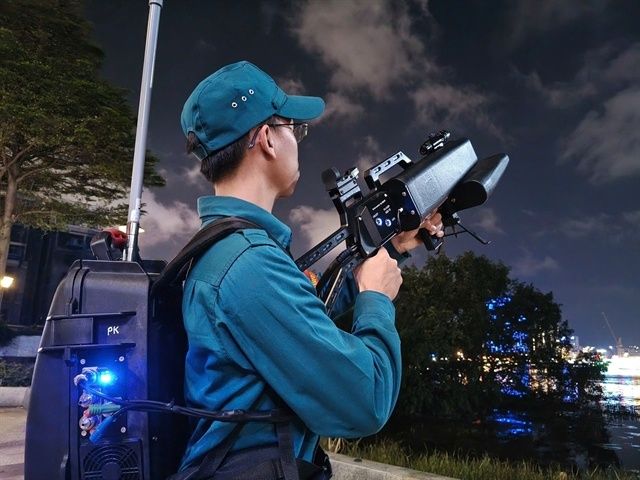
Vietnam's aviation authorities have escalated efforts to tackle a mounting crisis of unauthorised drone operations near airports, issuing a public warning as incidents surge and economic losses mount into the billions of dong. The Immigration Department under the Ministry of Public Security attributes the growing threat directly to drone operators flouting airspace restrictions, a problem that has forced emergency protocols at major facilities across the country and raised serious concerns about potential mid-air collisions.
The scale of the problem has become impossible to ignore. Vietnamese airports recorded 34 incursions of drones or other unauthorised aircraft into restricted airspace during 2025, a figure that accelerated dramatically in 2026 with 17 additional cases logged in just the first six months of the year. This upward trajectory suggests the issue is not stabilising but intensifying, reflecting either a growing number of drone owners operating without proper authorisation or a deteriorating compliance culture among those who do hold permits.
When unauthorised drones enter airport airspace, air traffic controllers must respond with emergency measures designed to prevent collisions. These responses include immediately halting aircraft takeoffs, suspending landing operations, or directing already airborne planes to alternate airports. Such interventions, while necessary for safety, create cascading disruptions throughout the aviation network and generate substantial costs borne by airlines, ground handlers, and passengers facing delays and cancellations.
The financial impact has proven substantial enough to attract corporate attention and quantification. Vietnam Airlines quantified losses from a single week of drone-related incidents between February 17 and 24, calculating that disruptions cost the carrier approximately 5.6 billion Vietnamese dong, equivalent to roughly US$215,000, while affecting the travel plans of approximately 9,200 passengers through delays and schedule modifications. Danang International Airport separately estimated direct losses exceeding 10 billion dong, or US$384,000, though this calculation excludes the ripple effects on associated industries including cargo operators, tourism services, and passenger compensation claims.
Beyond the immediate financial toll lies a more sobering concern: the potential for catastrophic consequences if a drone collides with an aircraft during the critical phases of takeoff or landing. Officials have stressed that such an impact could cause serious accidents, endangering all passengers and crew aboard, with consequences potentially extending far beyond a single aircraft. The scenario reflects growing global anxiety about drone incursions, an issue increasingly reported at major airports across Asia and beyond.
Vietnam's legal framework for drone operations establishes clear requirements and escalating penalties for violations. All drone owners must register their aircraft and obtain flight permits prior to operation, though registration alone does not grant operational authorisation. Permits are conditional documents specifying precisely where, when, at what altitude, and under what conditions a drone may be flown. This granular approach reflects international best practices in airspace management, though enforcement remains a challenge.
Penalties for violations are tiered according to severity and now encompass administrative sanctions, civil liability, and criminal prosecution. A government decree issued in 2025 introduced mechanisms for imposing fines, confiscating drones, and suspending flight privileges for operators who breach permit conditions. Importantly, the legal threshold for criminal prosecution does not require that an actual accident occur; instead, authorities may pursue criminal charges simply for flying a drone into an aircraft's approach, takeoff, or landing path, creating a genuine collision risk.
For such dangerous incursions, penalties range from financial fines between 10 million and 50 million dong (approximately US$384 to US$1,920) to non-custodial reform lasting up to two years or imprisonment from three months to two years. In the most severe cases where drone operations obstruct air traffic or seriously endanger aviation safety, penalties can extend to prison sentences of up to 15 years. Beyond incarceration, convicted individuals may face restrictions on employment in certain sectors or positions for periods lasting one to five years, effectively creating professional consequences for violations.
The authorities' enforcement strategy also emphasizes community participation in identifying and reporting violations. The Immigration Department has called on drone operators to strictly adhere to their permit conditions and has urged the general public to report any suspected unauthorised drone activity near airports directly to police, military units, or airport management. This approach recognises that detecting airspace violations requires vigilance across multiple stakeholders and cannot rely on official monitoring alone.
For Malaysian readers and those across Southeast Asia, Vietnam's crisis offers important lessons about the intersection of consumer technology adoption and aviation safety. As drone ownership proliferates throughout the region—driven by declining prices and expanding recreational and commercial applications—neighbouring countries face similar risks of operators either ignorantly or deliberately flouting airspace restrictions. Vietnam's experience demonstrates that reactive enforcement and penalties, while necessary, may prove insufficient without concurrent investment in public education, accessible permitting systems, and advanced detection technologies.
The Vietnamese authorities have framed aviation safety as a collective responsibility transcending government action alone, positioning themselves to appeal to operator consciousness and social norms. This messaging strategy suggests recognition that legal penalties alone have not deterred violations and that broader cultural change may be necessary. For the region's aviation infrastructure and the safety of millions of air passengers, the stakes of addressing this challenge extend well beyond Vietnam's borders.
Moving forward, Vietnam's experience may influence how other Southeast Asian nations approach emerging drone safety challenges. The development of clear legal frameworks, as Vietnam has pursued, offers a necessary foundation, but the real test lies in whether enforcement, technology, and public cooperation can adequately manage the explosive growth in drone operations while preserving aviation safety and commercial viability.

