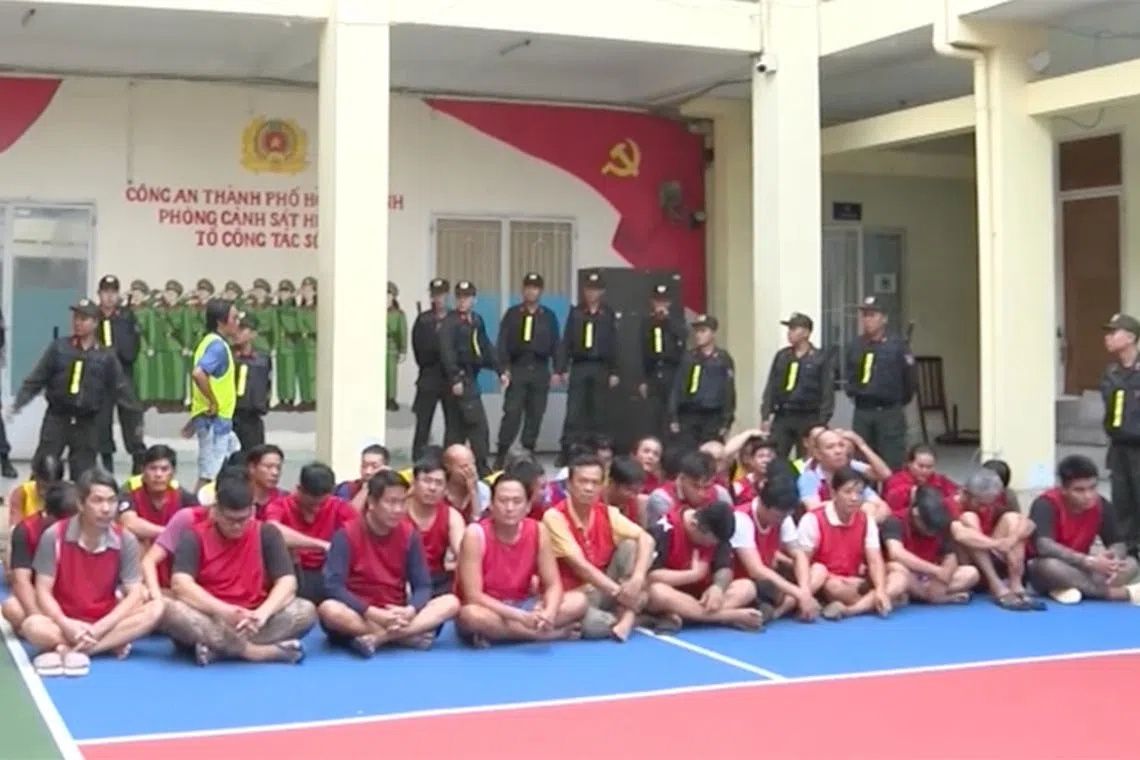
Vietnamese police have moved aggressively against organised illegal gambling by dismantling two sprawling betting networks and arresting 85 suspects in late June operations. The operations, described by Ho Chi Minh City police as exceptionally large in scale, had collectively facilitated approximately US$133 million in illegal transactions since October 2025, highlighting the enormous sums that flow through Vietnam's underground gambling economy despite strict government prohibitions.
The crackdown reflects a broader pattern of enforcement action that intensifies whenever major international sporting events attract widespread wagering. Online gambling remains completely banned across Vietnam, classified as a serious criminal matter under the country's strict regulations. Yet this legal prohibition has done little to curtail the business, which operates through sophisticated underground networks that adapt constantly to evade police detection. The timing of these raids coincides with heightened security concerns during major tournaments, when authorities recognise the window for enforcement is narrow and public interest in illegal betting reaches peak levels.
According to the police statement, the suspected ringleaders admitted to receiving "master-level betting accounts" sourced from individuals operating in Cambodia and subsequently subdividing these accounts into cascading networks of agent and member accounts distributed to individual gamblers. This hierarchical structure allowed the syndicates to distance themselves from direct transactions while maintaining tight operational control and extracting profits from each transaction level. The arrangement also provided some insulation from law enforcement, as the distribution network made it difficult to trace money flows or identify key organisers without detailed financial investigation.
The scope of Vietnam's broader gambling enforcement becomes clearer when viewed alongside the government's national statistics. The public security ministry announced that across the entire country, police had dissolved 73 separate gambling operations and arrested 346 individuals during the first twenty days of the World Cup tournament period. These figures demonstrate that the two high-profile busts were part of a coordinated nationwide campaign rather than isolated incidents, suggesting a deliberate strategic choice by authorities to mount sustained pressure on illegal operations rather than sporadic enforcement.
Colonel Bui Tuan Anh of the public security ministry characterised the financial scope of these cases in notably broad terms, stating that "transaction money in these cases totalled thousands of billions of dong" — figures that translate into hundreds of millions of dollars when converted. This characterisation suggests the disclosed US$133 million from the two major cases may represent only the portion authorities could definitively trace and document, with the actual scale of illegal betting likely substantially larger. Such gaps between documented and actual illegal activity are common in enforcement operations, where many transactions remain hidden or difficult to quantify precisely.
The underlying appeal of illegal betting in Vietnam rests on several structural factors that authorities must contend with beyond simple law enforcement. The population's enthusiasm for international football, combined with limited legal recreational alternatives and the ability to place bets through readily accessible online platforms, creates persistent demand. Cambodian sources mentioned in the police statement suggest that cross-border cooperation in illegal gambling networks represents an emerging challenge for Southeast Asian law enforcement, requiring coordination between nations with varying enforcement capacities and priorities.
For Malaysia and other Southeast Asian nations, Vietnam's experience offers instructive lessons about the challenges of containing underground gambling networks. Despite stringent regulations and periodic enforcement campaigns, the Vietnamese government has not substantially reduced the scale of illegal operations. The sheer profitability of these networks—demonstrated by the US$133 million figure—ensures a steady supply of operators willing to accept arrest risks. This dynamic applies equally across the region, where similar prohibitionist approaches have generally failed to eliminate underground betting markets.
The 2026 World Cup in Canada, Mexico and the United States represents another significant enforcement opportunity for Vietnamese authorities. With the tournament commencing in mid-2026 and culminating in the final match on July 19, police have already signalled their intention to replicate the intensive campaign mounted during the recent competition. However, the demonstrated ability of betting networks to recover and resume operations following raids suggests that enforcement alone, without addressing underlying demand factors or creating legitimate alternatives, will likely prove insufficient as a long-term solution.
Vietnamese officials have not publicly articulated plans to legalise or regulate gambling, despite the evident reality that prohibition has not eliminated the market. This stands in contrast to approaches taken in some other Southeast Asian jurisdictions, where regulated gambling operations exist alongside ongoing efforts against unlicensed competitors. The question of whether Vietnam might eventually reconsider its prohibitionist stance remains open, particularly given the substantial tax revenues that could theoretically accrue from regulated operations and the enforcement costs associated with combating clandestine networks of this scale.

