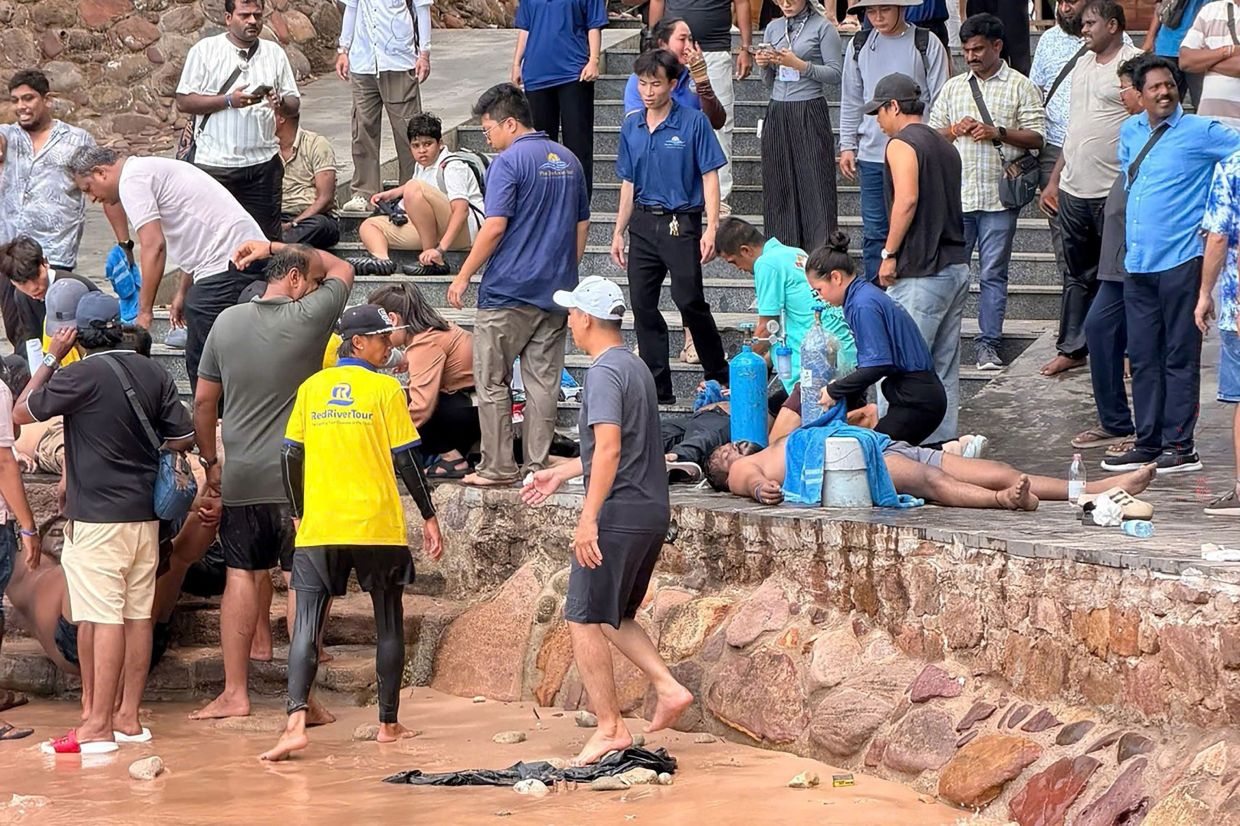
Vietnam's Prime Minister has ordered an immediate and comprehensive investigation into a speedboat disaster that claimed the lives of 15 Indian tourists near Phu Quoc Island, signalling the seriousness with which the government is treating what has emerged as one of the region's deadliest maritime accidents in recent years. The directive, issued on July 11, reflects mounting concern over safety standards in Vietnam's tourism sector and the need for swift accountability mechanisms to address what officials are treating as a potential breach of maritime protocols.
The tragedy unfolded when a speedboat carrying 32 Indian tourists, along with four crew members and tour guides, capsized near Hon May Rut Ngoai within the Phu Quoc Special Zone. The rescue operation succeeded in bringing 21 people to safety, but the confirmed death toll stands at 15 Indian nationals—13 men and two women—making this one of the most significant incidents affecting foreign nationals in Vietnamese waters. The survivors, along with the deceased, have left Indian authorities and the Vietnamese government grappling with questions about how such an accident could occur in what is marketed as a premier destination for international visitors.
The Prime Minister's directive has set in motion a coordinated response across multiple government agencies, each assigned specific responsibilities to prevent similar incidents and address immediate humanitarian needs. An Giang Province, which administers Phu Quoc Island, has been given primary authority to lead the investigation, coordinate with relevant agencies and law enforcement, and conduct a thorough assessment of what caused the vessel to capsize. This hands-on provincial involvement reflects Vietnam's administrative approach to crisis management, delegating significant responsibility to local authorities while maintaining central oversight through the Prime Minister's office.
The Ministry of Public Security has been explicitly instructed to conduct a rigorous criminal investigation to determine the precise cause of the accident and establish whether any individuals or organizations violated safety regulations or legal requirements. This investigative mandate is particularly significant because it signals potential prosecution if negligence, inadequate maintenance, or operational breaches are discovered. The emphasis on accountability extends beyond mere fact-finding; it represents a commitment to ensure that responsible parties face strict legal consequences, which may include charges against boat operators, owners, or tour company officials if culpability is established.
Beyond immediate investigation, the Ministry of Construction has been tasked with a broader safety audit programme covering maritime and inland waterway operations throughout the region where the accident occurred, as well as similar tourism destinations. This systematic approach acknowledges that if safety deficiencies existed in Phu Quoc operations, they may well be replicated elsewhere in Vietnam's growing tourism infrastructure. The audit will likely encompass vessel inspection standards, crew certification requirements, capacity regulations, weather protocols, and emergency response procedures—essentially a comprehensive review of how Vietnamese maritime safety is enforced and monitored in tourist zones.
The humanitarian response has become a central concern for Vietnamese authorities, particularly given the international dimensions of the tragedy. The Prime Minister specifically requested that all available medical resources and medication be mobilized to treat the injured survivors and minimize further loss of life. This directive reflects awareness that trauma management for survivors and provision of adequate medical care can substantially influence both recovery outcomes and international perception of how Vietnam handles crisis situations affecting foreign nationals.
Diplomatic channels have become equally important in managing the incident's fallout. The Ministry of Foreign Affairs has been directed to establish close coordination with the Indian Embassy in Vietnam to handle consular matters, protect the interests of affected Indian citizens, and manage the return of deceased bodies and support for grieving families. This coordination is critical not only for humanitarian reasons but also for maintaining bilateral relations between Vietnam and India, both of which have been strengthening economic and tourism ties in recent years. The Indian Embassy itself has taken proactive steps by releasing the complete passenger manifest comprising 30 men and two women, and establishing two contact centres in Ho Chi Minh City and Hanoi to assist affected nationals and provide information to families.
The timing and scale of the government's response suggest that Vietnamese leadership recognises the potential reputational damage such incidents pose to the country's tourism industry, which has become increasingly crucial to economic growth. Phu Quoc, designated as a special economic zone, has been positioned as Vietnam's flagship beach destination and has attracted growing numbers of international visitors in recent years. A major accident involving foreign tourists, if not handled transparently and decisively, could undermine confidence among international tourists and travel operators who consider Vietnam as a safe destination.
For Malaysian observers and regional analysts, the incident raises broader questions about safety standards in Southeast Asia's tourism sector. As countries in the region compete aggressively to attract international visitors, the balance between rapid tourism development and rigorous safety enforcement has become increasingly precarious. The responses of Vietnamese authorities will likely set a benchmark for how other regional governments address similar maritime tourism incidents and could influence traveller behaviour and insurance considerations across Southeast Asia.
The investigation's findings will be particularly instructive for understanding systemic gaps in Vietnamese maritime regulation and enforcement. Whether the capsizing resulted from weather conditions, structural vessel defects, overcrowding, crew incompetence, or some combination of factors will determine what corrective measures are implemented and whether international safety standards applicable to tourist operations require strengthening throughout the region.

